
AI Shoe Design Advisor: Revolutionizing Footwear through Data-Driven Innovation
Discover how the AI shoe design advisor is transforming footwear design with data-driven innovation, enhancing customization, and boosting sustainability.

Estimated reading time: 8 minutes
Key Takeaways
- AI-powered systems optimize shoe design by analyzing fit, materials, and market trends.
- Generative design accelerates development cycles by up to 70%, enabling rapid prototyping.
- Personalization through detailed foot scans improves fit accuracy and reduces returns.
- Trend prediction and material optimization promote sustainability and on-demand production.
- Real-world case studies showcase faster development, reduced waste, and enhanced customer satisfaction.
Table of Contents
- Introduction
- Understanding AI in Design
- What Is an AI Shoe Design Advisor?
- Benefits of AI in Shoe Design
- How AI Shoe Design Advisors Work
- Case Studies & Examples
- Overcoming Challenges
- Future of AI in Shoe Design
- Conclusion
Introduction
An AI shoe design advisor is an intelligent system that leverages artificial intelligence to assist footwear designers by generating ideas, optimizing fit, and personalizing products based on data like materials, aesthetics, user scans, and market trends. This technology addresses fit issues—63–72% of wearers struggle with ill-fitting shoes—and drives customization, sustainability, and rapid iteration. In this deep dive, we explore how an AI shoe design advisor transforms shoe design from concept to production.
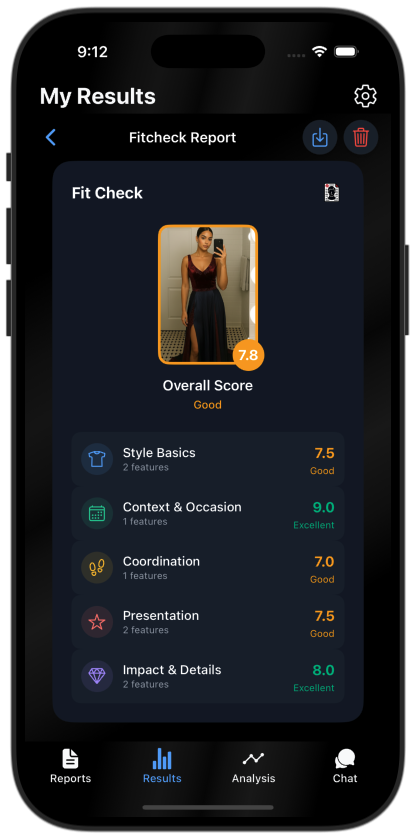
For real-world applications of AI-powered fit analysis and style guidance, check out how the Maxx Report app delivers personalized “fit check” insights and aesthetic recommendations.
Understanding AI in Design
Artificial intelligence mimics human thinking, utilizing machine learning algorithms to learn from data and generate predictions or designs. A key method is generative design, where designers define parameters—function, materials, cost—and the AI rapidly produces optimized options. Beyond footwear, AI powers manufacturing, drives fashion trends, and aids product development. In shoes, it analyzes foot scans, biomechanics, and style trends to craft tailored solutions for support and comfort.
Source: Concept Kicks on AI design
What Is an AI Shoe Design Advisor?
An AI shoe design advisor processes vast datasets—foot shapes, material properties, trend data—to recommend designs, automate pattern generation, and ensure fit and performance. Core functions include:
- Generative design: Algorithmically creates upper and sole variants (Concept Kicks).
- Material optimization: Selects materials for durability, weight, and sustainability.
- Trend prediction: Forecasts next-season styles using market data.
- Personalization: Uses foot-scan data with 12+ biometric points (IAMBIC).
Underlying technologies include machine learning for pattern recognition, computer vision for scan analysis, and 3D modeling engines for automation.
Benefits of AI in Shoe Design
Increased Efficiency
Auto-generates patterns and 3D files, cutting design time by up to 70% and accelerating development from months to weeks.
Source: AI in footwear video
Creative Inspiration
Explores vast permutations of shapes, colors, and structures, sparking ideas designers may overlook.
Customization & Fit Accuracy
Leverages smartphone foot scans with 12 biometric points to reduce the 63–72% ill-fit rate.
Source: IAMBIC's precision fit AI
Market Trend Analysis
Predicts consumer preferences and optimizes for sustainability, cost, and durability by mining market and social data.
Sustainability & On-Demand Production
Enables print-on-demand and reduces waste from overproduction by improving order forecasting.
How AI Shoe Design Advisors Work
An AI shoe design advisor follows a clear four-step process:
- Data Gathering: Collect foot photos, questionnaires, material libraries, and trend datasets.
- Data Processing: Use computer vision to extract arch height, instep volume, and other metrics.
- Design Generation: Algorithms morph 3D models to optimize support, cushioning, or style.
- Recommendations & Iteration: Deliver multiple design options; designers prototype and finalize for production.
Note: High-quality scans and diverse datasets ensure accurate, creative outputs.
Case Studies & Examples
IAMBIC Custom Fit
Built on 50,000+ foot scans and 12 patents, this solution achieved 25% fewer returns and 40% faster development.
Ben Weiss’s AI-Driven Sneakers
Collaborating with Reebok’s founder, 3D-printed sneakers deliver custom arch support. Outcome: prototyping in under a week and 30% material waste reduction.
Generative Design in Practice
CONCEPTKICKS optimizes uppers while Adidas uses AI for seamless 4D-printed midsoles, cutting iterations by 50% and weight by 20%.
Overcoming Challenges
- Dependence on Data: Limited datasets can constrain creativity.
- Scan Accuracy: Poor-quality scans lead to design errors.
- Human-AI Balance: Over-automation may suppress designer intuition.
Solutions:
- Hybrid workflows blending AI output with human edits.
- Expanded datasets covering diverse shapes and styles.
- Rapid 3D-printed prototyping to validate concepts.
Future of AI in Shoe Design
- Advanced computer vision for real-time gait analysis.
- Sustainable 3D printing & recyclable materials.
- Predictive AI for global trend forecasting.
- AR/VR previews and real-time fit feedback.
Fully autonomous mass customization could soon make precision-fit footwear the norm.
Conclusion
AI shoe design advisors are redefining footwear development, delivering efficiency, creativity, customization, and sustainability. From workflow frameworks to real-world case studies, the technology promises a future where personalized, data-driven shoes are the industry standard. How will you integrate AI into your next design project?
FAQ
Q: How do I implement an AI shoe design advisor?
A: Choose a reliable foot-scan app, integrate generative design software, and establish a hybrid prototyping workflow.
Q: Is AI creative enough?
A: AI excels at remixing existing data to generate novel options, but human input remains essential for true innovation.
Q: What about cost and accessibility?
A: Lower order quantities and 3D printing make AI-driven design accessible to small brands and independent creators.
Q: How does it impact sustainability?
A: On-demand production cuts overstock and waste, while AI-driven material selection favors eco-friendly options.