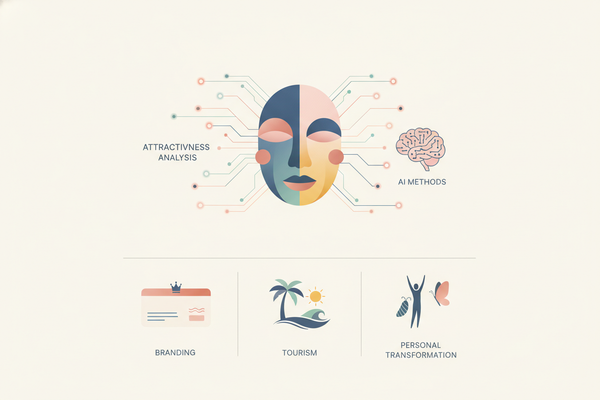
AI Facial Analysis: Meaning, How It Works, and Key Insights
Discover AI facial analysis meaning, how it works, beauty scoring, emotion detection, and privacy concerns in this comprehensive guide.


Estimated reading time: 18 min
Key Takeaways
- AI facial analysis leverages machine learning to measure facial landmarks, symmetry, and proportions for insights related to beauty and identity, processing numerous data points with precision.
- It evaluates face shape, jawline, cheekbones, and expression to provide personalized aesthetic ratings and health cues, incorporating skin texture and microexpression details where applicable.
- Applications range from attractiveness scoring and emotion detection to medical diagnostics and security verification, including anti-spoofing and deepfake detection techniques.
- Privacy, bias, and ethical implications are important considerations in deploying AI facial analysis technologies, necessitating transparency, data protection, and fairness.
- Advanced anti-spoofing and deepfake detection methods aim to enhance the reliability and security of facial AI systems, employing multi-modal biometric checks and temporal analysis.
Table of Contents
- Section 1: Understanding AI Facial Analysis Technology
- Section 2: Facial Landmarks, Proportions, and Symmetry in Analysis
- Section 3: Beauty Scoring and Attractiveness Ratings Explained
- Section 4: Emotion and Expression Detection from Facial Cues
- Section 5: Medical and Security Applications of AI Facial Analysis
- Section 6: Ethical, Privacy, and Bias Concerns in Facial AI
Section 1: Understanding AI Facial Analysis Technology
What is AI Facial Analysis?
AI facial analysis is a technology that uses artificial intelligence algorithms, primarily machine learning and computer vision, to interpret and quantify human facial features. It involves scanning a person's face via images or video to extract data points related to facial structure, expressions, and skin condition. This data can then be analyzed to provide insights such as attractiveness ratings, emotion recognition, identity verification, or health indicators.
Unlike traditional image analysis, AI facial analysis often employs deep neural networks trained on large datasets of diverse facial images, enabling detection of subtle features such as microexpressions, skin texture variations, and minor asymmetries. These capabilities allow for applications that go beyond simple recognition to include aesthetic and emotional profiling.
How Does AI Facial Analysis Work?
The process starts with face detection, where the AI locates the face within a photo or video frame using methods such as Haar cascades, Histogram of Oriented Gradients (HOG), or deep learning-based detectors like Multi-task Cascaded Convolutional Networks (MTCNN). This step isolates the facial region for detailed analysis.
Next, facial landmarks are identified—key points like the corners of eyes, tip of the nose, and edges of the lips. Modern systems detect 68 to over 100 landmark points, providing dense mapping of eyes, eyebrows, nose, mouth, jawline, and cheek contours. These landmarks enable measurement of distances, angles, and ratios.
Using these landmarks, the system measures proportions, symmetry, and other metrics relevant for aesthetic evaluation. For example, it calculates the distance between pupils, the width of the nose relative to the face width, and angles defining cheekbone prominence. Some models also analyze skin texture using convolutional layers that detect smoothness, pore size, and pigmentation inconsistencies, often via high-resolution imagery.
Beyond static features, AI facial analysis can detect microexpressions—brief, involuntary facial movements lasting less than half a second—by analyzing temporal sequences in video frames, which may provide insight into suppressed or genuine emotions.
Machine learning models, particularly deep learning architectures such as convolutional neural networks (CNNs) and recurrent neural networks (RNNs), trained on extensive labeled datasets, enable the AI to interpret these features with increasing accuracy. Transfer learning techniques allow models to adapt to new populations and lighting conditions, improving generalizability.
Role of Machine Learning and Computer Vision
- Machine Learning: Enables the system to learn patterns from labeled facial data, improving predictions on attractiveness, identity, or emotions. Algorithms like Support Vector Machines (SVM), Random Forests, and deep neural networks classify and regress facial attributes based on learned representations.
- Computer Vision: Provides the techniques for image processing, feature detection, and 3D reconstruction of faces. Techniques include edge detection, histogram equalization, 3D morphable models for pose normalization, and texture analysis for skin assessment.
Platforms like Maxx Report integrate these technologies to offer users detailed AI-powered facial reports and personalized transformation plans. Their systems often combine cloud processing with mobile-friendly interfaces, aiming to ensure fast and user-friendly analysis while protecting user data through encryption and anonymization.
Section 2: Facial Landmarks, Proportions, and Symmetry in Analysis
Key Facial Landmarks and Their Importance
Facial landmarks are the foundation of AI facial analysis. These include specific points such as:
- Eye corners and centers
- Nose tip and nostrils
- Mouth corners and center
- Jawline edges and chin point
- Eyebrow arches
- Philtrum and Cupid’s bow
- Cheekbone highest points
Accurately detecting these landmarks allows the AI to map the face’s geometric structure and calculate distances and angles that define shape and balance. For instance, the distance between the inner eye corners is important for assessing eye spacing, while the angle of the jawline can influence perceived masculinity or femininity.
Detection accuracy can reach sub-pixel precision, which is useful for subtle beauty assessments and medical diagnostics. Landmark localization often uses cascaded regression or heatmap regression techniques, which refine landmark positions iteratively for robustness against pose and lighting variations.
Measuring Facial Proportions: The Golden Ratio and Thirds
AI systems assess facial proportions by comparing distances between landmarks. One key concept is the golden ratio, approximately 1.618, which has historically been associated with aesthetic appeal. Facial thirds divide the face horizontally into three equal parts (forehead to brows, brows to base of nose, nose to chin). Balanced thirds and golden ratio proportions are often linked to perceived attractiveness.
For example, the ideal distance between the eyes is roughly equal to the width of one eye, and the length of the nose compared to the mouth width ideally aligns with the golden ratio. AI quantifies these proportions with ratios and percentage deviations, allowing users to see where their face aligns or diverges from classical ideals.
Advanced AI models can also account for ethnic and individual variations, recognizing that beauty standards vary culturally and personally. This contextual awareness enables more personalized and realistic aesthetic feedback.
Symmetry Analysis and Its Role in Attractiveness
Facial symmetry refers to how closely one side of the face mirrors the other. AI calculates symmetry by comparing paired landmarks across the vertical midline. Metrics include the difference in distances between left and right corresponding points and pixel-level texture symmetry.
While perfect symmetry is rare, higher symmetry scores are often associated with higher attractiveness ratings. Symmetry is also considered an indicator of genetic health, which partly explains its influence on human perception. Some studies suggest that asymmetries greater than a few millimeters can be perceived negatively.
Moreover, AI can detect dynamic symmetry by analyzing facial expressions over time, identifying asymmetries caused by neurological disorders or aging. Such insights can be valuable for medical assessments as well as beauty evaluations.
Section 3: Beauty Scoring and Attractiveness Ratings Explained
How AI Scores Beauty and Looks
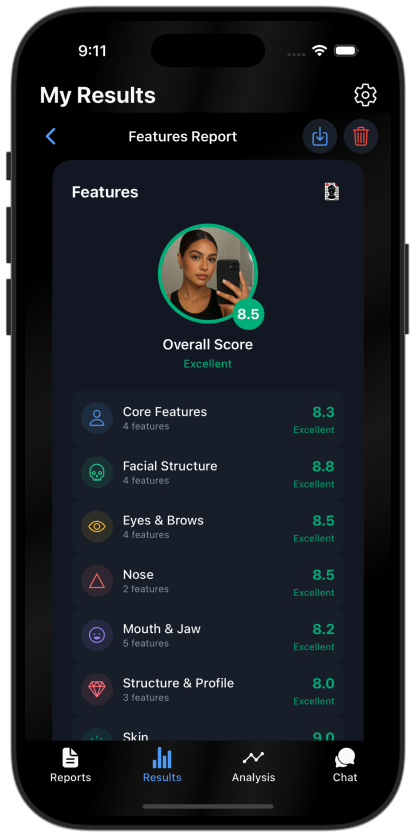
AI beauty scoring models synthesize measurements of facial landmarks, symmetry, proportions, skin texture, and even color tone to generate an attractiveness rating. These scores typically range on a numeric scale, for example from 0 to 100, or as percentile ranks compared to a large database of faces, sometimes comprising tens of thousands of samples.
The scoring algorithms combine weighted factors based on empirical correlations found in psychological and anthropological research. For instance, symmetry and proportions might contribute a significant portion to the score, skin quality another portion, and expression or eye brightness the remaining part. This multi-factor approach aims to ensure a holistic evaluation rather than reliance on a single attribute.
Factors Influencing AI Attractiveness Ratings
- Jawline and Chin Shape: Defined and balanced jawlines often increase attractiveness scores. For example, a sharp mandibular angle around 120-130 degrees is considered ideal in many beauty standards.
- Cheekbone Prominence: Well-defined cheekbones are a classical marker of beauty, contributing to facial contour and youthfulness. AI measures cheekbone height relative to nose width and jawline.
- Skin Quality: Smooth, even-toned skin without blemishes scores higher. AI assesses texture using micro-pattern analysis and color uniformity, detecting wrinkles, scars, or pigmentation.
- Brow Shape and Eye Position: Symmetrical, well-arched brows and spaced eyes influence appeal. AI evaluates eyebrow curvature, thickness, and alignment with eye centers.
- Facial Thirds Proportions: Balanced thirds contribute to a harmonious look. Deviations beyond 5-10% from equal thirds can lower scores.
- Smile and Teeth Visibility: A natural, symmetrical smile with visible, well-aligned teeth can positively impact attractiveness ratings.
Personalized Aesthetic Reports and Transformation Plans
Apps like Maxx Report provide users with detailed breakdowns of their facial features alongside beauty scores. They also offer personalized glow-up and transformation plans tailored to individual facial structure and skin condition. This might include grooming tips, hairstyle recommendations, skincare routines, and makeup suggestions, enabling users to enhance their natural beauty.
For example, if the AI detects a weak chin projection, it might suggest contouring techniques or grooming styles that emphasize jaw definition. For skin texture issues, the app could recommend specific skincare products containing ingredients such as retinoids or vitamin C, supported by clinical evidence.
These recommendations are often accompanied by visual simulations, allowing users to preview potential changes before making decisions. Additionally, the plans may include lifestyle advice such as hydration, nutrition, and sleep optimization, which can impact facial appearance.
For those interested in discovering their face shape and how AI can guide styling, the Face Shape Quiz article is a useful resource. It explains how different face shapes—oval, round, square, heart, diamond—can be enhanced through tailored haircuts, beard styles, and makeup.
Section 4: Emotion and Expression Detection from Facial Cues
Detecting Emotions Using Facial Microexpressions
Beyond physical structure, AI facial analysis can attempt to decode emotions by identifying microexpressions—subtle, involuntary facial movements that may reveal feelings such as happiness, anger, surprise, sadness, fear, or disgust. These expressions involve muscle movements in areas like the eyes, mouth, and eyebrows, often lasting less than 500 milliseconds.
AI uses high-frame-rate video analysis and temporal convolutional networks to capture and classify these fleeting expressions. It identifies Action Units (AUs) as defined by the Facial Action Coding System (FACS), such as eyebrow raises or lip corner pulls, to infer emotional states with varying accuracy depending on the environment and data quality.
Applications of Emotion Recognition
- Customer Experience: Brands analyze user emotions during product interactions or advertisements to tailor marketing strategies, aiming to improve engagement and satisfaction metrics.
- Mental Health: Early detection of mood disorders through facial cues, such as reduced frequency of positive expressions or increased microexpressions of distress, may aid clinicians in monitoring patients remotely.
- Human-Computer Interaction: Adaptive interfaces respond to user emotions, such as calming a voice assistant's tone when detecting frustration or adjusting game difficulty based on player engagement.
- Security Screening: Identifying stress or deception cues in high-risk environments may enhance threat detection.
Accuracy and Challenges
While AI models can achieve high performance in controlled conditions, real-world challenges include varying lighting, occlusions (like glasses, masks, or facial hair), and cultural expression differences. For example, some cultures express emotions more subtly, requiring models trained on diverse datasets to avoid misclassification.
Moreover, emotions are complex and often mixed, making single-label classification difficult. Multi-label and continuous emotion recognition models attempt to capture these nuances by outputting intensity scores across multiple emotions simultaneously.
Ongoing research focuses on improving robustness through data augmentation, multi-modal inputs (combining facial analysis with voice or physiological signals), and explainable AI techniques to increase user trust.
Section 5: Medical and Security Applications of AI Facial Analysis
Medical Diagnostics and Health Monitoring
AI facial analysis can assist in detecting signs of medical conditions by analyzing facial attributes such as skin coloration, asymmetry, or muscle movements. For example, the presence of facial drooping or asymmetry can be indicative of conditions like stroke or Bell's palsy, potentially enabling rapid alerts for emergency care.
Moreover, AI models may analyze skin pallor or cyanosis, which can indicate anemia or hypoxia. Changes in eye redness or sclera color might suggest infections or liver problems. In genetic disorders like Down syndrome or Marfan syndrome, characteristic facial features identifiable through landmark patterns can aid early diagnosis.
Neurological diseases such as Parkinson's can be monitored by analyzing reduced facial expressivity (hypomimia) or tremors. Fatigue and dehydration may be inferred from skin texture and color changes, offering non-invasive health monitoring tools.
These non-invasive assessments can complement traditional exams and enable remote patient monitoring, especially valuable in telemedicine and underserved regions.
Face Recognition, Verification, and Identity Use Cases
One of the most widespread uses of facial AI is identity verification in smartphones, airports, and secure facilities. The AI matches live facial data with stored profiles to confirm identity, often combined with anti-spoofing measures to prevent fraud.
For example, Apple's Face ID uses infrared 3D facial mapping combined with neural networks to unlock devices securely. Airports employ facial recognition for passenger check-in, reducing wait times and enhancing security. Financial institutions use facial biometrics for transaction authentication, improving convenience and fraud prevention.
Accuracy in these applications is critical, typically requiring very low false acceptance rates and false rejection rates optimized for usability. AI systems continuously update to handle aging, lighting changes, and disguises.
Anti-Spoofing and Deepfake Detection
To enhance security, AI facial analysis incorporates techniques that detect attempts to spoof the system using photos, videos, or masks. These anti-spoofing methods analyze texture differences (e.g., shiny surfaces of printed photos), 3D depth information (captured via structured light or time-of-flight sensors), and liveness cues such as eye blinking or subtle head movements.
Additionally, deepfake detection algorithms analyze inconsistencies in facial movement, texture, lighting, and physiological signals like pulse estimation from subtle skin color changes. Techniques include frequency analysis, temporal anomalies detection, and neural network classifiers trained on datasets of synthetic media.
These measures are important to safeguard trustworthiness in identity verification and prevent misuse in political disinformation, fraud, or harassment.
Section 6: Ethical, Privacy, and Bias Concerns in Facial AI
Privacy and Consent Issues
Using AI facial analysis raises significant privacy concerns. Facial images are biometric identifiers, and unauthorized collection or use can lead to identity theft, surveillance, or discrimination. Therefore, users should be informed about how their facial data is collected, stored, and used.
Consent and data protection regulations such as the General Data Protection Regulation (GDPR) in Europe and the California Consumer Privacy Act (CCPA) in the USA impose strict requirements on data handling, including explicit opt-in consent, data minimization, purpose limitation, and rights to access or delete personal data.
Trustworthy platforms like Maxx Report emphasize user control and security by implementing end-to-end encryption, anonymization techniques, and transparent privacy policies. They also provide users with options to delete their data permanently and avoid data sharing with third parties without consent.
Bias and Fairness Challenges
AI models trained on skewed datasets can produce biased results, disproportionately affecting certain age groups, genders, or ethnicities. For example, early facial recognition systems exhibited higher error rates for darker-skinned individuals or women, leading to misidentification or unfair treatment.
This bias can impact beauty scoring by enforcing narrow aesthetic standards, emotion detection by misinterpreting expressions, and identity recognition accuracy. To address these issues, developers use diverse, representative training datasets, implement bias detection tests, and apply fairness-aware algorithms that adjust prediction thresholds or feature importance.
Continuous evaluation and community feedback are essential to identify emerging biases. Some platforms also include disclaimers about the limitations of AI assessments, encouraging users to interpret results critically.
Ethical Considerations
- Avoiding misuse for surveillance or discrimination, ensuring facial AI is not deployed in ways that violate human rights or exacerbate social inequalities.
- Ensuring transparent and explainable AI decisions, so users understand how conclusions are reached and can contest or correct them.
- Balancing innovation with respect for human dignity, promoting applications that empower users rather than exploit vulnerabilities or insecurities.
- Engaging multidisciplinary stakeholders—including ethicists, legal experts, and affected communities—in the design and deployment of facial AI systems.
Conclusion
AI facial analysis is a technology with broad applications spanning beauty, security, healthcare, and emotion recognition. By measuring facial landmarks, proportions, and expressions, AI can provide ratings and personalized recommendations that help users understand and potentially enhance their appearance and wellbeing.
However, ethical deployment requires careful attention to privacy, bias, and consent. Responsible platforms implement robust security measures, transparent policies, and inclusive algorithms to ensure fairness and user trust. For those interested in exploring AI-driven beauty insights and transformation plans, Maxx Report offers a user-friendly platform combining advanced facial analysis with actionable glow-up advice, supported by scientific methodologies and ethical standards.
FAQ
Q: What does AI facial analysis measure?
A: AI facial analysis measures key facial landmarks, symmetry, proportions, skin texture, color, and expressions to assess attractiveness, emotions, identity, and health indicators. It processes numerous data points to generate comprehensive profiles.
Q: How accurate is AI facial analysis?
A: Accuracy depends on the quality of input images, the AI model, and training data diversity. State-of-the-art systems achieve high precision in controlled settings, but may face challenges with occlusions, diverse populations, and real-world lighting variations.
Q: Can AI facial analysis detect emotions or health problems?
A: AI can identify facial microexpressions linked to emotions and detect visual signs of certain health conditions, aiding early diagnosis and mental health monitoring. However, it complements but does not replace professional medical evaluation.
Q: Is AI facial analysis biased by age, gender, or ethnicity?
A: Bias can occur if training data lacks diversity. Developers mitigate this by using inclusive datasets, fairness-aware algorithms, and extensive testing across demographic groups to improve equity and accuracy.
Q: How does AI facial analysis rate attractiveness or beauty?
A: It combines measurements of facial symmetry, proportions (including golden ratio and facial thirds), skin quality, feature prominence, and expression dynamics to generate an attractiveness score, contextualized by cultural and individual factors.
Q: Is it safe and legal to upload my face to an AI analyzer?
A: When using reputable platforms that comply with data protection laws and provide clear consent mechanisms, uploading facial images is generally safe. Users should review privacy policies carefully and ensure the platform offers data control options.
Free to start
Try the Maxx Report app
Everything in this guide, in your pocket.
Get it on iPhoneGet it on Android