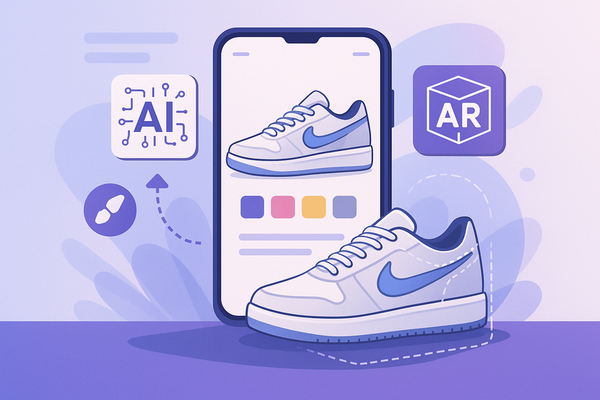
How Customized Footwear Styling AI Is Revolutionizing Personalized Footwear
Discover how customized footwear styling AI creates personalized shoe designs that blend function, aesthetics, and comfort. Learn about its benefits and future.

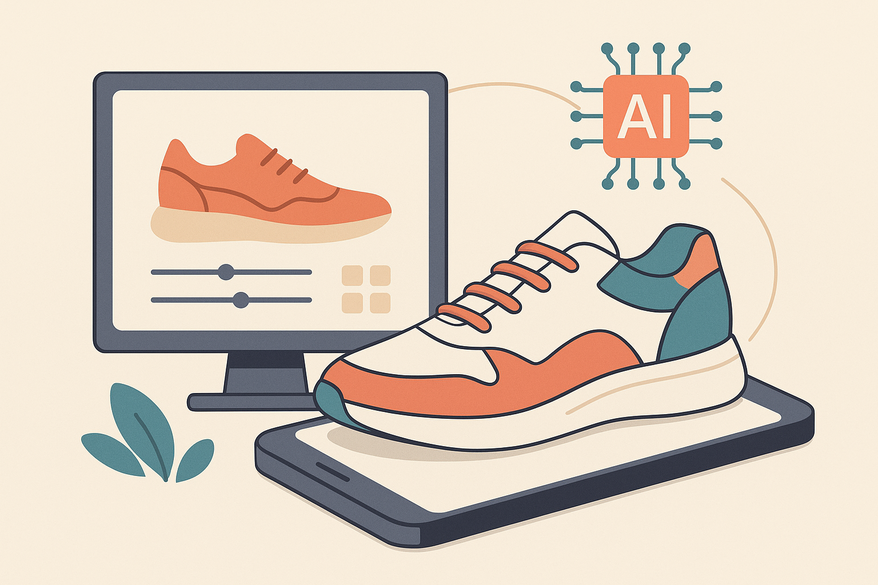
Estimated reading time: 7 minutes
Key Takeaways
- AI-driven platforms merge 3D scans, gait metrics, and style preferences to deliver bespoke footwear in days.
- Consumers benefit from personalized comfort, unique aesthetics, and faster turnaround.
- Manufacturers gain streamlined prototyping, accurate trend forecasting, and sustainable production.
- Future innovations include gait-adaptive shoes, generative AI design studios, and advanced AR/VR try-ons.
Table of Contents
- Introduction to Customized Footwear Styling AI
- Understanding Customized Footwear Styling AI
- Benefits of Customized Footwear Styling AI
- How Customized Footwear Styling AI Works
- Case Studies
- Challenges & Limitations
- The Future of Customized Footwear Styling AI
- Conclusion
- FAQ
Introduction to Customized Footwear Styling AI
Customized footwear styling AI systems analyze 3D foot scans, gait metrics, and style preferences to craft one-of-a-kind designs that blend function and fashion. By merging biomechanical data with personal taste, these platforms deliver a perfect fit and unique look in days, not weeks.
From centuries-old cobblers handcrafting bespoke shoes to the mass-production era of the Industrial Revolution, the quest has always been comfort and style. Today, AI-powered personalization marks the next leap: ultra-custom designs at scale.
In this post, you’ll learn how customized footwear styling AI transforms the shoe industry, explore real-world examples, and discover what the future holds.
Understanding Customized Footwear Styling AI
At its core, this technology uses machine learning and computer vision to process:
- 3D foot geometry captured to ±0.5 mm accuracy
- Gait cycle parameters like pronation angle and cadence
- User style variables: color palettes, textures, lace types
With these inputs, AI outputs:
- Optimized last shapes that conform to arch height and toe spread
- Targeted midsole cushioning zones based on pressure maps
- Upper material suggestions aligned to both biomechanical needs and fashion trends
Key components include CNNs for foot classification, recommendation engines for style matching, generative models (e.g., GANs) for novel ideation, and CAD/CAM integration for prototyping.
Learn more at Refabric Fashion AI Personalized Footwear Design.
Benefits of Customized Footwear Styling AI
- Consumer advantages:
- Reduces plantar pressure by up to 30% and lowers injury risk
- Offers infinite color, pattern, and texture combinations
- Design-to-delivery in days versus traditional timelines
- Manufacturer & designer advantages:
- Cuts physical samples by up to 80% through virtual prototyping
- Achieves >90% trend-forecasting accuracy via data mining
- Generative models propose unconventional yet feasible designs
- Sustainability & waste reduction:
- On-demand production minimizes overstock
- Precise material usage cuts scrap rates by 50%
- Fit-related returns drop by ~20%, reducing shipping emissions
Discover more at Fibre2Fashion AI Revolutionize the Footwear Industry.
How Customized Footwear Styling AI Works
Step 1 – Data Collection
- 3D foot scan via smartphone LiDAR or in-store scanner
- Gait video recorded for motion-capture analysis
- Style questionnaire covering activities, color palettes, and materials
Step 2 – AI Analysis
- Ingests point-cloud geometry and gait metrics
- Integrates preference vectors for style choices
- Produces optimal arch support zones and material hardness gradients
- Uses supervised regression, clustering, and GANs for design proposals
Step 3 – Design Generation
- CAD/CAM creates dynamic meshes and adjusts sole geometry
- Interactive interface for color, pattern, and material tweaks
- Real-time 3D renditions and AR try-ons ensure pre-production satisfaction
Step 4 – Prototyping & Production
- Multi-material 3D printers build insoles and midsoles
- Selective laser sintering produces custom uppers
- Real-time cost estimator updates price based on choices
Step 5 – Delivery
- Each pair undergoes stringent quality checks
- Shipped in eco-friendly packaging with a fit report
Case Studies
Case Study A: Nike A.I.R Collection
- Co-created 13 prototypes with athlete feedback
- Accelerated performance testing via algorithm-driven material layering
Case Study B: AI-3D Printed Custom Orthotics
- Captures 12 foot data points per shoe
- Prints insoles with variable density zones for targeted support
Challenges & Limitations
- High upfront investment in scanners and ML infrastructure
- Critical need for secure storage of biometric data
- Digital-to-real gap: scans may miss complex wear patterns
The Future of Customized Footwear Styling AI
- Embedded sensors and AI adjust midsole stiffness mid-stride
- Generative AI design studios produce infinite permutations from user prompts
- Scalable multi-material 3D printing for full shoe assemblies in a single run
- Enhanced AR/VR try-ons with biomechanical feedback overlays
- Continuous optimization via integrated plantar pressure sensors
Conclusion
AI-powered customization delivers unmatched personalization, operational efficiency, and sustainability. Consumers get perfect-fit, unique-style shoes; industry pros gain smarter workflows and reduced waste. The revolution in tailored footwear is here—explore platforms like Nike’s Studio or emerging startups today.
Learn more about AI-driven Outfit Personalization.
FAQ
- What is customized footwear styling AI?
- A technology that uses 3D scans, gait analysis, and style preferences to generate bespoke shoe designs.
- How long does it take to receive customized shoes?
- Typically days, thanks to virtual prototyping and automated production workflows.
- Are these AI-designed shoes sustainable?
- Yes. On-demand manufacturing reduces waste, and precise material use cuts scrap rates by up to 50%.
- Can I see a preview before purchase?
- Most platforms offer real-time 3D renditions and AR try-ons for a realistic preview.