How a Virtual Glasses Try-On App Is Revolutionizing Eyewear Shopping
Discover how a virtual glasses try-on app is transforming eyewear shopping with AR technology, offering realistic at-home trials and reducing return rates.

Estimated reading time: 7 minutes
Key Takeaways
- Enhanced confidence: Realistic AR previews help customers find flattering frames.
- Convenience: Try on unlimited styles at home anytime.
- Reduced returns: Accurate fit and styling lower post-purchase mismatches.
- Personalization: AI-driven suggestions tailor options to individual facial features.
Table of Contents
- How Virtual Glasses Try-On Apps Work
- Benefits and Advantages
- User Experience and Key Features
- Impact on the Eyewear Industry
- Conclusion
- FAQ
How Virtual Glasses Try-On Apps Work
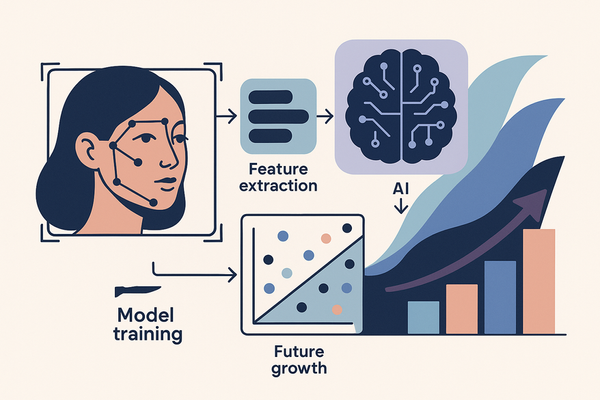
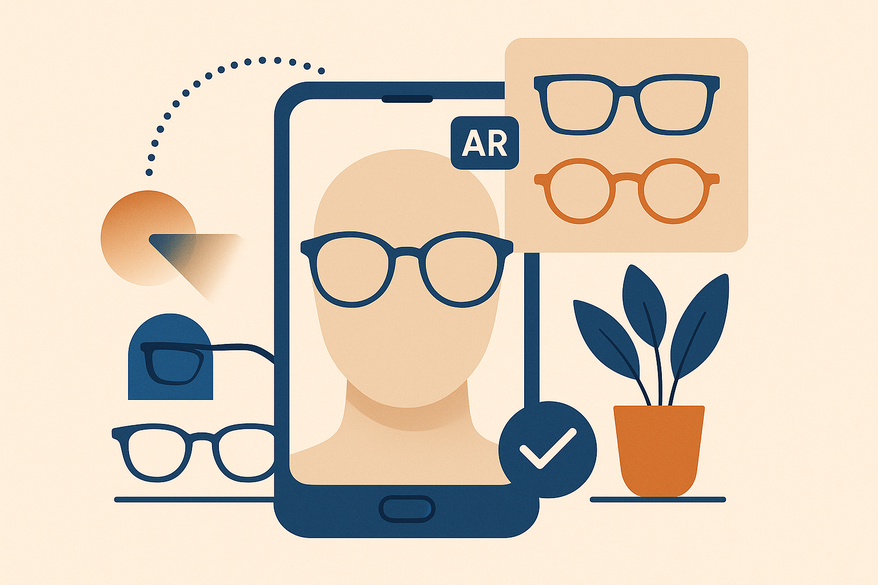
An effective virtual glasses try-on app combines AR, facial recognition, and 3D rendering. Here's a breakdown:
- Augmented Reality (AR)
- Overlays 3D frames onto a live camera feed.
- Adapts to head movements and lighting for realism.
- Facial Recognition & Landmark Detection
- Identifies facial landmarks for precise frame placement.
- Calculates pupillary distance (PD) to size frames correctly.
- 3D Frame Modeling & Scaling
- Uses detailed geometry for nose pads, temples, and rims.
- Scales models to individual facial dimensions.
- User Interface & Workflow
- Grant camera access or upload a photo.
- Map landmarks, browse styles, and tap “Try-On.”
- Swipe to switch frames; pinch to zoom; rotate head for profiles.
- Real-World Examples
- Fittingbox: Virtual Mirror with ultra-realistic AR.
- GlassesShop: Live video and photo upload options.
- SmartBuyGlasses: Over 5,000 styles in 3D.
Benefits and Advantages
- Accurate Previews & Fit Confidence
- See frames on your unique face shape and skin tone.
- Home-Based Convenience
- Try unlimited styles 24/7—no store trips needed.
- Reduced Return Rates
- Realistic sizing cuts post-delivery returns.
- Side-by-Side Comparisons
- Compare multiple frames on one screen.
User Experience and Key Features
- Accurate Fit: Facial mapping with PD estimation ensures frames align perfectly.
- Vast Style Libraries: Access eyewear across colors, shapes, materials, and brands.
- Real-Time Adjustments: Frames track head movements smoothly.
- Simplicity: One-tap browse, try-on, and filter by shape, color, size, brand.
- Advanced Features: AI suggestions based on facial anatomy and 360° spin views.
- Best-Practice Tips
- Use natural daylight for true colors.
- Choose a clear background to avoid distractions.
- User Testimonials: “Feels like looking in a mirror”—testers report high confidence.
Impact on the Eyewear Industry
- Bridging Online & In-Store
- Hybrid AR kiosks and apps for a unified experience.
- Industry Adoption
- Brands like MirrAR and Fittingbox offer AR SDKs.
- Future Innovations
- 3D bone-structure modeling and lens reflection simulation.
Conclusion
A virtual glasses try-on app revolutionizes shopping with AR, facial recognition, and 3D modeling—boosting confidence, reducing returns, and offering unmatched convenience. Experience the future of eyewear by trying on frames in your own home today.
For tips on matching frames to your facial contours, check out Choosing Glasses for Your Face Shape and Best Eyewear for Different Eye Shapes. For deeper analysis, explore Maxx Report.
FAQ
- How accurate are AR try-on apps? Results vary by app but most use advanced facial mapping and PD measurement for high accuracy.
- Do I need a special device? No—most work on standard smartphones and tablets with a front-facing camera.
- Can I share my try-on images? Yes, apps generally allow saving or sharing screenshots with friends or social media.
- Are returns really lower? Studies show up to a 30% reduction in returns due to better fit confidence.