AI Skin Analysis: How It Works and What It Can Detect
Discover how AI skin analysis detects wrinkles, acne, pores, pigmentation, and more for personalized skincare guidance.


Estimated reading time: 18 min
Key Takeaways
- AI skin analysis uses advanced algorithms to assess skin health from photos or scans, leveraging deep learning and computer vision techniques trained on diverse skin datasets.
- It detects common skin concerns including wrinkles, acne, pores, pigmentation, redness, texture, and hydration with quantitative scoring for detailed tracking.
- Accurate photo capture—considering lighting, camera quality, pose, and background—is important for reliable AI skin analysis results.
- AI provides personalized skincare recommendations and routine guidance but is not a substitute for medical diagnosis or professional dermatological evaluation.
- Privacy and data security are essential considerations when submitting facial images; reputable providers implement encryption, comply with data protection laws, and maintain transparent policies.
Table of Contents
- Section 1: What Is AI Skin Analysis and How Does It Work?
- Section 2: Skin Concerns AI Can Detect
- Section 3: Photo and Camera Requirements for Accurate Analysis
- Section 4: Accuracy, Limitations, and Diagnostic Value
- Section 5: Personalized Skincare Recommendations and Routine Guidance
- Section 6: Use Cases of AI Skin Analysis in Beauty and Dermatology
- Section 7: Privacy, Data Handling, and Security Considerations
- Conclusion
- FAQ
Section 1: What Is AI Skin Analysis and How Does It Work?
Defining AI Skin Analysis
AI skin analysis is a technology that employs artificial intelligence algorithms—primarily based on deep learning and computer vision—to evaluate the condition and characteristics of a person’s skin by analyzing images captured through smartphones, specialized imaging devices, or professional cameras. Unlike traditional skin assessments that rely on subjective human judgment, AI skin analysis aims to offer objective, reproducible, and scalable evaluations. This technology can detect subtle skin features that may be difficult to perceive visually and track changes over time, enabling users to better understand their skin health.
Underlying Technology and Process
The AI skin analysis process typically begins when a user submits a high-quality facial photo or a 3D scan. The submitted image is first preprocessed to adjust for lighting variations, alignment, and cropping, ensuring the face is centered and standardized for analysis. The AI system then applies deep convolutional neural networks (CNNs), which have been trained on large, annotated datasets containing many skin images, encompassing a variety of skin types, tones, ages, and conditions.
These models analyze multiple skin aspects such as texture, pigmentation, pore size, redness, hydration, and wrinkle depth. Facial segmentation algorithms isolate different regions of the face—forehead, cheeks, nose, chin—so that assessments can be region-specific. For example, pigmentation issues may be more prominent on the cheeks, while pore size might be a focus on the nose. This targeted approach allows for localized skin evaluations.
How AI Interprets Skin Features
- Pixel-level analysis: AI algorithms examine color variations, micro-textures, and surface irregularities at a detailed level, often beyond what can be perceived visually. This includes detecting subtle discolorations, fine wrinkles, or pores by analyzing pixel clusters and gradients.
- Pattern recognition: Using trained models, AI detects characteristic patterns of various skin concerns. For instance, it recognizes wrinkle formations by identifying linear depressions and their curvature, or acne lesions through characteristic shapes, redness, and swelling patterns.
- Quantitative scoring: AI assigns numerical scores or severity grades to skin features such as pore visibility, wrinkle depth, redness intensity, and hydration levels. These scores enable users to track skin changes over time, compare results across different sessions, and measure the impact of skincare routines.
Thanks to automated image processing and robust algorithms, AI skin analysis can provide consistent and scalable skin evaluations compared to traditional visual inspection or manual grading by dermatologists or aestheticians.
Section 2: Skin Concerns AI Can Detect
Wrinkles and Fine Lines
AI skin analysis can identify various types of wrinkles by detecting changes in skin contour and shadowing patterns. The system differentiates between fine lines—typically superficial and shallow—and deeper wrinkles that indicate more advanced skin aging. It may use 3D depth maps or shading gradients to estimate wrinkle depth, length, and density, providing a severity score. This scoring helps users track the progression of aging signs over time or evaluate the effectiveness of anti-aging treatments.
For example, the AI might analyze crow’s feet around the eyes, forehead lines, and nasolabial folds separately, offering insights into each area’s condition. Users can then focus on targeted interventions, such as incorporating retinoids or peptides in their skincare regimen.
Acne and Blemishes
AI identifies active acne lesions by recognizing redness, swelling, and texture irregularities typical of pimples, blackheads, and whiteheads. It can also detect post-inflammatory erythema and hyperpigmentation—marks left behind after acne heals. The system may classify acne severity, distinguishing mild comedonal acne from more severe cystic or inflammatory types.
Many platforms track breakout patterns by comparing images over time, helping users understand triggers or the impact of treatments like topical benzoyl peroxide, salicylic acid, or antibiotics. For instance, if the AI detects persistent inflammation on the chin area, it may suggest reviewing hormonal factors or consulting a dermatologist.
Pores and Skin Texture
AI measures pore size and density—key concerns in oily or combination skin types—using high-resolution image analysis to quantify pore visibility. It also assesses overall skin texture, identifying roughness, unevenness, and areas prone to flakiness or dullness. Texture analysis involves evaluating micro-relief patterns and smoothness indices.
Such insights help users determine whether exfoliation, hydration, or treatments like niacinamide or AHAs/BHAs might improve skin surface quality. Users with enlarged pores can also monitor the efficacy of oil-control products or professional procedures like laser therapy.
Pigmentation and Redness
AI detects hyperpigmentation spots, such as sun damage, melasma, freckles, or age spots by analyzing contrast differences in color and melanin concentration across the skin’s surface. It quantifies the size, density, and darkness of these spots, enabling monitoring and treatment evaluation.
In addition, AI identifies redness caused by conditions such as rosacea, irritation, or vascular issues by detecting increased blood flow and vascular patterns. The system can differentiate between transient redness (like flushing) and chronic erythema, providing tailored skincare advice.
Hydration Levels
Some advanced AI systems estimate skin hydration by evaluating skin reflectance, surface smoothness, and subtle optical properties visible in images. Hydrated skin tends to exhibit a certain level of luminosity and elasticity, which AI algorithms can quantify. By providing hydration scores, these systems help users optimize moisturizing routines and select appropriate emollients or humectants.
For example, a low hydration score might prompt recommendations for hyaluronic acid-based serums or occlusive creams, along with lifestyle tips like increased water intake.
Overall, these detection capabilities can help users identify skin concerns early and tailor treatments effectively, potentially improving skin health and appearance more efficiently than guesswork.
Section 3: Photo and Camera Requirements for Accurate Analysis
Lighting Conditions
Proper lighting is important to obtain accurate AI skin analysis results. Natural, diffuse lighting—such as indirect daylight on a cloudy day or near a north-facing window—prevents harsh shadows or overexposure that can skew AI interpretation. Avoid direct sunlight, which creates strong highlights and deep shadows, or dim environments that reduce image clarity and color fidelity.
Indoor lighting with balanced color temperature (around 5000K, mimicking daylight) and soft diffusion is ideal. Using ring lights or light boxes specifically designed for photography can standardize lighting conditions, improving consistency across multiple scans.
Camera Quality and Settings
High-resolution cameras are important for capturing the fine details necessary for detecting small features like pores, fine lines, or subtle pigmentation. Smartphones with at least 8-megapixel cameras are generally sufficient, but higher resolution (12MP or more) may improve analysis accuracy, especially for texture and hydration assessment.
Ensure the camera lens is clean to avoid blurriness or smudges. Use autofocus settings that lock on the face, and disable filters or beauty modes that artificially alter skin appearance. RAW image capture, if available, preserves maximum detail and color depth for analysis.
Pose and Facial Expression
Neutral, forward-facing poses with relaxed expressions allow the AI to capture true skin condition without distortions caused by smiles, frowns, or squints. Facial movements can stretch or compress skin, affecting wrinkle visibility and texture assessment.
Remove makeup, jewelry, glasses, or accessories that could interfere with image analysis. Makeup can mask pigmentation or texture issues, while glasses cast shadows or reflections. Hair should be pulled back to expose the entire face.
- Use a plain, uncluttered background to minimize distractions and prevent AI confusion.
- Maintain a consistent distance from the camera (typically around 30-50 cm) for baseline comparisons over time. Marking your spot or using a tripod can help.
- Take multiple photos under the same conditions to ensure reliability.
Adhering to these guidelines helps ensure the AI generates reliable and repeatable skin assessments, enabling accurate tracking of skin health and treatment outcomes.
Section 4: Accuracy, Limitations, and Diagnostic Value
Accuracy Strengths
AI skin analysis can provide objective, reproducible detection of visible skin traits. Unlike human evaluators who may be influenced by subjective bias, fatigue, or inconsistent lighting, AI algorithms apply standardized criteria across images. This consistency allows for quantitative tracking of skin features—such as wrinkle depth changes or pigmentation spot variations over time.
Moreover, AI systems can analyze subtle changes that may be difficult to measure manually. This early detection capability can enable proactive skincare adjustments and enhance treatment personalization.
Current Limitations
Despite advances, AI skin analysis has several inherent limitations:
- Medical Diagnosis: AI cannot fully interpret underlying medical conditions or diagnose skin diseases without clinical context such as patient history, symptoms, or biopsy results.
- Photo Quality Dependence: Poor photo quality, inconsistent lighting, or unusual facial expressions can lead to misclassification or inaccurate assessments.
- Skin Tone Diversity: AI models trained on insufficiently diverse datasets may perform less effectively on darker skin tones or uncommon skin types, leading to potential bias or errors.
- Environmental and Temporary Factors: Factors like temporary redness from exercise, allergies, or recent cosmetic procedures can confound AI analysis.
- Surface Analysis Only: AI primarily analyzes surface features and cannot assess subcutaneous or internal skin health.
Not a Medical Diagnosis Tool
AI skin analysis tools are designed to provide assessments for cosmetic and wellness purposes only. They do not replace dermatologists’ expertise or comprehensive clinical evaluations. Users with serious skin concerns—such as suspicious moles, severe acne, persistent rashes, or signs of infection—should seek professional medical advice promptly.
Understanding these boundaries helps users set realistic expectations and benefit from AI insights as a complementary guide rather than a definitive diagnosis.
Section 5: Personalized Skincare Recommendations and Routine Guidance
How AI Translates Analysis Into Advice
After analyzing skin features, AI algorithms generate personalized recommendations targeting detected concerns. These recommendations are based on skincare knowledge bases, clinical studies, and product ingredient databases. For example, if the AI detects prominent pigmentation spots, it may suggest incorporating brightening agents such as vitamin C, niacinamide, or azelaic acid, alongside diligent sunscreen use to prevent further sun damage.
The AI can also tailor advice based on skin type classification—dry, oily, combination, sensitive—and environmental factors like climate or pollution exposure.
Types of Recommendations
- Product suggestions: AI recommends specific skincare products such as moisturizers with ceramides for barrier repair, cleansers with gentle surfactants for sensitive skin, exfoliants containing AHAs/BHAs to improve texture, or anti-aging creams with retinoids and peptides tailored to the user’s unique skin profile.
- Routine adaptations: The system advises on the frequency and order of skincare steps. For example, it may suggest reducing exfoliation frequency if the skin shows signs of irritation or increasing hydration steps if the skin is dry and flaky.
- Lifestyle tips: AI provides guidance on hydration, diet (e.g., antioxidants intake), sun protection (e.g., SPF application timing), and sleep habits that impact skin health.
Benefits of Personalized Routines
Customized skincare plans can help users avoid trial-and-error approaches, reduce the risk of skin irritation, and enhance treatment effectiveness. For instance, an AI-generated routine might recommend switching from a harsh foaming cleanser to a gentle cream cleanser for someone with dry, sensitive skin, improving barrier function and reducing redness.
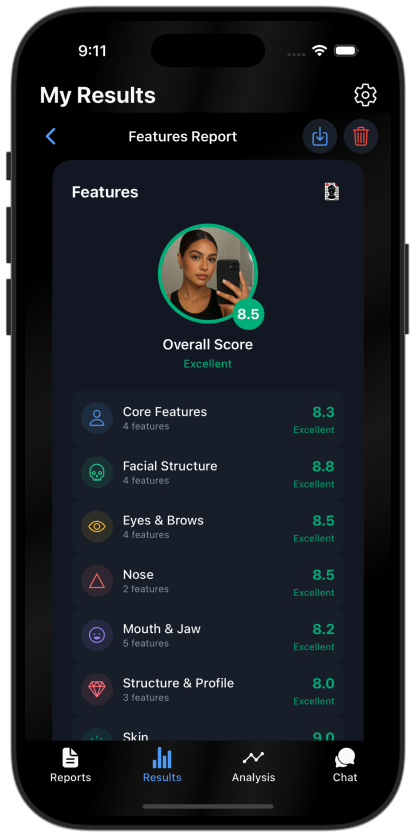
Apps like Maxx Report provide transformation plans that combine AI skin analysis with facial feature ratings—such as symmetry, bone structure, and proportions—to optimize overall appearance improvements. These data-driven insights help users achieve a holistic glow-up, addressing both skin health and aesthetic harmony. For a deeper dive into data-driven look transformations, see our post on AI Glow Up Tips That Work.
Section 6: Use Cases of AI Skin Analysis in Beauty and Dermatology
Beauty Apps and Personal Use
Many popular mobile apps integrate AI skin analysis to offer users instant feedback and personalized skincare guidance. These apps democratize access to advanced skin diagnostics that were previously available only through professional consultations, making skincare more accessible and data-driven.
Users can perform regular self-assessments at home, receive product recommendations, and monitor progress over weeks or months. Some apps also incorporate gamification elements or social sharing features to motivate consistent skincare habits.
In-Store Kiosks and Devices
Retailers and beauty brands deploy AI-powered skin scanners at physical stores to help customers select suitable products based on real-time skin assessments. Customers can receive instant skin reports and customized product recommendations, enhancing buying confidence and satisfaction.
These kiosks often provide multi-angle facial imaging and use controlled lighting to maximize accuracy. Integration with loyalty programs or personalized offers further enriches the shopping experience.
Dermatology and Telemedicine
Clinicians use AI tools as adjuncts for patient monitoring, early detection of skin issues, and treatment evaluation. Teledermatology platforms incorporate AI to pre-screen images submitted remotely, improving efficiency and triage accuracy by flagging suspicious lesions or severe cases needing urgent attention.
AI can assist dermatologists in quantifying lesion size changes, tracking acne severity, or monitoring treatment responses objectively, supplementing their clinical judgment.
Research and Product Development
AI skin analysis can accelerate cosmetic research by providing quantifiable data on skin responses to new ingredients or formulations under development. Researchers can evaluate efficacy and safety through standardized skin metrics, reducing reliance on subjective assessments.
Moreover, AI models facilitate personalized product development tailored to specific skin profiles or demographics, enabling precision skincare innovation.
These diverse applications highlight AI’s growing role in the skincare landscape, spanning consumer, clinical, and research domains.
Section 7: Privacy, Data Handling, and Security Considerations
Handling Facial and Biometric Data
AI skin analysis requires processing sensitive facial images, which qualify as biometric data with significant privacy implications. Responsible AI skin analysis apps implement encryption protocols—both during data transmission (using TLS/SSL) and at rest—to protect user information from unauthorized access.
Data storage often involves secure cloud servers with multi-factor authentication, regular security audits, and vulnerability assessments. Some services offer options for local analysis on-device to minimize data exposure.
User Consent and Transparency
Clear user consent is essential before collecting facial images. Reputable providers provide transparent privacy policies detailing how data is collected, processed, stored, and whether it is shared with third parties. They also inform users about data retention periods and rights to access, modify, or delete their data.
Users should review these policies carefully and opt for services that respect privacy and provide control over personal information.
Compliance with Regulations
Compliance with data protection laws such as the European Union’s General Data Protection Regulation (GDPR), California Consumer Privacy Act (CCPA), and other regional legislation is mandatory for apps operating in affected jurisdictions. These regulations impose strict requirements on data minimization, user consent, breach notification, and rights management.
By choosing reputable AI skin analysis providers like Maxx Report, users can safeguard their data while enjoying personalized beauty insights, assured that their privacy is respected and protected.
Conclusion
AI skin analysis is transforming how individuals understand and care for their skin by providing fast, objective, and personalized assessments of common skin concerns. Leveraging advanced deep learning and computer vision, it detects wrinkles, acne, pigmentation, pores, redness, texture, and hydration with quantitative precision, empowering users to make informed skincare choices.
While AI skin analysis is not a substitute for professional medical diagnosis, its ability to monitor skin changes over time, personalize recommendations, and enhance treatment efficacy makes it a valuable tool in daily skincare and wellness. Ensuring proper photo quality, understanding AI’s limitations, and prioritizing privacy are key to maximizing benefits.
Whether integrated into mobile apps, in-store scanners, or teledermatology platforms, AI skin analysis is expanding access to advanced diagnostics and personalized guidance. For a comprehensive AI-powered facial assessment—including skin, facial features, and transformation plans—consider trying Maxx Report.
FAQ
Q: How accurate is AI skin analysis?
A: AI skin analysis can be accurate for detecting visible skin features like wrinkles, acne, pores, and pigmentation when provided with high-quality images captured under proper lighting and pose conditions. Accuracy depends on camera quality, lighting, and diversity of training data. Well-trained AI models minimize human subjectivity and provide consistent assessments but should be used as an objective supplement—not a replacement—for professional skin evaluations.
Q: Is AI skin analysis safe or a medical diagnosis?
A: AI skin analysis is safe, non-invasive, and designed for cosmetic and wellness guidance only. It does not provide medical diagnoses and should not replace consultations with qualified dermatologists. For medical concerns or suspected skin diseases, seeking professional advice is essential.
Q: What skin concerns can AI skin analysis detect?
A: AI skin analysis can detect a variety of skin concerns, including wrinkles and fine lines, active acne and blemishes, pore size and skin texture irregularities, pigmentation spots such as melasma or sun damage, redness from rosacea or irritation, and hydration levels. Detection is accompanied by quantitative severity scores for tracking.
Q: How do I take the best photo for AI skin analysis?
A: To capture the best photo, use natural, diffuse lighting with no harsh shadows or overexposure. Employ a high-resolution camera (8MP or higher), ensure the lens is clean, and disable beauty filters. Adopt a neutral facial expression, face the camera directly, remove makeup and accessories, use a plain background, and maintain a consistent distance (about 30-50 cm). Taking multiple photos under similar conditions improves reliability.
Q: Which AI skin analysis app is the best?
A: The best app depends on your specific needs, but Maxx Report offers comprehensive AI-powered facial and skin analysis with personalized transformation plans. It combines skin ratings with facial feature assessments and data-driven recommendations to provide a holistic glow-up experience.
Q: Can AI skin analysis recommend the right skincare products for me?
A: Yes, many AI skin analysis tools provide personalized skincare product recommendations and routine guidance based on detected skin concerns and skin type. They help users select products suited to their unique skin profile, optimizing skincare effectiveness and reducing trial-and-error.