
AI Style Analysis: Definition, Methods & Practical Use Cases
Explore AI style analysis—how it works, key methods, tools, and practical uses for content creators and SEO professionals.


Estimated reading time: 17 min
Key Takeaways
- AI style analysis extracts and evaluates writing style attributes such as tone, clarity, and complexity with granular precision.
- It differs from topic and sentiment analysis by focusing on how content is communicated rather than what or how it feels, enabling nuanced audience targeting.
- Style clustering and taxonomy methods group communication patterns based on stylistic features, helping uncover latent style segments and brand voice profiles.
- AI-powered content-gap and competitor analysis can identify missing themes and style opportunities for SEO, providing data-driven content strategy insights.
- Practical applications include content creation, audience targeting, brand voice consistency, and evaluating AI-generated writing styles for authenticity and engagement.
Table of Contents
- Section 1: Understanding AI Style Analysis
- Section 2: Key Writing Style Attributes Analyzed by AI
- Section 3: Style Clustering and Taxonomy Techniques
- Section 4: Competitor and Content-Gap Analysis Using AI
- Section 5: AI-Powered Text Analysis Workflows and Tools
- Section 6: Evaluating AI Models for Writing Style and Communication
- Section 7: Practical Use Cases for AI Style Analysis
- Conclusion
- FAQ
Section 1: Understanding AI Style Analysis
What is AI Style Analysis?
AI style analysis is the process where artificial intelligence algorithms assess the distinctive features of a piece of writing or communication to characterize its style. Unlike traditional content analysis that focuses on topics or sentiment, style analysis evaluates how something is said—its tone, formality, clarity, and complexity. This means that instead of just parsing keywords or overall sentiment, AI style analysis looks into linguistic patterns that define the voice behind the message. For example, it can identify if a passage uses a passive or active voice predominantly, whether it employs technical jargon, or how emotionally charged the language is.
How It Differs from Topic and Sentiment Analysis
While topic analysis identifies what is being discussed (e.g., fashion, technology), and sentiment analysis determines the emotional tone (positive, negative, neutral), style analysis examines the manner of communication. For example, it can detect if a text is formal, conversational, or persuasive, which is useful for tailoring content to specific audiences. To illustrate, two articles about the same subject—say, electric vehicles—may differ widely in style: one could be a formal research report with dense terminology, while the other is an engaging blog post with a casual tone. AI style analysis helps differentiate these nuances, which topic and sentiment analysis alone would not capture.
Importance of AI in Style Analysis
Manual style analysis is subjective and time-consuming, often requiring expert linguists to annotate texts for tone, formality, and complexity. AI enables scalable, consistent, and detailed analysis by leveraging natural language processing (NLP) and large language models (LLMs) trained on large corpora. This automation helps marketers, writers, and SEO professionals optimize their content’s impact and alignment with audience expectations by providing quantifiable style metrics. For example, AI can analyze thousands of customer reviews to detect brand voice consistency or help authors adjust their manuscript to better fit a target demographic. Moreover, AI models can be fine-tuned continuously to adapt to evolving language trends and emerging genres, helping style analysis remain relevant over time.
Section 2: Key Writing Style Attributes Analyzed by AI
Tone and Formality
AI models evaluate tone by analyzing word choice, sentence structure, punctuation, and the presence of emotive language. They classify text into tones such as professional, casual, enthusiastic, authoritative, sarcastic, or empathetic. For example, the presence of exclamation points and informal contractions often indicates an enthusiastic or casual tone, whereas complex sentence structures and formal vocabulary indicate a professional tone. Formality is assessed by measuring the use of jargon, contractions, idioms, and colloquialisms, helping brands maintain consistent voice across channels. For instance, a legal document requires a high formality level with precise language, while social media posts may benefit from a more relaxed style. AI can detect these differences and provide actionable feedback, such as suggesting simpler synonyms or rephrasing to match a desired tone.
Sentiment and Emotion
Though style analysis is distinct from sentiment, many AI systems incorporate sentiment as one attribute because emotional cues influence style perception. AI can detect subtle emotional undertones—joy, anger, sadness, surprise—that shape the overall style. For example, a persuasive sales pitch often correlates with positive emotions like excitement and confidence, using words such as "amazing" or "guaranteed." Conversely, a critical editorial may display negative sentiment through skeptical or cautionary language. By integrating sentiment with style attributes, AI can deliver richer insights, allowing content creators to craft messages that resonate emotionally while adhering to the intended style.
Clarity and Readability
AI evaluates clarity by analyzing sentence length, complexity, use of passive voice, and jargon density. Common readability metrics include Flesch-Kincaid Grade Level, Gunning Fog Index, and SMOG Index, which estimate the education level required to understand the text. For example, a blog targeting general audiences might aim for a Flesch-Kincaid grade level of 6-8 to ensure accessibility, while academic papers may exhibit levels above 12. Additionally, AI can identify ambiguous phrases, redundant expressions, or convoluted sentence constructions that reduce clarity. This helps writers simplify their content and avoid alienating readers. Clear, concise writing is vital for engaging broad audiences, while complex styles suit academic or technical content where precision and detail are important.
Complexity and Syntax Patterns
Syntax analysis examines the use of grammatical structures such as passive voice, nominalizations (turning verbs into nouns), subordination, and coordination. AI identifies patterns distinguishing narrative (storytelling), descriptive, or expository styles. For example, narrative styles often contain more personal pronouns, past tense verbs, and varied sentence lengths, while expository texts favor logical connectors and passive constructions. Lexical diversity—measured by the variety of unique words relative to total words—also reflects complexity. A high lexical diversity often indicates a sophisticated style. These insights help content creators adjust complexity to match audience literacy and preferences. For instance, simplifying syntax and increasing active voice usage can make instructions or manuals more user-friendly.
Section 3: Style Clustering and Taxonomy Techniques
What is Style Clustering?
Style clustering groups texts or authors based on similarities in stylistic features without predefined labels. Using unsupervised learning algorithms like k-means, hierarchical clustering, or DBSCAN, AI discovers natural clusters representing different communication styles within large datasets. For example, in analyzing thousands of customer support emails, style clustering can reveal distinct groups such as empathetic responses, formal replies, or terse acknowledgments. This helps organizations understand the diversity of communication patterns and identify best practices or deviations from standard style guides.
Style Taxonomy Models
Taxonomy models classify writing styles into predefined categories (e.g., formal, informal, persuasive, narrative, technical). These models rely on labeled training data where samples are annotated with style labels by experts or crowdworkers. Supervised learning algorithms such as support vector machines, random forests, or neural networks then learn to assign style labels at scale. Taxonomies can be hierarchical—first distinguishing broad categories like formal vs. informal, then subdividing into more nuanced styles such as academic, journalistic, or conversational. For example, a taxonomy might classify marketing emails into promotional, transactional, or relationship-building styles, each with distinct linguistic traits.
Applications of Clustering and Taxonomy
- Identifying brand voice consistency across content: AI can analyze all company communications to detect deviations or inconsistencies in tone, formality, or vocabulary, enabling unified brand messaging.
- Segmenting audiences by preferred communication styles: By mapping customer feedback or social media posts into style clusters, marketers can tailor campaigns that resonate with different audience segments’ communication preferences.
- Personalizing messaging dynamically based on detected style: AI-driven platforms can adapt chatbot responses or newsletter content in real-time to align with the recipient’s preferred style, improving engagement and satisfaction.
Section 4: Competitor and Content-Gap Analysis Using AI
Using AI to Compare Top-Ranking Pages
AI style analysis tools can scan competitor content to identify stylistic choices that correlate with high search engine rankings. This includes examining tone consistency, keyword density, content structure (headings, paragraphs), and readability scores. For example, an AI tool might find that top-ranking articles in the finance niche use a formal tone, maintain an average sentence length of 18 words, and incorporate specific jargon at a consistent frequency. By benchmarking against such data, content creators can adapt their style to meet or exceed industry standards, potentially increasing the likelihood of ranking higher. Additionally, AI can track changes over time, revealing emerging style trends among competitors.
Identifying Content Gaps
Beyond style, AI can detect missing themes, keywords, or stylistic elements competitors haven’t covered adequately. Content gap analysis involves semantic comparison of your content with competitors’, leveraging topic modeling and keyword extraction. For instance, if competitor articles on "sustainable fashion" consistently include sections on "eco-friendly materials" and "ethical labor practices," but your content omits these, AI may flag these gaps. Furthermore, AI can suggest stylistic enhancements—such as adopting a more authoritative tone or introducing engaging anecdotes—to fill these gaps effectively and improve SEO. This strategic insight can enable creators to produce more comprehensive, targeted content that satisfies user intent.
Maxx Report and Content Enhancement
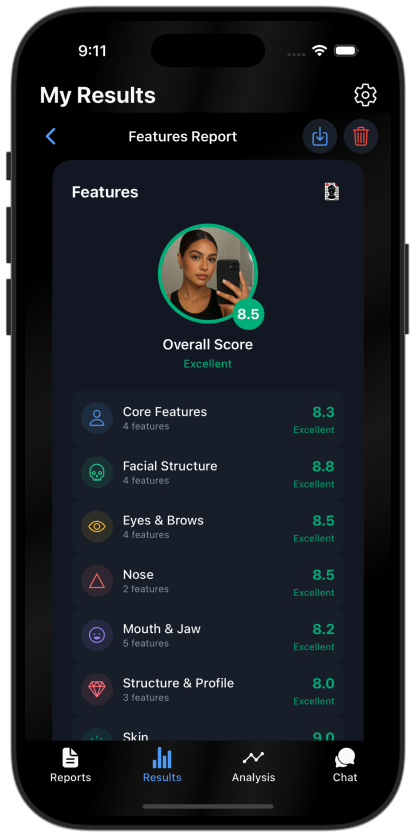
Apps like Maxx Report showcase how AI can analyze visual and textual style elements to provide personalized recommendations. While Maxx Report primarily focuses on facial aesthetics and visual style analysis, the underlying AI methodology parallels textual style analysis by evaluating feature patterns with precision and offering actionable feedback. Content creators seeking to refine their digital presence can draw inspiration from such tools to integrate multimodal style analysis—combining visual, linguistic, and behavioral data—to craft more compelling personal or brand narratives. For example, a digital influencer could use Maxx Report’s insights alongside textual style analytics to help ensure their visual and verbal communication styles are aligned for maximum impact.
Section 5: AI-Powered Text Analysis Workflows and Tools
Typical Workflow for AI Style Analysis
- Data Collection: Gathering diverse text samples from blogs, social media, corporate documents, or transcripts. For robust analysis, datasets should represent various genres and demographics to capture style variability.
- Preprocessing: Tokenization (breaking text into words/phrases), lemmatization (normalizing words to base forms), and noise removal (eliminating irrelevant characters, HTML tags). This step ensures cleaner input for downstream analysis.
- Feature Extraction: Calculating stylistic metrics such as average sentence length, punctuation usage frequency, sentiment scores, lexical diversity, syntactic complexity, and presence of rhetorical devices like metaphors or idioms.
- Modeling: Applying machine learning or deep learning models trained on labeled or unlabeled data to classify or cluster writing styles. Advanced models may incorporate transformer architectures (e.g., BERT, GPT) to capture contextual nuances.
- Interpretation: Generating human-readable reports including style labels, keyword relevance, readability scores, and actionable recommendations to guide content refinement or strategy development.
Popular AI Tools for Style Analysis
- OpenAI’s GPT models: Used for style detection, rewriting, and generation tasks, leveraging deep contextual understanding to mimic or alter writing style.
- IBM Watson Natural Language Understanding: Provides APIs for tone, emotion, and sentiment detection, useful for multi-attribute style profiling.
- StyleWriter: Specialized software focused on readability and style improvement, offering real-time feedback and suggestions.
- Custom NLP pipelines: Built with frameworks like spaCy or Hugging Face Transformers, enabling tailored feature extraction and model training suited to specific domains or languages.
Example: Using Maxx Report
While Maxx Report primarily focuses on visual looksmaxxing, its AI-driven assessment methodology mirrors textual style analysis by evaluating facial features with precision, much like how AI evaluates writing style attributes for clarity and impact. For example, Maxx Report analyzes proportions, symmetry, and texture to score facial aesthetics and recommends personalized grooming or styling tips. Similarly, AI style analysis evaluates linguistic elements and suggests revisions to enhance tone, readability, or engagement. This analogy underscores the broader potential of AI in personal style transformation—whether visual or textual—by leveraging data-driven insights and tailored recommendations.
Section 6: Evaluating AI Models for Writing Style and Communication
Metrics for Style Evaluation
Evaluating AI writing involves multiple quantitative and qualitative metrics, including:
- Style Consistency: Measures how closely AI-generated text adheres to a target style based on linguistic features such as tone, formality, and syntax patterns. For example, cosine similarity on style embeddings or classification accuracy against labeled style categories can quantify consistency.
- Fluency: Assesses naturalness, grammatical correctness, and coherence using language model perplexity scores or human ratings. Fluency ensures the text reads smoothly without awkward phrasing or errors.
- Engagement: Evaluates how well the style captures reader interest, often measured through user feedback, click-through rates, or dwell time in digital contexts. AI systems may also analyze rhetorical devices and emotional appeal contributing to engagement.
Human-in-the-Loop Evaluation
Despite advances, human reviewers play a key role in assessing nuance and appropriateness, especially for context-dependent styles or culturally sensitive materials. Hybrid evaluations combine automated metrics with expert judgment, helping ensure AI models produce style outputs aligned with brand or audience expectations. For instance, human annotators may rate samples for subtle attributes like sarcasm detection or empathy, which remain challenging for AI. Continuous feedback from users and editors helps refine models, reduce biases, and improve stylistic authenticity.
Continuous Model Training
Models improve by learning from feedback loops, incorporating new style data, and adjusting to evolving communication trends—important for staying relevant in SEO and content marketing. Techniques include fine-tuning on domain-specific corpora, active learning where models query uncertain samples for annotation, and reinforcement learning with human feedback. For example, a news organization might retrain models periodically to capture shifting journalistic tones or emerging slang. This adaptability helps AI style analysis remain effective across languages, platforms, and audience segments.
Section 7: Practical Use Cases for AI Style Analysis
Content Creation and Optimization
Writers use AI style analysis to tailor articles, blogs, and social media posts to resonate with specific demographics, improving readability and engagement. For example, adapting tone for younger audiences by making language more casual, incorporating emojis, or using shorter sentences. In contrast, B2B content might require a formal tone with industry jargon to establish credibility. AI tools can provide real-time suggestions, such as replacing complex words with simpler alternatives or adjusting sentence length to improve flow. Moreover, authors can benchmark their style against successful competitors or best practices, facilitating data-driven revisions that enhance clarity and appeal.
SEO and Audience Targeting
SEO specialists leverage style insights to align content with search intent and user expectations, increasing dwell time and reducing bounce rates. AI helps identify style gaps where competitors excel, such as a more engaging narrative or clearer calls to action. For instance, if top-ranking pages in a niche use an authoritative tone combined with concise bullet points, content creators can emulate this style to improve rankings. Additionally, AI-driven keyword insertion can be balanced with style preservation, helping ensure natural-sounding text that satisfies algorithms and readers alike. This nuanced approach helps prevent keyword stuffing and promotes genuine user engagement.
Brand Voice Consistency
Businesses maintain a uniform voice across channels by using AI tools that flag deviations in tone or formality, helping ensure every piece of communication strengthens the brand identity. For example, a global company might apply AI style analysis to marketing emails, social media posts, and internal documents to detect off-brand language or inconsistent formality levels. Automated alerts enable content teams to correct issues before publication. Over time, organizations can build comprehensive style guides informed by AI analytics, promoting cohesion and recognizability. This consistency fosters trust and deepens audience relationships.
AI Content Generation and Evaluation
Marketers deploying AI writing assistants can use style analysis to prompt models effectively and evaluate outputs for style adherence, improving quality and authenticity. For example, specifying desired style attributes in prompts—such as "write a friendly but professional email"—guides model outputs. Post-generation, style analysis tools assess fluency, tone, and engagement metrics, flagging awkward phrasing or off-tone passages. This iterative process can reduce manual editing time and help ensure AI-generated content aligns with organizational standards. Furthermore, style evaluation can help detect AI hallucinations or incoherence, safeguarding brand reputation.
Conclusion
AI style analysis stands at the intersection of linguistics and machine learning, offering tools to understand and optimize how content is communicated. By focusing on tone, clarity, and complexity rather than just topics or sentiment, it enables creators and marketers to connect more meaningfully with their audiences. The technology also supports competitive insights and continuous improvement of AI-generated content. For those interested in the broader potential of AI in personal style and transformation, exploring apps like Maxx Report can provide inspiration on how AI personalizes recommendations beyond text, applying similar principles to visual aesthetics. As AI continues evolving, the integration of multimodal style analysis—combining textual, visual, and behavioral data—may offer even richer understanding and personalization of communication in diverse digital landscapes.
FAQ
Q: What is AI style analysis?
A: AI style analysis is the use of artificial intelligence to evaluate the distinctive features of writing or communication style, such as tone, clarity, and formality, to understand how content is presented rather than just what it says. It involves extracting linguistic patterns and metrics that characterize the voice and manner of expression.
Q: How does AI analyze writing style?
A: AI analyzes writing style by extracting linguistic features like sentence length, word choice, syntax patterns, sentiment, and tone using NLP techniques and machine learning models to classify or cluster styles. Advanced models leverage contextual embeddings and deep learning architectures to capture subtle stylistic nuances.
Q: What tools can analyze text style with AI?
A: Popular AI tools for style analysis include OpenAI’s GPT models, IBM Watson Natural Language Understanding, StyleWriter, and custom pipelines using spaCy or Hugging Face Transformers. These tools provide APIs or software interfaces for tone detection, readability scoring, and style classification.
Q: How do you use AI for content gap analysis?
A: AI compares your content with competitors to identify missing topics, keywords, or stylistic elements that could improve SEO and audience engagement by uncovering content gaps. This involves semantic analysis, keyword extraction, and style benchmarking to highlight opportunities for more comprehensive and targeted content.
Q: What is the difference between style analysis and sentiment analysis?
A: Style analysis focuses on how content is communicated—tone, formality, clarity—while sentiment analysis determines the emotional attitude (positive, negative, neutral) expressed in the text. Style analysis covers broader linguistic features beyond emotional polarity.
Q: How do you evaluate an AI model’s writing style?
A: Evaluation involves measuring style consistency, fluency, and engagement, often combined with human review to help ensure the AI-generated text matches the desired style and audience expectations. Metrics like classification accuracy, perplexity, and user engagement data are commonly used.