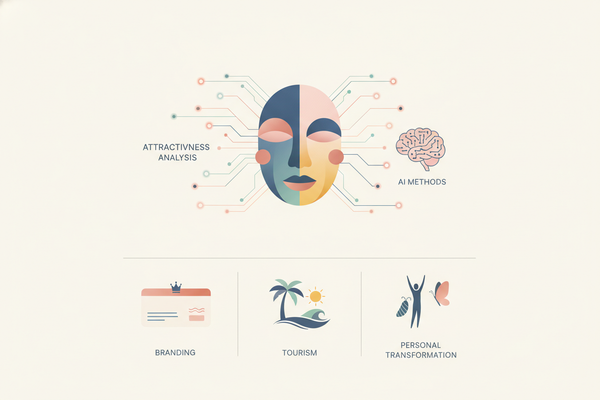
Am I Good Looking? Meaning, How AI Scores Your Face
Wondering 'Am I good looking?' Discover how AI scores your face using symmetry, jawline, and more to rate attractiveness and tips to enhance your look.

Estimated reading time: 15 min
Key Takeaways
- AI attractiveness tools evaluate facial symmetry, proportions, jawline, and skin quality to rate your looks using computational algorithms based on facial metrics.
- Photo quality and angle significantly affect AI scoring accuracy for "Am I good looking" queries; consistent, well-lit, and front-facing photos generally yield more reliable results.
- Scores typically range from 1 to 100, with higher scores indicating closer alignment with certain facial ratios and features often associated with attractiveness in some scientific and cultural contexts.
- Simple changes like grooming, lighting, posture, and expression can improve perceived attractiveness without altering bone structure.
- Recognizing biases and limitations helps interpret AI results fairly across ethnicities, genders, and selfie conditions, avoiding overreliance on numerical scores.
Table of Contents
- Section 1: Understanding AI Attractiveness Scoring
- Section 2: How Your Face Is Analyzed by AI
- Section 3: Preparing Your Photo for Accurate Results
- Section 4: What Your Attractiveness Score Means
- Section 5: Tips to Improve Your Attractiveness Score
- Section 6: Biases and Limitations of AI Looks Tests
- Section 7: Privacy and Data Handling in AI Look Rating Apps
- Conclusion
- FAQ
Section 1: Understanding AI Attractiveness Scoring
What Does "Am I Good Looking" Mean in AI Terms?
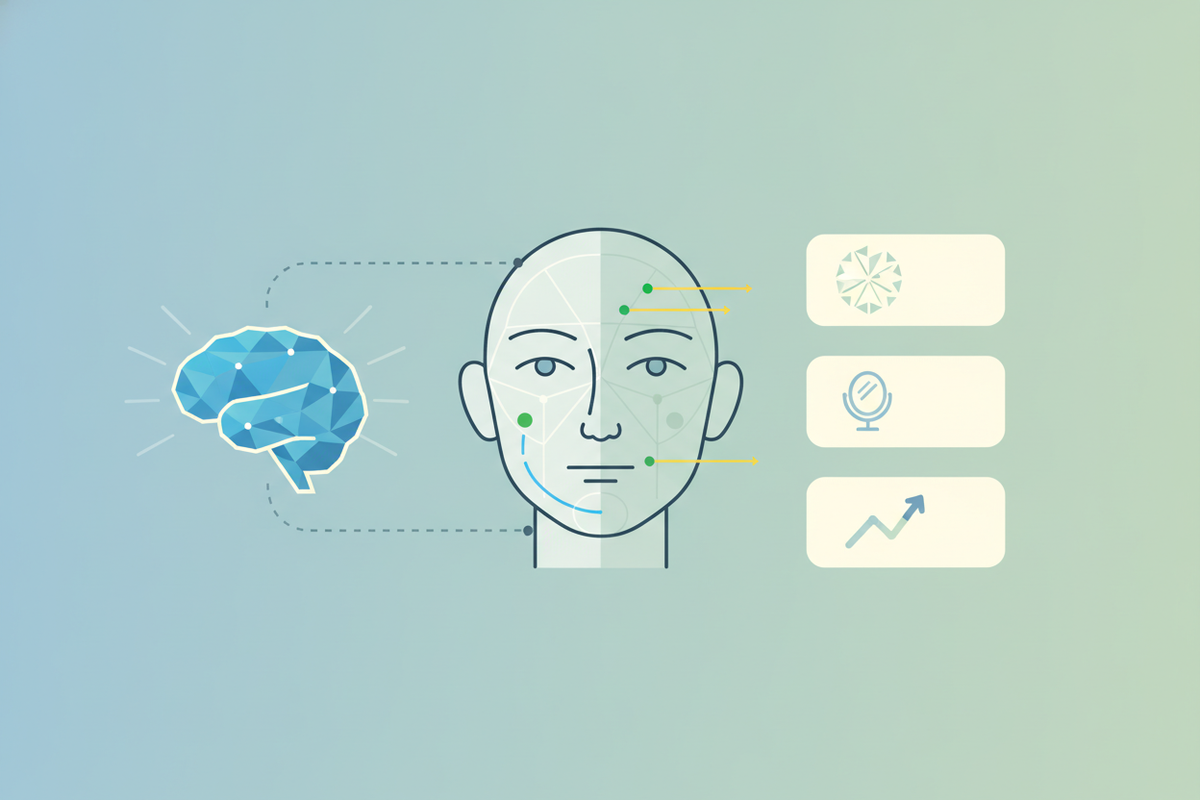
When you ask "Am I good looking?" to an AI app like Maxx Report, you are seeking an analysis of your facial features through computational methods. AI relies on machine learning models trained on datasets containing diverse faces and attractiveness ratings, enabling it to recognize patterns linked to perceived beauty. These algorithms analyze measurable facial attributes such as symmetry, proportions, jawline definition, and skin texture. The goal is to translate subjective human judgments into quantifiable metrics, offering a standardized score that reflects how closely your face aligns with certain scientifically and culturally established beauty parameters.
Why Use AI for Looks Evaluation?
Traditional beauty assessments have long been criticized for their subjectivity, cultural biases, and reliance on personal opinions. AI-powered tools like Maxx Report introduce a level of consistency by evaluating faces based on mathematical and scientific principles. This data-driven approach delivers instant feedback and can provide users with actionable insights. For instance, instead of vague compliments or criticisms, AI can highlight specific areas for enhancement—such as improving jawline sharpness or balancing facial thirds—allowing users to explore their appearance with measurable goals. Furthermore, AI tools can democratize beauty evaluation by providing access to analyses previously limited to experts.
How AI Attractiveness Tools Fit Into Modern Beauty Culture
In today's digital age, self-improvement and self-expression increasingly integrate technology. AI attractiveness scoring reflects this trend by blending scientific analysis with personal empowerment. These tools encourage users to explore their appearance objectively and gain confidence through understanding rather than guesswork. By coupling scoring with personalized recommendations, AI apps like Maxx Report can help demystify beauty standards, challenge unrealistic ideals, and promote healthier self-perception. This technological evolution also opens conversations about the diversity of beauty and the role of data in shaping modern aesthetics, fostering inclusivity and self-awareness.
Section 2: How Your Face Is Analyzed by AI
Facial Symmetry and Its Importance
Facial symmetry is often considered an indicator of attractiveness across cultures and evolutionary biology studies. AI algorithms employ facial landmark detection to map key points on the left and right sides of your face—such as the corners of your eyes, nostrils, and mouth. It then calculates the degree of mirroring between these halves. For example, a perfectly symmetrical face would have corresponding features aligned closely. Some scientific research suggests that higher symmetry signals genetic fitness and developmental stability, which humans may subconsciously associate with health and fertility. Maxx Report quantifies this symmetry score, integrating it into the overall attractiveness rating.
The Golden Ratio and Facial Proportion
The Golden Ratio (~1.618) has fascinated artists, mathematicians, and scientists for centuries due to its aesthetic appeal. AI tools measure multiple facial distances—such as the length of the nose relative to the width of the mouth, or the distance between the eyes compared to the width of the face—and compare these ratios to the Golden Ratio. For instance, the ideal distance from the eyes to the mouth divided by the length of the nose should approximate 1.618. Faces that closely align with these proportions tend to be perceived as more harmonious and attractive in some contexts. Maxx Report's algorithm aggregates these proportional metrics to provide insights into your facial balance.
Key Features Analyzed: Jawline, Facial Thirds, and Canthal Tilt
- Jawline: The app evaluates the sharpness, angle, and definition of your jawline. A well-defined jawline is often associated with attractiveness and may signal hormonal balance—masculine traits in men and femininity in women. AI measures the mandibular angle and jaw width relative to the face.
- Facial Thirds: Vertically, the face is divided into three parts: from hairline to eyebrows (upper third), eyebrows to the base of the nose (middle third), and nose base to chin (lower third). Balanced facial thirds indicate proportional harmony. The AI calculates distances between these landmarks and compares equality across the thirds.
- Canthal Tilt: This refers to the angle of the eyes' outer corners compared to the inner corners. A slight upward tilt—typically 9 to 12 degrees—is often preferred as it conveys youthfulness and friendliness. AI algorithms detect eye landmarks to calculate the canthal tilt.
Additional Skin and Texture Analysis
Beyond skeletal structure, Maxx Report also evaluates skin quality using image processing techniques. It detects uneven skin tone, presence of blemishes, wrinkles, and texture irregularities by analyzing color histograms and surface smoothness. For example, areas with high contrast or sharp edges may indicate acne scars or fine lines. These factors contribute to overall facial appeal and are weighted accordingly in the final score. The app may also track improvements over time if users retake analyses periodically.
Section 3: Preparing Your Photo for Accurate Results
Photo Requirements for Best AI Scoring
The accuracy of AI attractiveness assessments heavily depends on the quality and composition of the photo submitted. To obtain the most reliable "Am I good looking" score on Maxx Report, consider the following detailed guidelines:
- Front-facing angle: Position your face directly facing the camera, with your head centered and level. Even slight tilts or rotations can distort landmark detection and symmetry calculations.
- Good lighting: Use natural light sources, such as facing a window during daytime, to ensure even illumination. Avoid harsh shadows or backlighting, which can obscure facial features. Soft, diffused lighting is preferable.
- Clear image: Upload a high-resolution photo free from blur or pixelation. Ideally, use a camera with at least 8 megapixels and ensure the camera lens is clean to capture fine details.
- Hair away from face: Pull hair back or tuck it behind ears to fully expose the forehead, cheeks, and jawline, ensuring no features are obscured.
- Neutral expression: Maintain a relaxed, closed-mouth expression or a gentle smile without exaggerated facial movements to keep measurements consistent.
- Plain background: A solid, non-distracting background helps the AI isolate your face accurately.
Common Mistakes to Avoid
Many users unintentionally reduce the accuracy of AI analyses by making these common errors:
- Taking selfies from an angle rather than straight on, which skews symmetry measurements and proportions.
- Using artificial or colored lighting that alters true skin tones and creates shadows.
- Wearing heavy makeup, glasses, hats, or accessories that cover or distort facial landmarks.
- Including busy or cluttered backgrounds that confuse the AI's facial detection algorithms.
- Using low-resolution or compressed images that lose critical detail.
How to Take the Best Photo for Maxx Report
To maximize your score's reliability on Maxx Report, follow these step-by-step recommendations:
- Choose a well-lit room with natural window light or use a soft ring light positioned in front.
- Set up a plain, neutral-colored background such as a white or gray wall.
- Pull your hair back and remove glasses, hats, or heavy makeup.
- Position your phone or camera at eye level, ensuring your face is centered and fully visible.
- Hold a neutral or slight smile and take several photos to select the clearest and most evenly lit.
- Use the highest resolution setting on your camera and avoid digital zoom.
- Upload the best photo to Maxx Report for analysis.
Consistently following these steps for repeated analyses allows you to track genuine changes rather than variations caused by photo quality.
Section 4: What Your Attractiveness Score Means
Understanding the 1-100 Scale
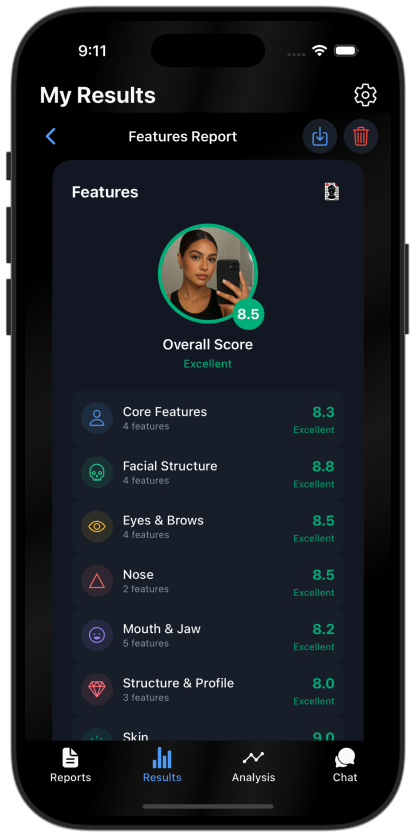
The AI attractiveness score is expressed on a 1 to 100 scale, where 1 denotes minimal alignment with established beauty standards and 100 represents near-perfect adherence. This scale enables a fine-grained evaluation of your facial features' harmony, symmetry, and skin quality. Typically, the distribution of scores in the general population centers around 50, reflecting average facial characteristics. Scores above 70 are considered above average and correlate with traits commonly associated with attractiveness in some evolutionary psychology and aesthetic research. The score is a composite, integrating factors such as:
- Symmetry (e.g., percentage difference between left and right features)
- Proportionality (e.g., adherence to Golden Ratio across facial landmarks)
- Jawline sharpness and angle measurements
- Skin texture analysis (e.g., smoothness, blemish detection)
Each element is weighted to reflect its contribution to perceived beauty.
Interpreting Your Score in Context
- Below average (1-49): May indicate asymmetry, disproportionate features, or skin irregularities. However, this is not a reflection of your intrinsic worth or overall appeal; many other factors such as personality and style influence attractiveness.
- Average (50-69): Represents typical facial features with balanced proportions. Many individuals fall within this range and can enhance their appearance through grooming, skincare, and styling.
- Above average (70-100): Shows features closely matching certain beauty standards, including high symmetry, defined jawline, balanced facial thirds, and clear skin. These scores correlate with higher attractiveness perception but still represent one dimension of multifaceted appeal.
Using Scores as Guidance, Not Judgment
It's essential to remember that AI-generated scores are scientific approximations designed to help you better understand your facial structure and potential areas for improvement. They are not definitive judgments of your attractiveness, personality, or value. Maxx Report complements scores with personalized glow-up tips tailored to your unique facial features, empowering you to make informed choices to enhance your confidence and appearance.
Section 5: Tips to Improve Your Attractiveness Score
Non-Surgical Enhancements That Work
Many users wonder if the "Am I good looking?" score can be improved without undergoing surgery or invasive procedures. Fortunately, several effective non-surgical strategies can boost your attractiveness score and how others perceive you:
- Grooming: Maintaining well-groomed facial hair or opting for a clean-shaven look can enhance jawline definition. For example, trimming sideburns and neckline sharpens facial contours, while a neatly shaped beard can add masculine structure.
- Skincare: Establish a daily routine involving gentle cleansing, exfoliation, and moisturizing to improve skin texture and tone. Ingredients like hyaluronic acid and niacinamide can reduce appearance of pores and unevenness. Consistent sun protection helps prevent premature aging.
- Posture and Expression: A genuine smile boosts your perceived friendliness and attractiveness. Maintaining upright posture elongates the neck and accentuates facial features. Practice relaxed, confident expressions in front of a mirror.
- Lighting and Angles: When taking photos or videos, position yourself near natural light sources and slightly elevate the camera to highlight your best angles. Experiment with subtle head tilts to find flattering poses.
Style and Hair Choices
Your hairstyle and clothing significantly influence how your face is framed and perceived. Using the Face Shape Quiz helps identify your face shape—oval, round, square, heart, or diamond—and recommends optimal hairstyles that enhance your natural features. For example, layered cuts add volume to round faces, while angular styles complement square jaws. Additionally, updating your wardrobe with AI fashion guidance, as detailed in the AI Fashion Consultant post, can harmonize colors and clothing styles with your complexion and face shape, elevating your overall attractiveness.
When to Consider Professional Advice
If you desire deeper transformation or have specific concerns such as acne scars, asymmetry, or structural features, consulting dermatologists or cosmetic specialists may be beneficial. These professionals can offer treatments like laser therapy, fillers, or orthodontics. Meanwhile, Maxx Report serves as an accessible first step, helping you identify priority areas for improvement and realistic goals before considering medical intervention.
Section 6: Biases and Limitations of AI Looks Tests
Ethnicity and Gender Considerations
Despite advances, AI attractiveness models are not free from biases, often reflecting the composition of their training datasets. Many datasets are skewed toward Western, Caucasian facial features and beauty norms, which can affect scoring accuracy for individuals from other ethnic backgrounds. For example, certain facial proportions valued in one culture may differ in another, leading to inconsistent results. Similarly, gender norms influence the features considered attractive—masculine jawlines versus softer feminine contours—so AI models must be calibrated accordingly. Maxx Report endeavors to include diverse data, but users should interpret scores with awareness of these limitations and cultural context.
Impact of Selfie Angles and Lighting
Small variations in photo conditions can substantially impact AI scoring. A tilt of just a few degrees or uneven lighting can alter symmetry measurements and skin texture analysis. For example, shadows can exaggerate wrinkles or blemishes, lowering your score unfairly. To mitigate this, always use consistent photo settings when tracking progress, and avoid overinterpreting single results. Understanding this variability helps maintain a balanced perspective on your attractiveness journey.
Limitations in Measuring True Attractiveness
Attractiveness encompasses multiple dimensions beyond facial geometry and skin quality. Personality traits such as charisma, kindness, humor, and confidence profoundly influence how others perceive you but are not measurable by AI. Cultural preferences also vary widely, meaning that a high AI score does not guarantee universal appeal. Thus, facial attractiveness scoring should be viewed as one piece of a complex puzzle, offering useful but partial insights.
Section 7: Privacy and Data Handling in AI Look Rating Apps
How Your Photo Data Is Used
Apps like Maxx Report process your uploaded images locally or on secure servers to analyze facial features, typically without retaining your photos beyond the analysis session unless you explicitly consent. This ephemeral data handling aims to ensure your privacy and security. However, it is critical to review each app's privacy policy carefully to understand how your data is stored, used, or shared. Maxx Report emphasizes transparency and user control, allowing deletion of photos and opting out of data retention.
Safety Best Practices
- Use only trusted and well-reviewed apps with clear, comprehensive privacy policies.
- Avoid uploading photos containing sensitive background information or personally identifiable objects.
- Prefer apps that allow users to delete uploaded photos and data after analysis.
- Read terms of service and data usage agreements before granting permissions.
Choosing Between Free and Paid AI Attractiveness Tools
Free AI attractiveness apps often provide instant, basic results without requiring sign-up but may lack personalized advice, detailed reports, or robust data security. Paid apps like Maxx Report typically offer enhanced features, including comprehensive transformation plans, ongoing progress tracking, and stronger privacy protections. Investing in a paid service can be worthwhile for users committed to their glow-up journey and who value confidentiality and tailored guidance.
Conclusion
Wondering "Am I good looking?" is a natural and common question that AI-powered tools like Maxx Report can answer with objective, data-driven insights. By analyzing measurable factors such as facial symmetry, proportions, jawline definition, and skin quality, these apps provide an evidence-based attractiveness score on a nuanced 1-100 scale. However, the accuracy of results depends heavily on photo quality, lighting, and consistent conditions, so preparing your images carefully is crucial for reliable feedback.
Use your score as a helpful guide rather than a definitive judgment. Implementing simple, non-surgical glow-up tips—like attentive grooming, dedicated skincare, improved posture, and confident expression—can enhance your perceived attractiveness. Always keep in mind the inherent biases and limitations of AI models and respect your unique beauty beyond numerical outputs.
For a comprehensive, personalized look evaluation and transformation plan, try the AI-powered analysis available at Maxx Report. It offers a smart, respectful, and empowering way to explore your attractiveness and unlock your best self confidently.
FAQ
Q: How accurate is an AI attractiveness test?
A: AI attractiveness tests provide objective scores based on scientific facial symmetry and proportion metrics derived from datasets. Their accuracy depends heavily on the quality of your photo and the diversity of the AI's training data. While they offer useful insights into facial structure and potential areas for enhancement, they cannot capture subjective elements like personality, charisma, or cultural preferences that also influence attractiveness.
Q: What facial features make someone look more attractive?
A: Features linked to attractiveness often include high facial symmetry, a well-defined jawline, balanced facial thirds (forehead, nose, chin), a slight upward canthal tilt (eye angle), and clear, smooth skin. These attributes align with some human evolutionary preferences and aesthetic ideals such as the Golden Ratio and are commonly favored across cultures.
Q: How do I take a photo for the best attractiveness score?
A: Take a front-facing photo with your face evenly lit by natural light, hair pulled away from your face, and a neutral or slight smile expression. Use a plain background and avoid shadows, accessories, or makeup that obscure facial features. Ensure the camera is at eye level and the image is high resolution without blur.
Q: What is a good attractiveness score out of 100?
A: Scores above 70 typically indicate above-average attractiveness based on AI's facial analysis, reflecting high symmetry and proportion adherence. Scores around 50 are average and common, while below 50 may suggest asymmetry or proportions outside ideal ranges. Remember these scores are guidelines designed to guide self-improvement, not absolute judgments.
Q: Can I improve my attractiveness score without changing my face?
A: Yes. You can improve your score by optimizing grooming habits, skincare routines, lighting when taking photos, posture, and facial expression. These factors enhance perceived attractiveness and can be adjusted instantly without surgery or invasive procedures.
Q: Are attractiveness tests biased by gender or ethnicity?
A: Some AI models may reflect biases from their training datasets that emphasize Western beauty standards and specific gender norms. However, apps like Maxx Report strive to include diverse data sources to reduce bias. Interpreting scores within your cultural and personal context is important to avoid misrepresentation.