Best Colors for Men by Skin Tone: The Essential Guide to Men’s Color Analysis
Discover the best colors for men by skin tone. Learn how to identify your undertone, build a stylish wardrobe, and dress your best with men’s color analysis.

Estimated reading time: 12 min
Key Takeaways
- The best colors for men by skin tone boost your confidence and make you look sharper.
- Identifying your undertone (warm, cool, neutral) is crucial for selecting flattering clothing colors.
- Contrast and color palette matter for building a versatile men’s wardrobe.
- Some colors universally flatter, while others work best for specific skin tones.
- Tools like Maxx Report use AI to offer personalized color analysis.
Choosing the best colors for men by skin tone isn’t just about fashion—it’s about maximizing your natural assets. The right shades can make your skin look healthier, your features more defined, and your style feel effortless. This guide will walk you through men’s color analysis basics, how to find your skin’s undertone, and how to build a wardrobe that works with—not against—your coloring. Whether you’re revamping your closet or just want to look better in photos, mastering color is a style game-changer. Let’s dive in.
1. How to Identify Your Skin Tone and Undertone
Understanding your skin tone and undertone is the foundation of men’s color analysis. Your skin tone refers to the surface color (fair, medium, olive, dark), while undertone is the subtle hue beneath (warm, cool, neutral).
Here’s how to figure yours out:
- Vein Test: Look at your wrist veins in natural light. Greenish veins = warm; blue/purple = cool; hard to tell = neutral.
- Jewelry Test: Gold jewelry flatters warm undertones; silver looks better on cool undertones.
- White Paper Test: Hold a white paper beside your face. If your skin looks yellow/golden, you’re warm. If it appears pink/rosy, you’re cool. If it’s hard to tell, you may be neutral.
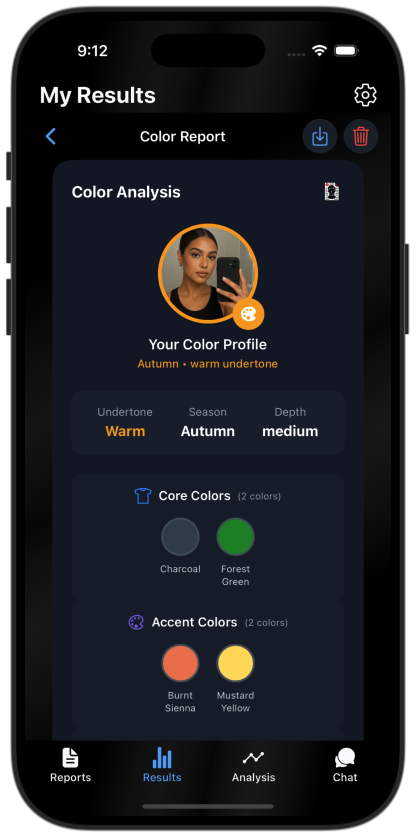
Apps like Maxx Report use AI to scan your face and provide a detailed, personalized color analysis, making this process even easier.
2. Warm vs. Cool vs. Neutral Undertones in Men
Understanding the difference between undertones is essential for finding colors that enhance your style. Here’s a quick breakdown:
- Warm undertones: Yellow, peach, or golden hues under the skin. Suit earth tones, olive, mustard, and warm reds.
- Cool undertones: Pink, red, or blue hues. Suit jewel tones, icy blues, cool greys, and true black.
- Neutral undertones: A mix of both; can wear a wider range of colors but still need to balance intensity and contrast.
This is the core of men’s color analysis: matching your undertone with your wardrobe to maximize your natural features and avoid looking washed out.
3. Best Neutral Colors for Men’s Wardrobes
Neutrals are the backbone of any stylish man’s closet. They’re versatile, timeless, and pair effortlessly with bolder shades. The best neutral colors for men by skin tone include:
- Navy: Universally flattering, especially for cool and neutral undertones. A smart alternative to black for suits, outerwear, and trousers.
- Charcoal grey: Works for almost everyone, but particularly sharp on men with cool undertones.
- Khaki and camel: Best for warm/neutral undertones; great for chinos, jackets, and casualwear.
- White and off-white: Crisp and clean on fair or medium-toned skin.
- Olive: Complements warm and olive undertones.
Building your core wardrobe around these shades ensures you always have something that flatters your skin and works for any occasion.
4. Best Colors for Fair/Light Skin
Fair-skinned men often have pink or cool undertones. Choosing the right colors prevents you from looking washed out or overly pale.
- Best picks: Navy, charcoal, burgundy, emerald, forest green, mid-blue, and mauve.
- Tips: Go for richer, deeper shades rather than super-pale pastels. Avoid stark black or pure white as they can be too harsh.
Layering is key—combine a dark jacket with a lighter shirt for balanced contrast. For more on dressing for your features, check out the Face Shape Quiz guide.
5. Best Colors for Medium/Olive Skin
Men with medium or olive skin have a broader palette to work with. Olive undertones especially thrive in both warm and cool colors, but certain shades truly stand out.
- Best picks: Teal, jade green, burnt orange, mustard, rust, turquoise, royal blue, and purple.
- Tips: Earth tones (like brown and tan) emphasize warmth, while jewel tones add vibrancy. Avoid colors that are too close to your actual skin shade, as they can blend in.
Mixing textures can enhance visual interest—think a suede brown jacket with a teal shirt.
6. Best Colors for Dark/Deep Skin
Dark and deep skin tones can pull off bold, saturated colors with ease. Vibrant hues pop, and neutrals provide a striking, sophisticated look.
- Best picks: Cobalt blue, royal purple, bright yellow, emerald, crimson, orange, and white.
- Tips: High-contrast combinations (like a white tee with navy or bright colors) look especially sharp. Avoid browns close to your skin color, which can look flat.
Don’t shy away from experimenting with statement pieces or layering brighter colors. For grooming tips to match your upgraded wardrobe, see this glow-up guide for men.
7. Colors to Avoid (or Use Sparingly)
Some colors are less forgiving, regardless of your skin tone. They can wash you out, clash with your undertone, or overpower your features.
- Pure black: Can be harsh on lighter and even medium skin tones. Opt for navy or charcoal instead.
- Neon brights: Often overpower natural coloring and look less sophisticated.
- Pale beige or yellow: Easily washes out fair/medium skin, especially with cool undertones.
- Browns close to your skin tone: Blend in too much on olive or deep skin.
When in doubt, stick to classic, muted shades and rely on neutrals for most staples.
8. How Contrast Level Affects Color Choice
Contrast level is a key element in men’s color analysis. It’s the difference in darkness between your hair, skin, and eyes. High-contrast men (think dark hair and fair skin) look best in color pairings with strong contrast, like navy and white. Low-contrast men (similar hair and skin color) should opt for softer, blended looks—like light grey with medium blue.
- High contrast: Try pairing a dark jacket with a light shirt.
- Low contrast: Go for tonal layering, sticking within a color family.
This approach ensures your outfit works with your natural coloring rather than against it.
9. Building a Versatile Color Palette for Men
A well-rounded wardrobe doesn’t require every color under the sun. Focus on a core palette, then add a few accents. Here’s how to build yours:
- Start with 2-3 core neutrals (navy, grey, olive, khaki).
- Add 2-3 accent colors based on your undertone (burgundy, teal, mustard, etc.).
- Include white or off-white for shirts and layering pieces.
- Sprinkle in pattern or texture to add depth without overwhelming your outfits.
Want a fully personalized plan? AI-powered tools like Maxx Report can scan your face and suggest a custom color palette based on your unique features. For more on digital style upgrades, see how AI fashion consultants are changing the game.
10. How to Dress for Your Body Type with Color
Color doesn’t just affect your face—it can enhance your physique too. Use darker shades to slim areas you want to de-emphasize and lighter/brighter colors to draw attention upward (like a white shirt under a navy blazer).
- Broad shoulders: Add color to your lower half with colored pants.
- Slim build: Layer brighter colors and patterns to add visual weight.
- Taller men: Break up height with color-blocking (contrasting top and bottom).
For a science-backed approach to facial proportions and styling, read about the Golden Ratio Face and how it relates to overall looksmaxxing.
Conclusion
The best colors for men by skin tone are about more than style—they’re about presenting your best, most confident self. By understanding your skin’s undertone, choosing the right neutrals, and building a smart palette, you’ll always look on point. Want a personalized color guide? Try Maxx Report for instant AI-powered men’s color analysis and more. Let color work for you, and let your style do the talking.
FAQ
Q: What colors look best on men with fair skin?
A: Deep, rich shades like navy, charcoal, burgundy, and forest green flatter fair skin. Avoid pure black and pale pastels that can wash you out.
Q: How do I know if my skin tone is warm or cool?
A: Check your wrist veins (green = warm, blue = cool), see which jewelry suits you (gold = warm, silver = cool), or use a white paper test in daylight. Neutral undertones are a mix of both.
Q: What colors should men with dark skin avoid?
A: Avoid browns that closely match your skin tone, as well as overly pale or neon colors. Rich, bold hues and high-contrast combos look best.
Q: Is navy better than black for most men?
A: Yes, navy is more universally flattering and less harsh than black, especially for men with fair or medium skin. Navy also pairs well with most accent colors.
Q: Can men with olive skin wear warm and cool colors?
A: Absolutely. Olive skin often has neutral undertones, so both warm earth tones and cool jewel tones work well. Just avoid colors too close to your skin shade.
Q: What are the best neutral colors for a men’s wardrobe?
A: Navy, charcoal, olive, khaki, and white/off-white are timeless, versatile neutrals that work for most men and make mixing and matching easy.