
The Best Moisturizer for Dry Skin: Ultimate Skincare Guide
Discover the best moisturizer for dry skin and explore top vitamin C serums for 2025, sunscreens for oily skin, and retinol guides for beginners.

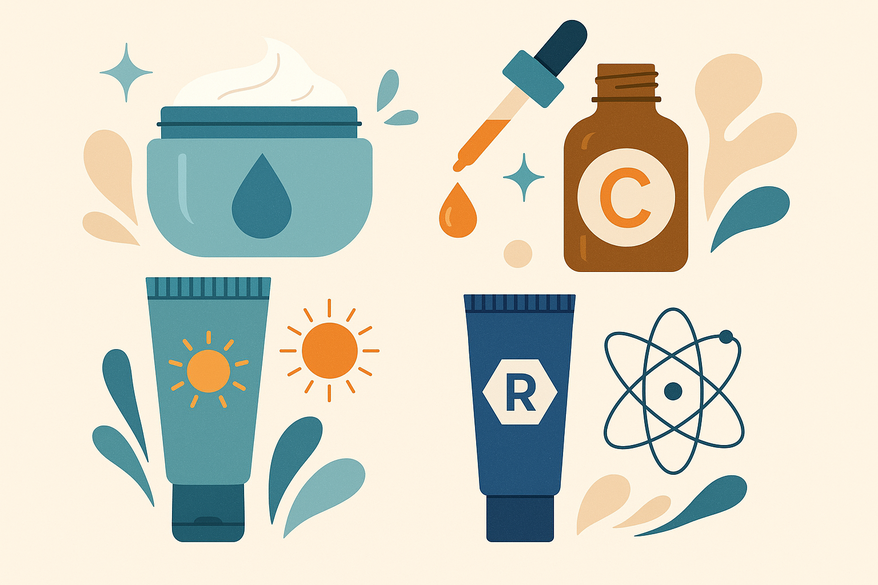
Estimated reading time: 7 minutes
Key Takeaways
- Identify your skin type to choose the right moisturizer and help avoid irritation.
- Key ingredient families—humectants, emollients, occlusives, actives—can deliver targeted hydration.
- Popular products for dry skin include CeraVe Moisturizing Cream, Neutrogena Hydro Boost Gel-Cream, and Kiehl’s Ultra Facial Cream.
- Explore specialized routines: vitamin C serums, sunscreen for oily skin, fragrance-free essentials, and beginner-friendly retinol.
Table of Contents
- Section 1: Understanding Your Skin Type and Needs
- Section 2: Best Moisturizer for Dry Skin
- Section 3: Top Vitamin C Serums 2026
- Section 4: Sunscreen for Oily Skin
- Section 5: Fragrance-Free Skincare List
- Section 6: Retinol for Beginners Guide
- Conclusion
Section 1: Understanding Your Skin Type and Needs
Before investing in skincare, know your canvas. Skin generally falls into four common types:
- Dry: Feels tight; may show flakiness and rough patches.
- Oily: Appears shiny; can be prone to enlarged pores and blemishes.
- Combination: Dry on cheeks but oily in the T-zone.
- Sensitive: May react to fragrance or strong actives with redness or stinging.
For more on analyzing your skin type, see skin analysis test guide.
Why It Matters
Matching product claims to your skin’s needs can help prevent irritation—a heavy cream on oily skin may clog pores, while a lightweight gel on dry skin might not provide enough hydration.
Section 2: Best Moisturizer for Dry Skin
A moisturizer typically blends humectants, emollients, occlusives, and supportive actives to hydrate, smooth, and protect your skin.
Key Ingredient Families
- Humectants (e.g., glycerin, hyaluronic acid, urea)
- Attract water to the skin’s surface to promote plumpness.
- Example: CeraVe Moisturizing Cream contains hyaluronic acid, which helps attract hydration.
- Emollients (e.g., shea butter, squalane, jojoba oil)
- Fill spaces between skin cells to smooth texture and relieve roughness.
- Kiehl’s Ultra Facial Cream includes squalane and glycerin for softness.
- Occlusives (e.g., petrolatum, dimethicone)
- Form a protective seal to help prevent moisture loss.
- Often found in rich creams for overnight barrier support.
- Supportive Actives (e.g., ceramides, niacinamide, panthenol)
- Help strengthen the lipid barrier and may calm redness.
Popular Picks for Dry Skin
- CeraVe Moisturizing Cream (ceramides + hyaluronic acid)
- Neutrogena Hydro Boost Gel-Cream (hyaluronic acid–rich, oil-free)
- Kiehl’s Ultra Facial Cream (squalane + glycerin)
Section 3: Top Vitamin C Serums 2026
Vitamin C is a well-known antioxidant that can brighten dull skin tone, help fade dark spots, and protect skin from free radicals. In 2026, serums with enhanced stability and bioavailability, including formulations with stabilized derivatives like tetrahexyldecyl ascorbate and delivery systems such as liposomal encapsulation, are available.
- Look for L-ascorbic acid concentrations between 10–20% in air-tight, UV-protective packaging to help maintain potency.
- Consider formulations with ferulic acid and vitamin E for enhanced antioxidant synergy and protection.
- Popular Picks:
- SkinCeuticals C E Ferulic
- La Roche-Posay Pure Vitamin C Serum 10%
- Drunk Elephant C-Firma Fresh Day Serum
Section 4: Sunscreen for Oily Skin
Finding a non-greasy, broad-spectrum sunscreen is important if your skin tends to be oily or acne-prone. Formulations now include lightweight, mineral-based options with mattifying agents.
- Look for oil-free, gel- or fluid-based formulas that absorb quickly without leaving residue.
- Ingredients: niacinamide for shine control; silica, dimethicone, or mattifying powders like zinc PCA for a matte finish.
- Popular Picks:
- EltaMD UV Clear Broad-Spectrum SPF 46
- La Roche-Posay Anthelios Clear Skin SPF 60
- Supergoop! Unseen Sunscreen SPF 40
- ISDIN Eryfotona Actinica SPF 50+ (mineral-based with DNA repair enzyme)
Section 5: Fragrance-Free Skincare List
A fragrance-free routine can help minimize irritation and is suitable for many skin types, especially sensitive skin. In 2026, many brands offer clean formulations free from common irritants.
- CeraVe Hydrating Cleanser (with ceramides and niacinamide)
- Vanicream Moisturizing Cream (suitable for sensitive skin)
- Avene Thermal Spring Water Spray (soothing and calming)
- La Roche-Posay Toleriane Ultra Moisturizer (fragrance-free and calming)
Section 6: Retinol for Beginners Guide
Retinol is widely used for supporting cell turnover and smoothing fine lines—but starting slowly and carefully is important to help avoid irritation and build tolerance.
- Begin with 0.25–0.5% concentration, applying 1–2 times weekly at night.
- Always pair with a gentle, hydrating moisturizer and apply broad-spectrum sunscreen every morning to protect new skin.
- Consider newer retinoid formulations with encapsulation technology for gradual release and potentially reduced irritation.
- Examples: The Ordinary Retinol 0.5% in Squalane; RoC Retinol Correxion Deep Wrinkle Night Cream; Paula’s Choice 0.3% Retinol + Peptides Booster.
Conclusion
A resilient skincare routine often starts with a suitable moisturizer for dry skin and builds with targeted products—vitamin C serums, sunscreens, fragrance-free essentials, and retinol. Personalized choices, based on transparent ingredients and expert advice, can support lasting hydration and a radiant glow.
Ready to transform your skin? Explore user reviews and make informed purchases today. Your journey can begin with proper hydration and continue with tailored actives for brightening, protecting, soothing, and renewing.
To further personalize your skincare journey, use the AI-powered Maxx Report app to receive tailored skin analysis, track progress, and optimize product selections.
FAQ
How often should I apply my moisturizer?
For dry skin, applying moisturizer twice daily—after cleansing in the morning and before bed—can help maintain a healthy skin barrier and reduce moisture loss.
Can I layer vitamin C and retinol?
It is generally recommended to use vitamin C in the morning for antioxidant protection and retinol at night to support cell turnover and minimize irritation. Avoid layering them simultaneously to reduce the risk of sensitivity.
What should I look for in a fragrance-free product?
Check labels for “fragrance-free” or “unscented” and avoid essential oils or added scents to help reduce the risk of irritation, especially if you have sensitive skin.