
Color Coordination Tips for Men with Glasses: The Essential Guide
Color coordination tips for men with glasses: discover how to pick frame and clothing colors based on your undertone, wardrobe, and style goals.


Estimated reading time: 10 min
Key Takeaways
- Identify your skin undertone (warm, cool, neutral) before choosing frame and clothing colors.
- Contrast between your features and your frames is key for a balanced, stylish look.
- Coordinate glasses with your wardrobe, accessories, and occasion for maximum impact.
- Test frame colors in different lighting to ensure the best match for your complexion.
- Build a capsule wardrobe around your best color palette for effortless style.
Mastering color coordination as a man with glasses is one of the most powerful style upgrades you can make. The right frame color can sharpen your features, boost your confidence, and bring your entire look together. But it's more than just picking a trendy shade—it's about understanding your skin tone, wardrobe palette, and personal style. This guide unpacks the essential color coordination tips for men with glasses, based on proven men's color analysis principles. Let's dive in and help you discover the best colors for your unique features and lifestyle.
1. Identify Your Skin Undertone: The Foundation of Men's Color Analysis
Before choosing glasses or clothing colors, you need to know your skin undertone. Men's color analysis boils down to three main undertones: warm, cool, and neutral. This single factor influences which frame and clothing colors will enhance your natural coloring—or clash with it.
- Warm undertones: Your skin has golden, peachy, or olive hues. Veins may appear greenish. You look best in earth tones, gold, olive, and warm browns.
- Cool undertones: Your skin has pink, red, or bluish hues. Veins look blue. You suit jewel tones, navy, charcoal, silver, and cool blues.
- Neutral undertones: A mix of both. You can wear most colors, but muted or balanced shades work best.
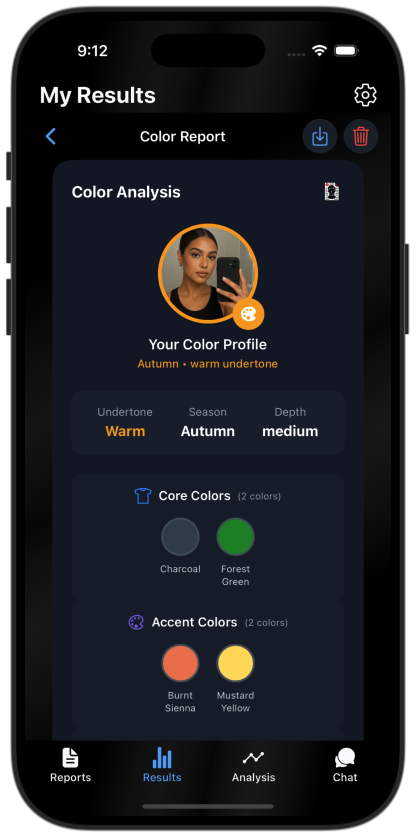
Pro tip: Use the Maxx Report app for an instant, AI-powered color analysis based on your selfie. Its color analysis report helps you identify your undertone and top color matches.
2. Match Frame Color to Your Skin Tone for Maximum Harmony
Once you know your undertone, pick frame colors that complement (not fight) your skin. For warm undertone men, tortoiseshell, honey, copper, and olive frames are flattering. Cool undertone men often look sharp in black, gunmetal, silver, navy, and clear frames. Neutral undertones can experiment with both, but should avoid colors that are too stark or too muted.
- Try frames in your palette against your jawline in natural light. The right color will make your skin look healthy and vibrant.
- If you’re unsure, opt for classic neutral frames (like deep brown or matte black) that work with most palettes.
Want to go deeper? Check out the AI Fashion Consultant guide for more on dressing for your coloring.
3. Use Contrast: Face, Hair, Brows, and Frames
Men’s style basics say that contrast is everything. High-contrast men (think dark hair, fair skin) can pull off bold, dark frames like black or navy. Low-contrast men (lighter skin and hair) look best in softer, lighter colors—think clear, taupe, or light tortoiseshell.
- Match your frame intensity to your natural coloring. Too dark, and frames overpower your features. Too light, and they disappear.
- Try frames that echo your hair color for a subtle, harmonious effect.
- For a dramatic look, go for a strong contrast between frames and face/hair.
Tip: The Face Shape Quiz can help you see which frame styles and contrasts work best for your unique features.
4. Coordinate Frame and Wardrobe Colors
Should your glasses match your clothes or your skin tone? Ideally, both. Start by building a wardrobe palette around your best colors (from your undertone analysis), then select frame colors that fit naturally within that scheme. For example:
- If your wardrobe is mostly navy, gray, and white, black or silver frames are safe bets.
- Earthy wardrobes (olive, camel, brown) harmonize with warm tortoiseshell or bronze frames.
- Bold accent frames (like deep green or burgundy) can punch up a simple, neutral outfit.
Consider creating a capsule wardrobe where your glasses are a stylish anchor—not a wild card.
5. Neutral vs. Bold Frames: Choosing Your Signature Style
Neutral frames (black, brown, clear, silver) are versatile and professional, especially for business or formal settings. But don’t be afraid to try colorful or accent frames if your personal style allows. Just remember:
- Neutral frames blend with most outfits and don’t compete for attention.
- Colored frames (blue, green, red) work best as statement pieces—keep the rest of your look simple.
- Switch between neutral and bold frames depending on occasion and mood.
This flexibility lets you express your personality while still looking sharp for any occasion.
6. Coordinate Glasses with Accessories and Metals
Your accessories—watch, belt buckle, rings—should tell a cohesive color story with your glasses. Match metal frames to your go-to jewelry and hardware: gold frames with gold accessories, silver frames with silver. If you wear mostly leather, choose frames that echo those tones (brown with brown, black with black).
- For a modern look, try mixing gunmetal frames with black leather or navy blue.
- If you wear both metals, opt for matte black or clear frames for maximum versatility.
Attention to these small details makes your style look intentional and polished.
7. Dress for the Occasion: Business, Casual, and Formal Color Choices
Frame color can set the tone for your entire look. For business and formal wear, stick to classic, understated colors: black, navy, tortoiseshell, or metallics. For casual or creative settings, experiment with more color and trend-driven frames.
- Business: Black, charcoal, navy, or silver frames pair well with suits and dress shirts.
- Casual: Matte finishes, transparent frames, or subtle pops of color add personality.
- Formal events: Go for sleek, minimal metal frames or deep tortoiseshell for timeless appeal.
When in doubt, choose frames that don’t draw more attention than your overall outfit.
8. Factor in Hair and Eye Color
Your hair and eye color play a big role in which frame and clothing colors look best. As a quick rule:
- Brown hair: Warm or dark frames (tortoiseshell, espresso, deep green).
- Blonde hair: Light or clear frames, pale gold, or muted pastels.
- Black hair: Bold black, navy, or metallic frames.
- Blue/green eyes: Frames that echo or complement your eye color, like navy or slate.
Experiment to see which combinations make your eyes pop and your complexion glow. For more on facial harmony, explore the Golden Ratio Face analysis.
9. Compare Metal Frame Colors: Silver, Gold, Gunmetal, and Black
Metal frames offer a sleek, minimalist option that works for nearly every man—but the right metal depends on your undertone and wardrobe:
- Silver: Best for cool undertones and wardrobes heavy in blues and grays.
- Gold: Best for warm undertones and wardrobes with earth tones.
- Gunmetal: Versatile for both warm and cool, adds subtle sophistication.
- Black: Universally sharp, especially in business or formal settings.
Mixing metals can work, but aim for cohesion in your main accessories.
10. Apply Color Wheel Rules: Complementary vs. Analogous
The color wheel isn’t just for artists—it’s a powerful tool for men’s style. Complementary colors (opposites) create bold, eye-catching contrast (e.g., blue frames with orange accents). Analogous colors (neighbors) offer a more harmonious, subtle effect (e.g., brown frames with olive or camel clothing).
- Use complementary pairings for statement looks or creative settings.
- Stick to analogous pairings for everyday, easy coordination.
The right pairing depends on your personality, job, and how much attention you want to draw.
11. Test Frame Colors in Daylight Before Buying
Artificial lighting can dramatically change how frame colors look against your skin. Always test potential frames in natural daylight, either by stepping outside or using a window. The true color will be most visible, and you’ll see how the frames interact with your undertone and features.
- Bring a trusted friend or take selfies in daylight to compare options.
- Use the Maxx Report app’s color analysis for a digital preview of how frames suit you in real life.
This extra step prevents expensive mistakes and helps you feel confident in your choice.
Conclusion
Mastering color coordination as a man with glasses is about more than just matching—it’s about discovering your best colors, owning your style, and letting your unique features shine. By starting with men’s color analysis, matching frames to your undertone, and coordinating with your wardrobe and accessories, you’ll build a versatile, stylish look that works for any occasion. For a personalized color report and more glow-up tips, try Maxx Report and unlock your full style potential today.
FAQ
Q: What glasses color suits my skin tone best as a man?
A: If you have a warm undertone, try tortoiseshell, brown, gold, or olive frames. Cool undertones look best in black, silver, navy, or clear frames. Neutral undertones can wear both but should avoid extremes. Use a color analysis tool for exact matches.
Q: Should my glasses match my clothes or my skin tone?
A: Ideally, choose frame colors that complement your skin tone and fit within your main wardrobe palette. This ensures your glasses look natural and cohesive with any outfit.
Q: What glasses color goes with black clothes?
A: Black, silver, clear, or deep tortoiseshell frames all pair well with black clothing, offering a crisp and stylish look. For a bold statement, try frames in a contrasting color like navy or burgundy.
Q: Are black frames or tortoiseshell frames better for men?
A: Black frames are classic and versatile, ideal for business and formal settings. Tortoiseshell frames offer warmth and personality, especially for men with warm undertones or earth-tone wardrobes.
Q: How do I choose glasses that match my hair and eye color?
A: Echo your hair color for subtle harmony, or choose frames that complement your eye color (e.g., blue frames for blue eyes). Consider your overall contrast—lighter hair, lighter frames; darker hair, bolder frames.
Q: What are the best frame colors for business or formal wear?
A: Stick to classic colors: black, navy, silver, gold, or deep tortoiseshell. These frames look polished and professional with suits and dress shirts.