Color Draping at Home for Men: Complete Guide to Finding Your Best Colors
Color draping at home for men: Discover how to find your best colors by skin tone and undertone, tips for men’s color analysis, and build a stylish wardrobe.

Estimated reading time: 18 min
Key Takeaways
- Color draping at home for men can help you discover colors that may complement your skin tone and undertone.
- Proper lighting, preparation, and method can make home color analysis more reliable and actionable.
- Understanding your undertone (warm vs cool) is foundational for choosing what colors to wear.
- Seasonal color analysis connects your results to a wardrobe palette for easier, more coordinated dressing.
- Documenting your draping test can help ensure more objective comparisons and lasting style confidence.
Table of Contents
- Section 1: Why Color Draping Matters for Men’s Style
- Section 2: Preparing for a Color Draping Test at Home
- Section 3: The Right Lighting and Setup for Accurate Draping
- Section 4: Step-by-Step Home Color Draping for Men
- Section 5: Interpreting Results – Warm vs Cool Undertone and Men’s Color Analysis
- Section 6: Building Your Wardrobe – Best Colors for Men by Skin Tone
- Section 7: Common Mistakes and How to Avoid Them in DIY Color Analysis
- Section 8: From Color Analysis to Men’s Style Basics – Practical Next Steps
- Conclusion
- FAQ
Section 1: Why Color Draping Matters for Men’s Style
The Impact of Color on Perception and Confidence
Color draping at home for men isn’t just for fashion enthusiasts—it can be a helpful tool for looking sharp and put together. The right colors may make your skin look clearer, your eyes brighter, and your overall appearance healthier and more energetic. In contrast, less suitable shades can sometimes leave you looking tired or washed out. For men, color draping can help reduce the guesswork in men’s style basics and support a wardrobe that flatters you.
How Color Analysis Works for Men
Men’s color analysis is based on understanding your skin’s undertone (warm vs cool), overtone (surface color), and how different hues interact with your natural coloring. Through a systematic approach—color draping—you test various fabric shades against your face under controlled conditions. This can reveal which colors harmonize with you and which ones clash, guiding your choices for shirts, suits, and accessories.
Why DIY Color Draping is Practical
- Accessibility: You don’t need a stylist or expensive tools—a mirror, daylight, and some fabric swatches or clothes you already own are enough.
- Personalization: Unlike generic advice, color draping at home for men gives you results tailored to your unique skin tone, eye color, and hair color.
- Wardrobe Efficiency: Once you know your palette, shopping and outfit planning can become easier—every piece works together.
If you want to take your look to the next level, combining color analysis with AI-powered apps like Maxx Report may offer additional feedback on facial features and style compatibility as well.
Section 2: Preparing for a Color Draping Test at Home
Your Face: Clean, Bare, and Neutral
For the most accurate men’s color analysis, start with a blank canvas:
- Wash your face and pat dry—avoid makeup (if applicable), moisturizer, or sunscreen that could alter your skin’s undertone.
- Shave or trim facial hair if you want to see the effect of colors on your full complexion, but it’s not mandatory.
- Pull hair away from your face using a headband or clips—your natural coloring should be unobstructed.
- Remove glasses if possible, as frames can reflect color.
- Wear a plain white or neutral top so your clothing doesn’t influence the results.
Assembling Your Draping Materials
No need for fancy fabric swatches. Look for:
- Plain t-shirts, pillowcases, or scarves in a range of colors—especially warm vs cool shades, light and dark, muted and bright.
- A large hand mirror or position yourself in front of a wall mirror.
- Notebook or phone for documenting your observations.
Setting Up for Success
- Plan your test for mid-morning or early afternoon when natural light is at its best.
- Ask a friend to help take photos for more objective results, but self-timers work too.
- Prepare to spend 30–60 minutes for a thorough session—don’t rush the process.
For men interested in more data-driven insight, you can supplement your DIY approach with an AI-powered color analysis using apps like Maxx Report, which can scan your face and rate your skin clarity, tone, and more.
Section 3: The Right Lighting and Setup for Accurate Draping
Why Lighting Makes or Breaks Your Results
The most common mistake in color draping at home for men is using poor lighting. Artificial bulbs and shadows can distort colors, leading to misleading results. For more reliable men’s color analysis, always use natural daylight.
How to Set Up Your Space
- Best Lighting: Sit or stand directly facing a window with indirect sunlight. North-facing windows are often recommended for cool, consistent light.
- Avoid: Overhead lights, lamps with yellow or warm bulbs, and fluorescent lighting—all of which can skew undertone perception.
- Time of Day: Aim for between 9 am and 2 pm, avoiding sunrise or sunset when light is more golden.
- Background: A plain wall (white or gray) helps ensure no color reflections alter your results.
Mirror and Camera Placement
- Position your mirror so your face is evenly lit—no harsh shadows on one side.
- If taking photos, place your phone/camera at eye level.
- Take a neutral, relaxed expression for each shot.
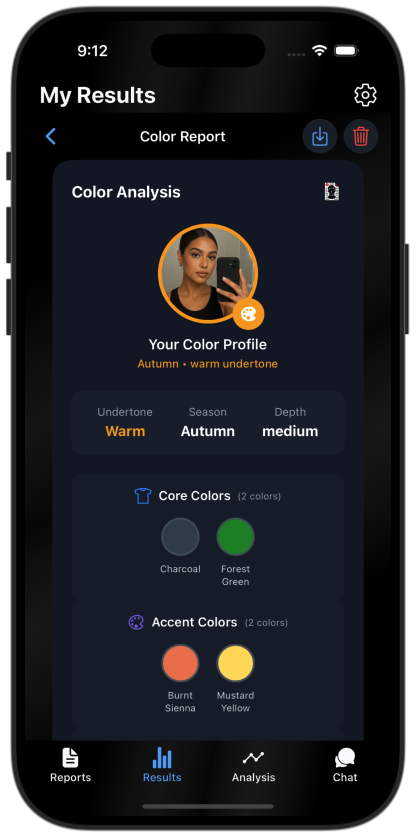
For a visual reference, here’s a screenshot from a color analysis in the Maxx Report app, which uses AI and your photo for advanced color recommendations:
Section 4: Step-by-Step Home Color Draping for Men
Which Colors to Test First
Begin with the most revealing contrasts:
- Warm vs Cool: Use a true orange (warm) versus a true blue (cool), or gold vs silver. These show undertone differences clearly.
- Light vs Deep: Try pastel blue versus navy, or cream versus chocolate brown.
- Soft vs Vivid: Compare muted sage green to bright emerald, dusty rose to clear red.
How to Drape and Observe
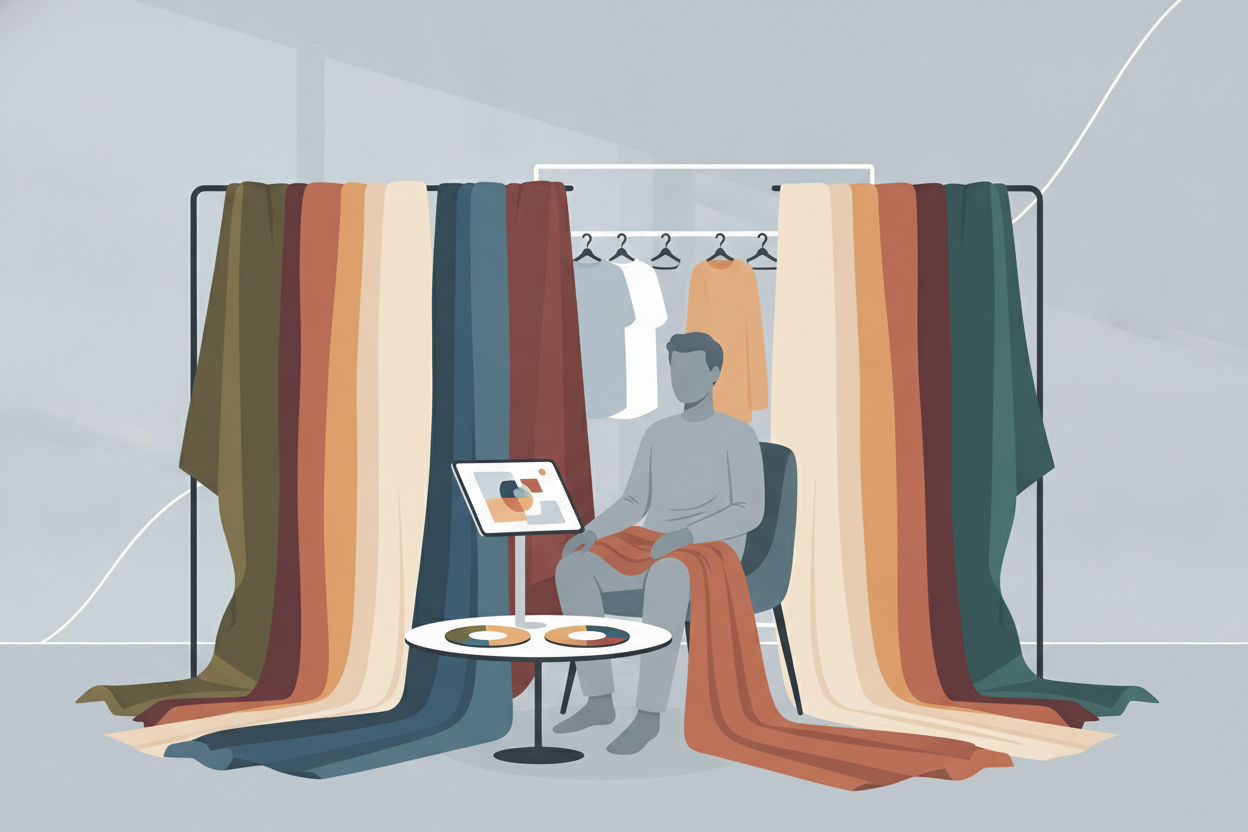
- Hold or drape each fabric right under your chin, letting it reflect upward onto your face.
- Alternate between each pair (warm/cool, light/deep) and observe your skin and eyes.
- Look for instant changes—not just which color you "like," but how your skin clarity, eye brightness, and overall harmony shift.
What to Look For
- Positive Signs: Skin appears smoother, more even, with less redness. Eyes look brighter, whites clear. Shadows or undereye circles seem lighter.
- Negative Signs: Dull, ashy, or yellowed skin. Redness or blotchiness increases. Eyes look tired or less vibrant. Jawline and facial features appear less defined.
Repeat with several color pairs to confirm your results. If unsure, take photos of each drape for side-by-side comparison later.
Section 5: Interpreting Results – Warm vs Cool Undertone and Men’s Color Analysis
How to Tell Your Undertone from Draping
Many guides suggest using veining or jewelry (gold vs silver) to determine undertone, but these methods are not always reliable for men. Draping can be more objective:
- If warm colors (orange, gold, olive, cream) seem to make your skin look healthier, you may have a warm undertone.
- If cool colors (blue, silver, gray, pure white) appear to brighten your complexion, you’re probably cool-toned.
- If both seem neutral, you may have a neutral undertone and can wear a wider range.
Seasonal Color Analysis for Men
Once you know your undertone, you can refine your palette using the "seasonal" system:
- Spring (Warm, Light, Clear): Often best with light, warm, vivid colors—peach, coral, light olive, sky blue.
- Summer (Cool, Light, Soft): May look good in soft, cool, pastel colors—powder blue, rose, lavender, cool gray.
- Autumn (Warm, Deep, Muted): May be flattered by rich, earthy tones—mustard, rust, olive, chocolate, camel.
- Winter (Cool, Deep, Vivid): May suit strong, cool colors—black, white, navy, true red, emerald.
This system can make choosing men’s wardrobe colors simpler. For more details on how AI can support your color journey, check out our guide on the AI fashion consultant revolution.
How to Record and Compare Results
- Take side-by-side photos for each color tested.
- Ask a friend for a second opinion.
- Jot down your impressions—"skin brighter," "eyes pop," or "looks tired."
Section 6: Building Your Wardrobe – Best Colors for Men by Skin Tone
Core Wardrobe Colors for Each Undertone
- Warm Undertone: Olive, camel, cream, mustard, burnt orange, teal, warm brown, khaki.
- Cool Undertone: Charcoal, navy, pure white, cobalt, cool red, true black, icy pastels.
- Neutral Undertone: Many grays, taupe, muted blues, burgundy, soft olive, stone.
Best Suit, Shirt, and Everyday Colors for Men
- Warm: Tan, olive, chocolate for suits; ivory, sage, or brick for shirts; some may wish to avoid stark white or icy blue.
- Cool: Navy, charcoal, black for suits; crisp white, lavender, or blue-gray for shirts; some may wish to avoid yellow or warm brown.
- Universal Basics: True navy and charcoal gray are widely considered flattering and are smart wardrobe investments.
How to Build a Cohesive Palette
- Choose 2-3 core neutrals that work with your undertone (e.g., navy and camel for warm; gray and black for cool).
- Add 2-3 accent colors that make your eyes pop or skin glow.
- For everyday wear, prioritize shirts, sweaters, and jackets in your best shades—these sit closest to your face.
If you want to explore how your face shape and features impact your clothing choices, try the AI face shape quiz for more tailored recommendations.
Section 7: Common Mistakes and How to Avoid Them in DIY Color Analysis
Lighting and Fabric Pitfalls
- Using artificial or poor lighting—always stick to daylight for accuracy.
- Testing with textured, patterned, or shiny fabrics—they can distort reflections and color perception. Stick to smooth, matte materials.
- Relying on too few or too many colors at once—start with strong contrast pairs (warm/cool) before branching out.
Misinterpreting Results
- Choosing based on personal color preference rather than observed effects—try to stay objective.
- Not documenting with photos—memory can be unreliable, especially with subtle differences.
- Ignoring how colors change with facial hair or skin changes—repeat the test if your look changes significantly.
Other Common Issues
- Testing while wearing colored clothing or accessories.
- Attempting to match "vein color" or jewelry only—these are not foolproof for men’s color analysis.
- Not reassessing after tanning, sunburn, or major hair color changes.
Remember, even pros sometimes need a second opinion. AI-powered apps like Maxx Report may offer a more data-backed approach if you want to double-check your findings.
Section 8: From Color Analysis to Men’s Style Basics – Practical Next Steps
Document and Build Your Color Palette
- Keep your best draping test photos handy on your phone when shopping.
- Build a palette of 6-10 go-to colors (neutrals + accents) for shirts, tees, sweaters, and jackets.
- Gradually phase out colors that seem to drain or clash with your natural coloring.
Applying Color Analysis to Everyday Men’s Style
- Prioritize your best colors for items worn near your face (tops, ties, scarves, outerwear).
- Pants, jeans, and shoes can be more flexible, but sticking to your core neutrals keeps things cohesive.
- Even small pops of the right color—like pocket squares or beanies—can make a noticeable impact.
What Colors Should You Wear for Your Body Type?
- If you want to visually broaden your frame, wear lighter/brighter colors on top.
- To slim or elongate, stick to darker shades and vertical lines.
- Well-placed color blocking or contrast can emphasize shoulders or draw attention to your best features.
Curious how AI can support your overall transformation? Read about the latest in AI glow up tips for men or start your own report with Maxx Report today.
Conclusion
Color draping at home for men is a practical way to explore which colors may suit your skin tone and undertone. With just a mirror, natural light, and a few clothing items, you can experiment to find colors that help you look and feel your best. The right colors can enhance your skin, frame your face, and make every outfit look more intentional. Use the step-by-step process above to perform your own men’s color analysis, avoid the most common pitfalls, and start building a wardrobe that works for you. For next-level insights, explore AI-powered tools like Maxx Report to combine personal color analysis with facial feature guidance—helping you reach your style goals more efficiently.
FAQ
Q: How do I do color draping at home for men?
A: Start with a clean face, neutral clothing, and natural daylight. Hold plain color fabrics (warm vs cool, light vs deep) under your chin and observe how your skin, eyes, and overall appearance respond. Take photos for comparison, and focus on skin clarity and eye brightness to help determine your best palette.
Q: What lighting is best for a home color draping test?
A: The best lighting is indirect natural daylight, ideally facing a window between 9 am and 2 pm. Avoid artificial, yellow, or fluorescent bulbs, as these can distort color perception and lead to less reliable results.
Q: How can I tell if warm or cool colors suit me better?
A: If warm shades (orange, gold, olive) seem to make your skin glow and your eyes look bright, you may have a warm undertone. If cool shades (blue, silver, gray) flatter you more, you’re probably cool-toned. Use draping, not just vein or jewelry tests, for a more objective assessment.
Q: What colors should I drape first when testing my season?
A: Start with strong contrasts: a true warm (orange or gold) and a true cool (blue or silver), plus light vs deep shades (cream vs navy), and soft vs vivid colors. These pairs can help reveal your undertone and best palette direction.
Q: How do I know my undertone from color draping?
A: Your undertone is often revealed by which color family—warm or cool—makes your skin clearer, reduces redness, and brightens your eyes during the draping test. Ignore personal color preferences and focus on observable effects in daylight.
Q: Can I do color analysis with clothes I already own?
A: Yes! Use plain t-shirts, shirts, or scarves in different colors for your draping test. Avoid patterns and stick to smooth, matte fabrics for the most accurate comparison.