How Customized Eyewear Fittings AI Is Revolutionizing Glasses Personalization
Discover how customized eyewear fittings AI revolutionizes glasses personalization by providing precise, data-driven solutions for perfect fits.


Estimated reading time: 5 minutes
Key Takeaways
- Personalized virtual fittings use computer vision and AI to map facial landmarks and recommend frames and lenses.
- Accuracy improvements reduce returns by up to 40% and speed up purchase decisions.
- Core technology combines 2D/3D scanning, machine learning models, and predictive analysis.
- Challenges include image quality, dataset bias, and data privacy, addressed by continuous learning and quality controls.
- Future trends involve AI-generated frame designs, LiDAR scanning, and smart lenses for health monitoring.
Table of Contents
- Understanding Customized Eyewear Fittings with AI
- The Technology Behind AI in Eyewear Fittings
- Benefits of Using AI for Customized Eyewear Fittings
- Challenges and Considerations
- Future Trends and the Evolving Role of AI in Eyewear
- Conclusion and Takeaways
- FAQ
Understanding Customized Eyewear Fittings with AI
Customized Eyewear Fittings AI
Customization in eyewear means tailoring frames and lenses to individual face shapes, proportions, skin tones, lifestyles, and vision needs. Today’s shoppers expect personalized solutions, not one-size-fits-all glasses. Online customization is vital: it reduces returns by delivering a precise fit, boosts customer satisfaction, and meets the demands of a booming e-commerce market.
How AI integrates customization:
- Photo and video inputs: Users upload selfies or use live camera feeds for real-time fitting.
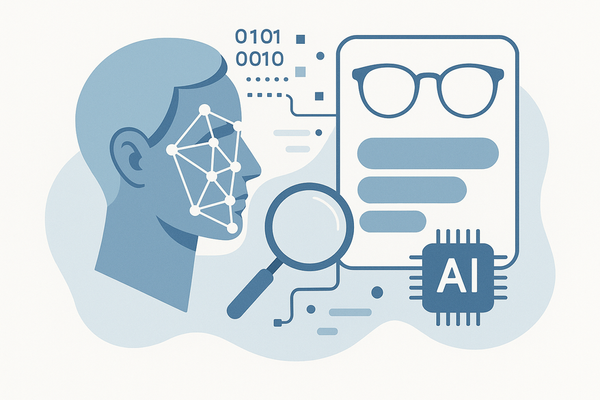
- Facial landmarks: Computer vision maps jawline, cheekbones, forehead, and nose bridge with sub-millimeter precision.
- Data fusion: AI combines facial measurements with prescription data (e.g., pupillary distance) and lifestyle factors such as screen time or outdoor exposure.
- Lens recommendations: Systems suggest blue-light filters, progressive lenses, or anti-glare coatings based on user habits.
Real-world impact:
- Reduced returns: Brands report up to 40% fewer size-related exchanges.
- Faster decision-making: Shoppers complete fittings in under two minutes.
The Technology Behind AI in Eyewear Fittings
AI and Eyewear Fittings
The core of virtual fittings combines computer vision with machine learning to deliver tailored eyewear. This technology streamlines every step from measurement capture to frame selection.
Core AI components:
- Computer Vision
- 2D/3D facial scanning via smartphone cameras or webcams.
- Measurement capture: bridge width, temple length, frame height.
- Machine Learning Models
- Predictive analysis matches facial profiles against large datasets.
- Fit optimization proposes frame curvature, thickness, and geometry.
Fitting workflow:
- Step 1: Camera-based face scan collects dozens of points across facial landmarks.
- Step 2: Facial recognition aligns virtual frames precisely, even as users tilt or turn their heads.
- Step 3: Predictive algorithms reference thousands of prior fittings to refine lens curvature and frame shape.
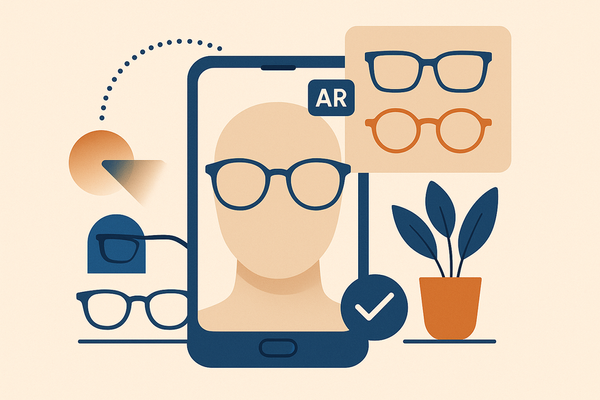
To explore augmented reality eyewear trials and for AI-driven frame styling.
Benefits of Using AI for Customized Eyewear Fittings
AI Benefits
Integrating AI into eyewear fittings delivers clear advantages for brands and consumers.
Top advantages:
- Improved Accuracy
AI estimates pupillary distance and facial metrics with sub-millimeter precision, cutting human error and returns by up to 30%. - Enhanced Efficiency
Instant, at-home virtual try-ons replace multiple store visits and speed up the purchase cycle. - Cost Reduction
Automated workflows lower fitting overhead and in-store staffing needs. - Superior Customer Satisfaction
Hyper-personalized frame and lens combos, honed by continuous user feedback, drive repeat purchases.
Actionable tip: Brands should integrate feedback loops to refine AI models and improve recommendation accuracy over time.
Challenges and Considerations
Challenges and AI
While powerful, AI-driven fittings face hurdles that providers must address.
Main hurdles:
- Technology Limitations
Image quality impacts scan precision; low-light or blurred photos can yield inaccurate measurements.
Potential bias: Datasets under-representing certain ethnicities or facial structures may reduce fit accuracy for those groups. - Data Privacy
Handling biometric and prescription data requires robust end-to-end encryption.
Compliance with GDPR, CCPA, and other regulations is mandatory to protect user privacy.
Industry solutions:
- Continuous Learning Algorithms
Models update as new facial data enters the system, improving accuracy across diverse populations. - Standardized Quality Controls
Solutions like Schneider’s CSI Modulo ONE detect lens defects and ensure consistent manufacturing output.
Future Trends and the Evolving Role of AI in Eyewear
Future and AI
AI’s role in eyewear will expand beyond fittings into design, health monitoring, and adaptive optics.
Near-term innovations:
- AI-Generated Frame Designs
Algorithms propose frame shapes that perfectly match facial symmetry and style preferences. - 3D Facial Scanning with LiDAR
Mobile LiDAR yields sub-millimeter scans for ultra-precise custom builds. - Smart Lenses
Integrated sensors track intraocular pressure and adjust prescriptions in real time for conditions like glaucoma.
Implications:
- Consumers gain seamless personalization and wellness integration in a single pair of glasses.
- Providers unlock new revenue via telemedicine partnerships, subscription-based lens updates, and adaptive optics services.
Conclusion and Takeaways
Customized eyewear fittings AI transforms how we choose frames and lenses through precise facial analysis, virtual try-ons, and data-driven personalization. This technology drives unmatched accuracy, efficiency, cost savings, and customer satisfaction. As AI evolves, expect smarter, health-integrated eyewear, globally consistent fit standards, and new service models in tele-optometry. Ready to experience a perfect fit? Explore AI-powered fitting tools from leading eyewear brands today.
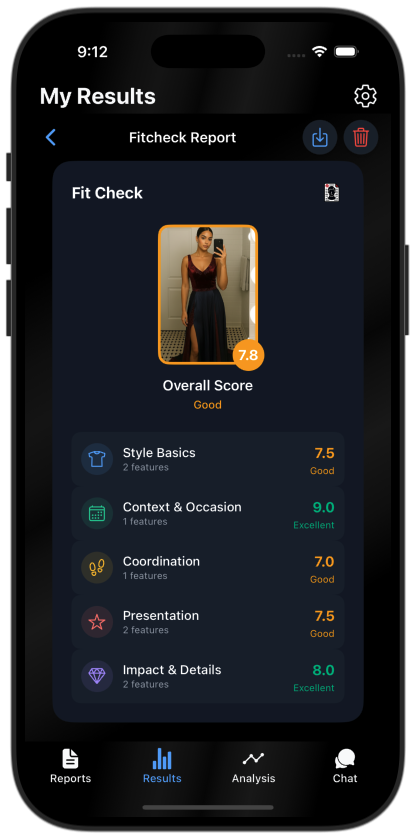
You can also get personalized fit reports, facial feature analysis, and style insights on Maxx Report.
FAQ
What is customized eyewear fittings AI?
AI-driven fittings use computer vision and machine learning to tailor frame shapes and lens options based on individual facial metrics, prescription data, and lifestyle inputs.
How accurate are virtual eyewear fittings?
Most AI systems achieve sub-millimeter precision, reducing size-related returns by up to 40% and ensuring a more reliable fit than traditional in-store measurements.
Are there privacy concerns with AI eyewear fittings?
Yes, providers must safeguard biometric and prescription data through end-to-end encryption and comply with GDPR, CCPA, and other regulations to protect user privacy.