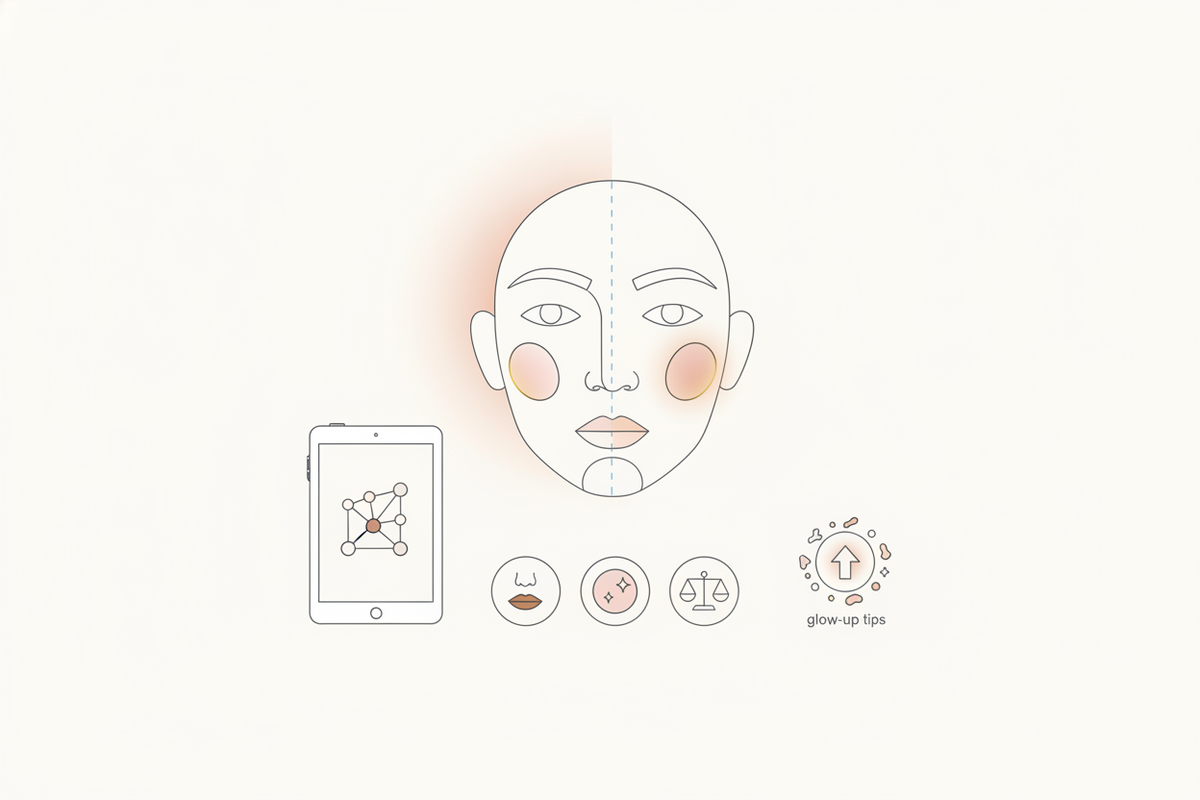
Face Analysis Looksmax: How to Decode and Improve Your Facial Attractiveness
Explore face analysis looksmax techniques to rate and enhance your facial features, symmetry, jawline, skin, and get personalized glow-up tips.

Estimated reading time: 15 min
Key Takeaways
- Face analysis looksmax uses AI to evaluate key facial features like symmetry, jawline, and skin quality with landmark detection and ratio calculations.
- Understanding facial proportions, such as the golden ratio and vertical thirds, can help decode attractiveness and inform targeted improvements.
- Personalized glow-up plans focus on improving features non-surgically through grooming, skincare, style changes, and posture adjustments for sustainable enhancement.
- Photo quality and proper angles are important for accurate AI face analysis results; consistent, high-resolution, neutral-expression images yield better insights.
- Maxx Report offers a face analysis looksmax tool that generates detailed ratings, tracks progress over time, and provides tailored transformation plans.
Table of Contents
- Section 1: Understanding Face Analysis Looksmax and Its Importance
- Section 2: Facial Symmetry and Proportions in Attractiveness
- Section 3: Jawline Definition and Lower-Face Structure Explained
- Section 4: Eye Area Analysis: Spacing, Shape, and Harmony
- Section 5: Cheekbones, Midface Projection, and Facial Ratios
- Section 6: Skin Quality, Complexion, and Hairline Impact on Looks
- Section 7: Personalized Looksmaxxing Tips for a Successful Glow-Up
Conclusion
FAQ
Section 1: Understanding Face Analysis Looksmax and Its Importance
What is Face Analysis Looksmax?
Face analysis looksmax is a technology-driven approach that evaluates facial attractiveness by examining specific features and their proportions. Using AI algorithms, this process identifies facial landmarks—such as the eyes, nose, mouth, jawline, and cheekbones—and quantifies their relationships using established metrics. The goal is to understand which features may contribute positively or negatively to perceived attractiveness, thereby guiding users toward targeted enhancement strategies. These strategies, collectively known as looksmaxxing, range from minor grooming tweaks to lifestyle changes, and occasionally medical or cosmetic interventions.
Why Is AI-Powered Face Analysis Important?
Subjective opinions on facial attractiveness vary widely due to cultural, personal, and contextual differences. AI-powered face analysis introduces objectivity by utilizing consistent measurement standards and datasets of facial images rated for attractiveness. Platforms like Maxx Report leverage deep learning models trained on many faces to detect subtle facial asymmetries and proportion deviations that may be difficult to discern otherwise. These tools calculate scores based on metrics like symmetry indices, golden ratio adherence, and feature prominence. This data-driven approach enables users to receive personalized, actionable feedback rather than generic advice, potentially increasing the likelihood of meaningful improvement.
Key Components Evaluated in Face Analysis
- Facial symmetry: AI measures the alignment and size equality of bilateral features, which is often correlated with perceived attractiveness.
- Jawline: The shape, sharpness, and angularity of the jawline impact impressions of youthfulness and masculinity/femininity.
- Eye area: Includes spacing, shape, eyelid contour, and how these harmonize with surrounding features.
- Cheekbones and midface projection: The prominence and placement of cheekbones play a role in face structure and the perception of health.
- Skin quality: Texture smoothness, evenness of complexion, pore size, and clarity are analyzed for vitality and youth.
- Hairline and hairstyle: The hairline framing and chosen hairstyle influence perceived face shape and balance.
Understanding these components allows individuals to focus their efforts efficiently when pursuing looksmaxxing.
Section 2: Facial Symmetry and Proportions in Attractiveness
The Role of Facial Symmetry
Facial symmetry is one of the commonly studied markers of beauty. Evolutionary psychology suggests that symmetrical faces may indicate genetic fitness and developmental stability, which humans may subconsciously interpret as attractiveness. Symmetry involves the near-mirror replication of facial features on the left and right sides across both vertical and horizontal axes. Research indicates that even small asymmetries—such as one eye being slightly higher or a nostril differing in size—can impact perceived attractiveness.
How Is Symmetry Measured?
AI-based face analysis quantifies symmetry by detecting key landmarks (e.g., inner and outer eye corners, mouth edges, nose tip) and then calculating distances and angular differences between corresponding points on each side. For example, the algorithm may measure the horizontal distance from the left eye corner to the face’s vertical midline, then compare it to the right eye’s equivalent. An aggregate symmetry score is derived by averaging these discrepancies, often normalized to a 0–100 scale. Some tools also analyze texture symmetry, assessing whether skin features like moles or blemishes are mirrored.
Facial Proportions and the Golden Ratio
Facial proportions describe the relative sizes and distances among features, and the golden ratio (~1.618) is often cited as a benchmark of aesthetic appeal. While not universally applicable, many naturally attractive faces approximate these ratios, which can be assessed via AI.
- Vertical thirds: The face is divided horizontally into three equal parts: from hairline to eyebrows, eyebrows to base of nose, and base of nose to chin. Disparities here can affect balance—for example, a too-long lower third may appear less youthful.
- Horizontal fifths: The face’s width is segmented into five equal vertical sections, each ideally matching the width of one eye. This helps evaluate eye spacing and face width harmony.
- Width ratios: The ratio of cheekbone width to jaw width and overall face length influences the perceived shape (oval, square, round) and attractiveness.
Maxx Report’s AI calculates deviations from these proportions, providing a detailed breakdown and suggestions on which areas to target for proportional enhancement.
Section 3: Jawline Definition and Lower-Face Structure Explained
Why Jawline Matters in Looksmaxxing
The jawline is a key feature affecting face shape perception and attractiveness. A defined, angular jawline often signifies youth, health, and sexual dimorphism—particularly masculinity in men. It anchors the lower face, providing structural balance and enhancing the appearance of other features like the lips and chin. Conversely, a weak or rounded jawline may be associated with aging or lower attractiveness scores in AI assessments.
Key Jawline Features Analyzed
- Jaw angle: The angle formed where the lower jaw meets the neck, ideally around 120–130 degrees for males and slightly softer for females, influences perceived sharpness.
- Jaw width: The horizontal breadth of the jaw relative to cheekbones and overall face width, contributing to facial harmony.
- Chin shape: Chin projection (how far it protrudes from the face) and symmetry are analyzed to ensure balance. A protruding chin can enhance jawline strength, whereas a recessed chin may reduce it.
Improving Jawline Definition
Many people seek non-surgical methods to enhance jawline appearance before considering invasive procedures. Non-invasive options include:
- Facial exercises: Exercises such as chin lifts, jaw clenching, and neck stretches target the masseter and platysma muscles, potentially increasing muscle tone and definition. Some studies suggest consistent exercise over several weeks can yield improvements.
- Weight management: Excess submental fat (double chin) can blur jaw contours. Losing body weight through diet and cardio may help sharpen the jawline.
- Grooming: Beard styles can visually sculpt the jawline. For example, a short boxed beard with clean neckline trimming creates shadowing that simulates a chiseled jaw. For patchy beards, see the comprehensive Glow Up for Men with Patchy Beards.
- Posture and confidence: Maintaining an upright posture with the chin slightly raised elongates the neck and accentuates jaw angles, improving perceived strength.
- Cosmetic aids: Temporary contouring makeup or dermal fillers can also enhance jawline sharpness without surgery.
Section 4: Eye Area Analysis: Spacing, Shape, and Harmony
Importance of the Eyes in Facial Attractiveness
The eyes are central to human communication and are often the first features noticed. Their size, shape, and symmetry contribute heavily to facial attractiveness. Bright, clear eyes with distinct eyelid contours and healthy sclera (the white part) are widely admired. AI analysis considers subtle nuances like eyelid crease definition and eye aperture size to assess attractiveness.
Eye Spacing and Proportions
Ideal eye spacing is approximately one eye-width between the two eyes. This balance ensures neither a crowded nor a wide-eyed appearance. AI algorithms measure the distance between the inner eye corners and compare it to eye width to calculate an eye spacing ratio. Deviations from the ideal ratio can be improved cosmetically or via makeup techniques to simulate optimal spacing.
Eye Shape and Definition
Certain eye shapes are preferred due to their association with youth and vitality. Almond-shaped eyes, characterized by a subtle upward tilt at the outer corners, are often rated higher. The so-called 'Hunter eyes'—deep-set, elongated eyes with a pronounced orbital rim—are linked to higher attractiveness scores in some AI assessments. Achieving or enhancing this look may include:
- Makeup techniques like tight-lining and eyeshadow contouring.
- Eyebrow shaping to complement eye shape.
- Facial exercises to strengthen surrounding muscles.
- Consulting the guide on Hunter Eyes for detailed strategies.
Harmony with Other Features
The eyes do not exist in isolation; their harmony with the nose, eyebrows, and cheekbones affects overall facial balance. For example, well-arched eyebrows enhance eye openness and can lift the entire eye area visually. Cheekbones create natural shadows that define eye prominence, while nose width and shape should proportionally complement eye spacing to maintain balance. AI tools evaluate these inter-feature relationships to provide holistic attractiveness scores.
Section 5: Cheekbones, Midface Projection, and Facial Ratios
Role of Cheekbones in Looksmax
High, prominent cheekbones are often associated with youth, health, and attractiveness. They create natural highlights and shadows that add dimension to the face, preventing a flat or aged appearance. AI analysis quantifies cheekbone prominence by measuring the distance between the zygomatic arches (the widest part of the face) and their projection relative to the nose and jawline.
Midface Projection and Its Impact
The midface encompasses the area around the cheeks and nose bridge. Proper midface projection ensures that the cheeks are neither too flat nor excessively protruding, maintaining facial harmony. A well-projected midface supports the eyes and soft tissues, contributing to a youthful look. AI 3D modeling can assess midface projection from frontal and lateral photos, calculating angles and volumes to inform enhancement options.
Facial Ratios to Consider
- Cheekbone to jawline width ratio: An ideal ratio balances the width so that the face has neither a too-wide nor too-narrow appearance. Typically, cheekbone width slightly exceeds jawline width in attractive faces.
- Vertical facial thirds: Maintaining equal thirds vertically ensures cheekbones sit optimally in the midface, contributing to balanced features.
- Nasolabial fold depth: These folds run from the sides of the nose to the corners of the mouth. Subtle folds add natural character, but excessive depth may indicate aging or volume loss. Skincare and dermal fillers can address this.
Maxx Report's AI quantifies these ratios and suggests non-invasive methods—such as contouring makeup, facial massage, or fillers—to optimize cheekbone appearance.
Section 6: Skin Quality, Complexion, and Hairline Impact on Looks
Why Skin Quality Is Crucial
Skin quality is a primary visual indicator of health and youth. AI algorithms assess skin by analyzing:
- Texture smoothness: Detecting fine lines, wrinkles, and roughness.
- Pore visibility: Smaller, less visible pores are associated with healthier skin.
- Pigmentation: Even skin tone without hyperpigmentation or redness scores higher.
- Blemishes and scars: Presence reduces skin quality scores.
- Radiance and glow: Subtle light reflection patterns indicate skin vitality.
These factors are weighted to assign an overall skin quality score, which is often a significant determinant in attractiveness ratings.
Improving Your Skin Score
Enhancing skin quality is achievable through consistent care and lifestyle adjustments:
- Skincare routine: Daily cleansing to remove impurities, exfoliation (1–3 times per week) to eliminate dead skin cells, moisturizing to maintain hydration, and daily broad-spectrum SPF 30+ sunscreen application to prevent UV damage.
- Targeted treatments: Use dermatologist-recommended products containing ingredients such as retinoids, vitamin C, niacinamide, and hyaluronic acid to address acne, pigmentation, and texture.
- Lifestyle factors: Adequate hydration (8+ glasses of water/day), balanced diet rich in antioxidants (fruits, vegetables), regular sleep (7–9 hours/night), and stress management support skin regeneration.
- Professional treatments: Chemical peels, microdermabrasion, laser therapy, and microneedling can provide accelerated improvement but should be approached with expert guidance.
Hairline and Hairstyle Influence
The hairline frames the upper portion of the face and affects perceived face shape and balance. Receding hairlines or uneven growth can detract from facial symmetry scores and may age the appearance. AI evaluates hairline shape, recession, and density as part of the overall looksmax score.
Choosing hairstyles that complement your face shape can enhance features and mask less desirable areas. For instance, a voluminous top with short sides can elongate a round face, while layered cuts soften angular faces. Maxx Report provides hairstyle recommendations based on your unique facial structure, optimizing balance and highlighting strengths. See the for an example of this personalized analysis.
Section 7: Personalized Looksmaxxing Tips for a Successful Glow-Up
Grooming and Skincare for Transformation
Effective grooming extends beyond basic hygiene; it involves tailoring your routine to your facial features. For example:
- Beard shaping: Align beard lines with your jaw angles to enhance definition. For patchy beards, selective trimming and blending can create the illusion of fullness. Explore the Glow Up for Men with Patchy Beards for detailed methods.
- Eyebrow grooming: Regularly shaping eyebrows to maintain a natural arch complements eye shape and improves facial harmony.
- Skincare consistency: Adhering to a daily routine improves skin texture and complexion, which are critical for a radiant, youthful appearance.
Style and Confidence Optimization
Your clothing choices and posture influence how your facial attractiveness is perceived. AI-driven fashion consultant tools, like those discussed in AI Fashion Consultant: Revolutionizing Personal Style in 2024, analyze your face shape, coloring, and proportions to recommend clothing styles, colors, and fits that enhance your features and boost confidence. Confidence itself improves perceived attractiveness through positive body language and facial expressions.
Leveraging AI for Continuous Improvement
Maxx Report’s platform allows users to upload high-quality photos regularly to track their looksmax progress over weeks and months. By comparing scores and feature analyses over time, users can identify which strategies yield the best results. The tool also adapts recommendations dynamically, helping refine grooming, skincare, and styling routines for maximal effect. This iterative feedback loop empowers users to make evidence-based decisions rather than guessing.
Photo Tips for Accurate Face Analysis
- Use front-facing photos with uniform, natural lighting to avoid shadows that confound AI detection.
- Maintain a neutral facial expression without exaggerated smiles or frowns to capture true feature geometry.
- Avoid filters, heavy makeup, or digital retouching that alter natural features.
- Pull hair back or use a headband to fully expose the hairline and face contours.
- Use high-resolution images (at least 1080p) to allow detailed landmark detection.
Consistently following these guidelines helps Maxx Report’s AI generate accurate and actionable face analysis results.
Conclusion
Face analysis looksmax offers a data-informed framework for understanding and enhancing facial attractiveness. By focusing on objective metrics such as facial symmetry, jawline definition, eye harmony, cheekbone prominence, and skin quality, individuals can strategically prioritize their grooming, skincare, and style improvements without necessarily resorting to invasive methods. AI-powered tools like Maxx Report provide personalized scores and transformation plans that adapt as you progress. Combining this data-driven approach with consistent effort and confidence-building can support sustainable and effective enhancement of your appearance.
FAQ
Q: How accurate is an AI face analysis / looksmax score?
A: AI face analysis accuracy depends heavily on photo quality and the sophistication of the algorithm. Advanced tools like Maxx Report use precise facial landmark detection combined with established scientific standards to provide reliable and objective scores. However, some variations may occur due to lighting, expression, or angle differences. Consistent, high-quality photos minimize these discrepancies, ensuring dependable progress tracking.
Q: What facial features matter most in looksmaxxing?
A: The most influential features include facial symmetry, jawline definition, eye spacing and shape, cheekbone prominence, and skin quality. These features collectively influence facial harmony and perceived attractiveness. Improving these areas—through grooming, skincare, posture, and style—can yield noticeable enhancements in your overall look.
Q: How do I improve my face score without surgery?
A: Non-surgical improvements include targeted grooming techniques (e.g., beard shaping, eyebrow maintenance), consistent skincare routines addressing texture and pigmentation, facial exercises to tone muscles, hairstyle changes to complement face shape, and posture adjustments to enhance facial angles. These methods, combined with healthy lifestyle habits, can produce natural, lasting improvements.
Q: What photo should I use for the best face analysis results?
A: Use a well-lit, front-facing photo with a neutral expression, minimal to no makeup or filters, and hair pulled back to fully expose the hairline and face contours. Ensure the image is high resolution and free from shadows or obstructions. Consistency in lighting and pose across photos is essential for accurate comparison over time.
Q: Is symmetry or facial harmony more important in attractiveness?
A: Both are important and interrelated. Symmetry measures the balance between the two halves of the face, while harmony assesses how well all facial features complement each other in proportion and placement. High attractiveness ratings tend to occur when facial symmetry is high and features work cohesively in harmonious proportions.
Q: What does a good jawline, eye area, or cheekbone score mean?
A: High scores in these categories indicate well-defined, balanced features that align with established standards of attractiveness. For example, a strong jawline score reflects sharp, proportional angles and width; a high eye area score denotes ideal spacing and shape; and a good cheekbone score demonstrates appropriate prominence and midface projection. These scores guide personalized enhancement strategies.