
Face Beauty Test: Fact vs. Fiction—What Science Really Says
Face beauty tests are trending, but are they accurate? Explore the facts vs. fiction, scientific findings, and how AI apps like Maxx Report measure facial beauty.

Estimated reading time: 13 min
Key Takeaways
- The golden ratio is not a scientific standard for facial beauty—real attractiveness is complex and multi-factorial.
- Facial symmetry, averageness, skin clarity, and sexual dimorphism are consistently linked to attractiveness in research.
- AI face beauty tests provide interesting insights, but their scores reflect algorithms, not universal truths.
- Cultural, gender, and biological factors all influence beauty standards and what’s considered attractive.
- Online beauty tests often mix science with myth and should be used for fun or self-improvement, not absolute judgment.
Table of Contents
- Section 1: Debunking the Golden Ratio—Myth vs. Reality
- Section 2: What Science Really Says About Attractive Faces
- Section 3: Why the Face Beauty Test Can’t Be Just One Number
- Section 4: Cultural, Biological, and Gender Factors in Beauty Perception
- Section 5: How AI Face Beauty Tests Work—And Their Limits
- Section 6: The Real Role of Facial Proportions and Features in Beauty
- Conclusion
- FAQ
Section 1: Debunking the Golden Ratio—Myth vs. Reality
What is the Golden Ratio Beauty Test?
The golden ratio—roughly 1.618:1—has been called the "secret" to beauty for centuries. Viral beauty tests and AI apps often tout facial proportions that align with this ratio as proof of attractiveness. The concept suggests that the closer your features (like nose width to mouth width, or the distance between your eyes) fit this mathematical ratio, the more beautiful you are.
Specifically, the golden ratio is applied to various facial measurements, including:
- The length of the face divided by the width of the face
- The distance between the pupils divided by the distance from the top of the head to the chin
- The length of the lips divided by the width of the nose
- The width of the nose divided by the distance between the eyes
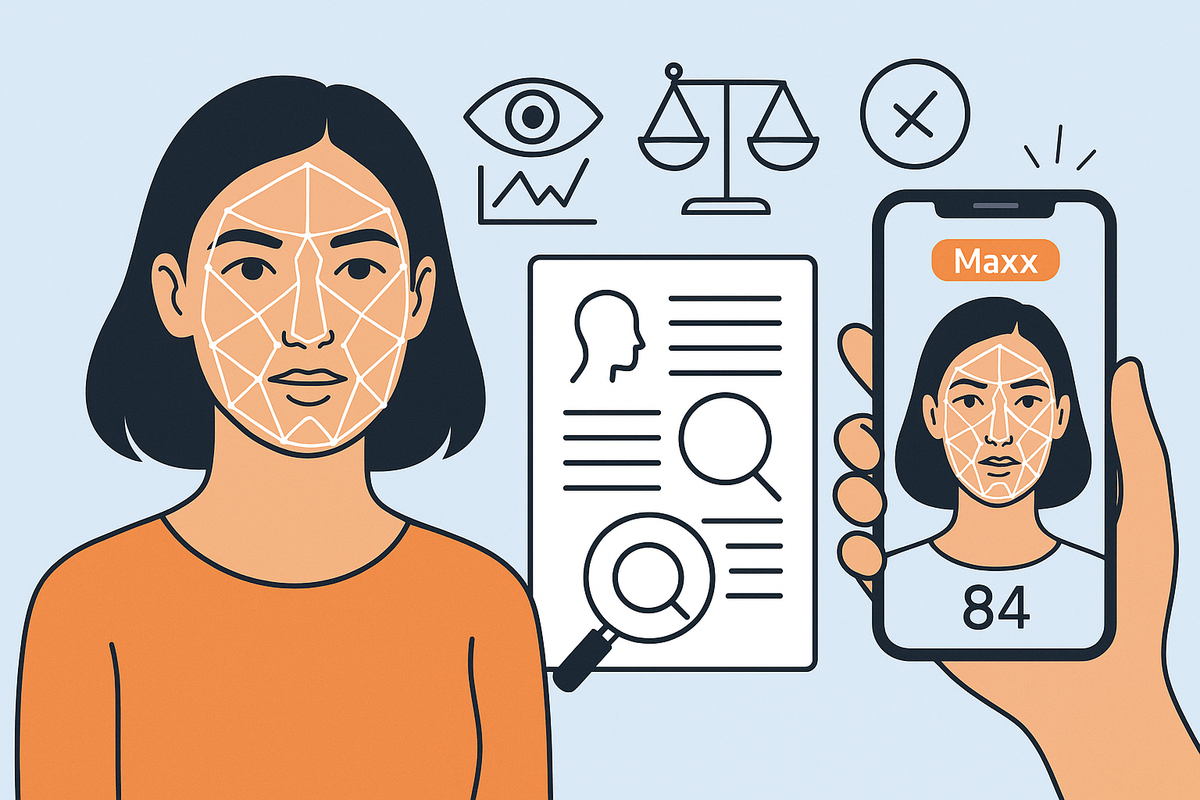
These calculations are often visualized with diagrams or apps that overlay lines on a facial image to "score" your adherence to the ratio. However, these ratios rarely account for the diversity of human features and ethnic backgrounds.
Why It’s Not a Scientific Standard
Despite its popularity, the golden ratio faces significant scientific criticism. Multiple peer-reviewed studies have failed to find a consistent link between this ratio and perceived beauty across diverse populations. The idea that there is a single "perfect face" is overly simplistic and not supported by facial attractiveness research.
- Beauty is influenced by many traits—not just proportions.
- Different cultures value different facial characteristics.
- Celebrity examples often cherry-pick faces that happen to fit the ratio.
For example, a 2020 review of facial aesthetic research concluded that while some attractive faces happen to fit the golden ratio, just as many do not. Furthermore, attempts to reconstruct "golden ratio" faces often result in unnatural or unappealing composites. The diversity of beauty standards across the world further undermines the argument for any singular mathematical ideal.
Why Do People Believe in the Golden Ratio?
The myth persists because it offers a simple, quantifiable answer to a complex question. It’s also visually satisfying—nature does use the golden ratio in some patterns (like shells or flowers). But human faces, with all their variation, don’t reliably fit this mold. The allure is understandable: people want clear answers, and the golden ratio promises a sense of objectivity and magic. It’s often promoted in pop culture, from plastic surgeons’ advertisements to viral social media posts, making it hard to separate fact from fiction.
For a deeper dive into the myth and the real science, see our full article on the golden ratio and facial proportions.
Section 2: What Science Really Says About Attractive Faces
Facial Symmetry: The Most Robust Link
Decades of research show that facial symmetry—a close match between the left and right sides of the face—is often (but not always) associated with attractiveness. Symmetry is thought to signal genetic health and developmental stability. However, people are rarely perfectly symmetrical, and moderate asymmetry can still be attractive.
- Studies in evolutionary psychology support a preference for near-symmetry.
- Symmetry is just one of several factors that shape our preferences.
For example, a 2006 study in the journal "Proceedings of the Royal Society B" demonstrated that participants consistently rated symmetrical faces as more attractive than manipulated asymmetrical faces. However, the effect size was smaller than expected, indicating that while symmetry is a factor, it is not a sole determinant. Symmetry may matter most in initial impressions, but other features quickly come into play.
Averageness: The Composite Advantage
When researchers create composite images by blending multiple faces, these "average" faces are typically rated as more attractive than most individual faces. Why? Averageness may signal genetic diversity and health. It also means the features are less exaggerated or extreme.
- Composite faces are smoother and lack unusual traits.
- Extremely unique or rare features are not always perceived as attractive.
In one classic experiment, over 30 individual faces were digitally averaged to create composite images. These composites were judged more attractive than almost all the originals. The "averageness hypothesis" suggests that average features are subconsciously associated with genetic diversity and resistance to disease—a subtle evolutionary cue.
Skin Quality and Sexual Dimorphism
Clear, even-toned skin is universally associated with health and youth—key signals in attractiveness. Skin quality is often one of the first things people notice, and even minor blemishes or uneven pigmentation can influence ratings. Good skin is interpreted as a sign of fertility and wellness, which is why skincare is a massive global industry.
Sexual dimorphism (masculine vs. feminine traits) also plays a role: pronounced jawlines or cheekbones can be attractive depending on gender and context. For instance, the "hunter eyes" trend focuses on deep-set eyes, which are discussed in detail in our post on hunter eyes and attractiveness.
- Masculine features: broader jaw, heavier brow in men.
- Feminine features: fuller lips, rounder eyes in women.
Studies have shown that men with higher facial sexual dimorphism (strong jaw, prominent brow ridge) are rated as more attractive in short-term contexts, while less pronounced features may be preferred for long-term partners. For women, higher estrogen-linked traits such as larger eyes and fuller lips are often rated as more attractive.
Section 3: Why the Face Beauty Test Can’t Be Just One Number
Limitations of Single-Score Beauty Ratings
Many online face beauty tests—whether app-based, AI-driven, or manual—try to summarize your attractiveness with a single score. But real beauty is multi-dimensional. A number can only reflect the priorities and biases of the algorithm or the human doing the rating.
- Your "score" may change dramatically between different tests.
- No two people (or algorithms) agree on every aspect of beauty.
For instance, one app might assign more weight to symmetry, while another emphasizes skin clarity or eye spacing. A study analyzing four popular AI beauty apps found up to a 30% variation in scores for the same individual based on different algorithmic criteria. This highlights the subjective nature of beauty quantification.
How Maxx Report Breaks It Down
Maxx Report doesn’t just give you a number—it provides detailed analysis on aspects like symmetry, jawline, skin quality, and feature proportions. This is more aligned with what science says: facial beauty is the sum of many distinct cues, not a single universal standard.
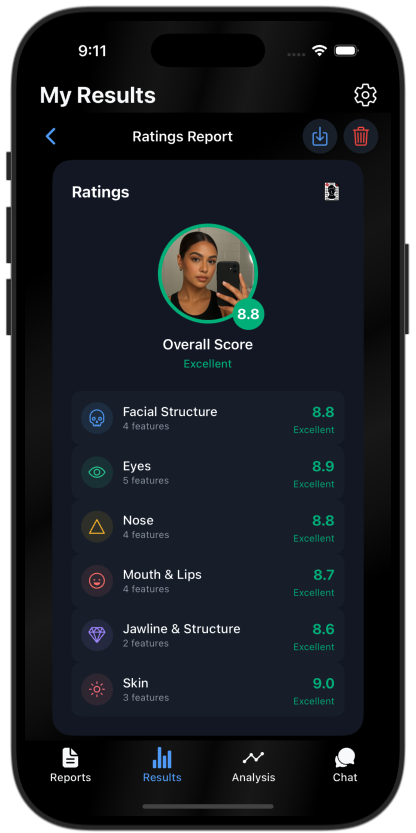
For example, Maxx Report might show a breakdown such as:
- Symmetry: 8.2/10
- Jawline definition: 7.5/10
- Skin clarity: 9/10
- Cheekbone prominence: 8/10
- Proportionality: 7.8/10
This approach provides a more actionable and realistic summary, allowing users to identify strengths and possible areas to improve, rather than focusing on a single, reductive number.
Health, Attractiveness, and Perceived Beauty
It’s important to distinguish between beauty, perceived attractiveness, and health cues. For example, someone can score high on health markers (clear skin, even features) but may not match popular beauty standards. Conversely, a "unique" face might be seen as highly attractive within a certain cultural context.
Consider the example of supermodels with unconventional features—such as a prominent gap between the teeth or unusually large eyes. These features might not align with classic proportional ideals but can become highly desirable trends due to cultural shifts or celebrity influence.
Section 4: Cultural, Biological, and Gender Factors in Beauty Perception
How Culture Shapes Beauty Ideals
Beauty is not just biological; it’s deeply cultural. What’s considered attractive in one country or era may be very different elsewhere. For example, high cheekbones and fair skin are prized in some East Asian cultures, while tanned skin and fuller lips are popular in the West.
- Fashion trends and media influence our beauty standards.
- Standards shift over time—think of the changing ideal body shapes across decades.
In the 1990s, thin eyebrows and very slim figures were the Western ideal; today, fuller brows and curvier body shapes are more celebrated. In Ethiopia, facial scarification used to be a beauty marker, while in Korea, double eyelid surgery is common. The idea of a single beauty ideal is a cultural illusion. Even within a single nation, regional variations abound, shaped by localized traditions and celebrities.
The Role of Gender Expectations
Gender norms strongly influence what features get labeled as attractive. Masculinity and femininity are expressed through different facial markers—strong jawlines, prominent brows, or delicate features, for example. AI beauty tests may be trained on gendered data, which can introduce bias.
For example, an AI trained predominantly on female faces from fashion magazines may undervalue masculine features or nonbinary faces. Similarly, beauty trends like "boyish" or "androgynous" looks in high fashion challenge binary standards, but may not be recognized by mainstream AI scoring.
Biological Universals vs. Social Constructs
Some cues, like clear skin and healthy hair, are near-universal because they signal health and fertility. But many preferences are learned. For a look at how AI is starting to reflect and sometimes challenge these biases, check out our deep dive on how automated beauty recommendations work.
It’s also important to recognize that even so-called "universal" preferences can shift. For example, preferences for body weight, hair style, or even eye color have changed due to globalization, migration, and cross-cultural exchange. AI tools must constantly adapt to avoid reinforcing outdated or narrow standards.
Section 5: How AI Face Beauty Tests Work—And Their Limits
The Algorithms Behind Beauty Scoring
AI-powered face beauty tests use neural networks trained on large datasets of labeled faces. They analyze facial landmarks (eyes, nose, mouth, chin, etc.), measure symmetry, proportions, and sometimes even skin tone or texture. Maxx Report’s AI, for instance, provides comprehensive looksmaxxing reports based on these features.
- AI can measure dozens of facial metrics in seconds.
- Training data often includes user ratings and expert assessments.
The process usually involves the following steps:
- Facial Detection: The system locates the face in the uploaded photograph.
- Landmark Mapping: Key points on the face (like the corners of the eyes, mouth, and nose) are mapped out.
- Metric Calculation: Distances, angles, and ratios between landmarks are computed.
- Pattern Matching: These metrics are compared to the average values in the training data.
- Scoring: The model outputs scores or recommendations based on how closely a face matches the learned "attractive" patterns.
Advanced systems may even detect skin tone uniformity, wrinkle depth, and subtle facial muscle tension, offering a highly granular analysis.
What Do These Tests Really Measure?
Most AI face beauty tests reflect the "average" preferences in their training data. If the data is biased toward certain ethnicities, ages, or celebrity looks, the results will reflect those biases. That means your score is as much about the dataset as about your actual face.
- AI cannot measure personality, charisma, or non-visual beauty.
- Interpret scores as starting points, not verdicts.
For example, an AI trained primarily on Western celebrity images may undervalue features common in other populations. If the dataset includes mostly young adults, older users might receive lower scores regardless of their actual appeal within their peer group. This is why scores should be interpreted as relative, not absolute.
Reliability, Bias, and Interpretation
No AI beauty test is perfectly reliable. Lighting, camera angles, facial expressions, and photo quality all impact the results. Some features, like skin clarity, can be affected by makeup or filters. Use these tools for fun, self-improvement, or curiosity—not as a judgment of your worth.
For more on how instant digital makeovers work and the science behind them, visit our post on digital AI makeovers.
Users should also be aware that subtle changes—such as tilting your head, smiling, or using different backgrounds—can lead to major differences in AI-generated scores. Some apps even recommend retaking photos under neutral lighting and with a relaxed expression for the most "accurate" results. Still, the inherent subjectivity of the training data means no score is definitive.
Section 6: The Real Role of Facial Proportions and Features in Beauty
Facial Thirds, Fifths, and Angles
Classic facial analysis divides the face into "thirds" (forehead, nose, chin) and "fifths" (vertical segments). While these measurements can help guide makeup artists or surgeons, they’re guidelines—not rules. Research shows that deviations from these ideals are common and often unnoticed.
- Jawline strength, nose angle, and eye spacing are all part of the picture.
- Extreme adherence to these rules can lead to unnatural results.
For example, the "rule of fifths" suggests that the face should be five eye-widths wide, but few people fit this exactly. Even supermodels deviate from these proportions. Similarly, the ideal "facial thirds" (where the distance from the hairline to the eyebrows, eyebrows to the base of the nose, and nose to chin are equal) are rarely observed in real faces. Surgeons and stylists use these as flexible templates rather than strict requirements.
Which Features Actually Matter Most?
According to studies, the most influential features for attractiveness include:
- Facial symmetry
- Skin quality
- Averageness (lack of extreme features)
- Proportionate jawline and cheekbones
- Eye clarity and spacing
However, features like dimples, freckles, or unique eye shapes can make a face memorable and appealing, even if they don’t fit the "ideal." For a personalized analysis, try a face shape quiz with AI analysis.
Real-world examples include celebrities whose distinctive features set them apart: think Cindy Crawford’s mole, Benedict Cumberbatch’s wide-set eyes, or Lupita Nyong’o’s striking cheekbones. These features may not align with textbook proportions but have nonetheless become beauty icons. This illustrates how individuality, confidence, and self-presentation often outweigh mathematical precision in perceived attractiveness.
Online Beauty Content: Science or Pseudoscience?
Much of what goes viral in facial aesthetics draws loosely from science but exaggerates claims. For example, AI and filter-driven videos often use selective data or visual tricks. Always consider the source and look for evidence-based explanations. The best AI apps, like Maxx Report, aim to balance science, helpful advice, and self-confidence.
It’s crucial to be skeptical of content that claims to "hack" beauty with one trick or formula. Genuine improvement comes from holistic self-care, understanding your own features, and sometimes experimenting with styles and grooming. Science can guide, but it cannot dictate, individual attractiveness.
Conclusion
The idea of a "face beauty test: fact vs. fiction" is more relevant than ever in the age of AI and viral trends. While technology like Maxx Report can provide fascinating, detailed analyses of your facial features, true beauty can’t be reduced to a single number or universal rule. Science shows that symmetry, averageness, and skin quality are important, but social, cultural, and personal factors matter just as much. Use AI tools as a way to learn, experiment, and grow in confidence—not as a final verdict. For a science-based, personalized approach to looksmaxxing, explore Maxx Report’s AI-powered beauty reports.
Ultimately, the most valuable outcome from any beauty test—AI or otherwise—is self-awareness and empowerment. Whether you’re curious about your facial metrics or seeking practical tips, remember that beauty is a dynamic interplay of biology, culture, and individuality. Technology can be a helpful mirror, but it can’t capture the full spectrum of human appeal. Let science inform your journey, but let your own personality and preferences lead the way.
FAQ
Q: Is the golden ratio really a valid test of facial beauty?
A: No. While the golden ratio is a popular myth, scientific studies have not found consistent evidence that faces fitting this ratio are more attractive. Beauty is influenced by many factors beyond mathematical proportions.
Q: What facial features make a face attractive according to science?
A: Research highlights facial symmetry, skin clarity, averageness, and balanced sexual dimorphism (masculine or feminine traits) as key factors. However, unique features can also contribute to attractiveness within individual and cultural contexts.
Q: Are AI face beauty tests accurate?
A: AI face beauty tests provide interesting estimates based on facial metrics and their training data, but their scores are not absolute or universally accurate. They reflect algorithmic patterns, not objective truth.
Q: Does symmetry really make someone more attractive?
A: Generally, yes—facial symmetry is linked to perceived attractiveness in many studies. But perfect symmetry is rare and not required; small asymmetries are normal and often go unnoticed.
Q: Is beauty objective or subjective?
A: Both. Some health cues and preferences are nearly universal, but most beauty standards are shaped by culture, era, and personal taste. What’s attractive varies widely between people and societies.
Q: Why do facial attractiveness scores differ so much between people and apps?
A: Differences arise from varied algorithms, cultural biases, and rating criteria. Lighting, photo angles, and subjective preferences also play major roles in score variability.