
Face Rate: How AI Scores and Enhances Your Facial Attractiveness
Discover how face rate AI tools score your looks with symmetry, proportions, and photo tips for accurate ratings and personalized glow-ups.

Estimated reading time: 15 min
Key Takeaways
- Face rate AI tools analyze facial symmetry, proportions, and landmarks to provide an attractiveness score on a 0–100 scale, using algorithms trained on datasets of human faces.
- Facial thirds, the golden ratio, jawline definition, and canthal tilt are factors that influence face rating results by quantifying classical beauty standards.
- Photo quality and framing are important for accurate face rate assessments; high-resolution, well-lit, front-facing images improve landmark detection and scoring consistency.
- Ratings can offer insights to improve your look through targeted grooming, hairstyle adjustments, and skincare routines that address specific facial feature metrics.
- Using apps like Maxx Report can provide personalized, AI-powered glow-up plans based on your face rate score, combining data-driven feedback with practical recommendations.
Table of Contents
- Section 1: Understanding Face Rate and AI Attractiveness Scoring
- Section 2: The Role of Facial Symmetry in Face Rate
- Section 3: Facial Proportions, Thirds, and the Golden Ratio
- Section 4: Jawline Definition, Canthal Tilt, and Face Shape Metrics
- Section 5: Photo Quality and Framing for Accurate Face Ratings
- Section 6: Interpreting Your Face Rate Score and What It Means
- Section 7: Improving Your Face Rate with Grooming and Styling
- Conclusion
- FAQ
Section 1: Understanding Face Rate and AI Attractiveness Scoring
What Is Face Rate?
Face rate refers to a numerical score generated by AI-powered tools that evaluate the attractiveness of a person’s face. These scores typically range from 0 to 100 and quantify features like symmetry, proportions, skin quality, and other aesthetic markers. This score is an aggregation of multiple facial feature analyses designed to provide a data-driven assessment of facial appeal. For example, a face rate of 85 might indicate balanced features and clear skin, while a score around 50 could highlight areas for improvement in proportion or skin texture.
How AI Analyzes Faces
AI facial rating systems use computer vision and deep learning algorithms trained on datasets of human faces and attractiveness ratings. These datasets often include thousands to millions of images, annotated with landmark points and subjective attractiveness scores collected from diverse populations, which helps the AI learn patterns related to beauty. By identifying key facial landmarks—such as the eyes, nose, mouth corners, jawline, and cheekbones—the AI calculates metrics linked to beauty standards. These algorithms also consider:
- Facial symmetry scores based on left-right matching, calculated by comparing the position and size of paired landmarks.
- Proportions such as the distance between features, for example, the ratio of nose width to interocular distance.
- Skin smoothness and texture analysis, wherein AI evaluates pore visibility, wrinkles, blemishes, and skin tone uniformity using convolutional neural networks.
- Shape and contours of facial features, including curvature of the jawline, eye shape, and lip fullness, which influence perceived attractiveness.
Some systems also analyze micro-expressions and subtle asymmetries to refine their scoring.
Why Use AI for Face Rating?
Traditional beauty assessments are subjective; AI face rating tools offer consistency, speed, and personalized feedback. They help users understand their facial strengths and areas for improvement by pinpointing specific features that deviate from established beauty norms, providing tailored recommendations for grooming and style adjustments. Unlike manual assessments, AI can process many facial metrics simultaneously and deliver immediate results. Apps like Maxx Report utilize these insights to craft glow-up plans, incorporating user goals and preferences to suggest practical steps such as skincare regimens or hairstyle options that may improve attractiveness scores.
Section 2: The Role of Facial Symmetry in Face Rate
Why Facial Symmetry Matters
Facial symmetry is one of the factors considered in AI face rating. It measures how closely the left and right halves of the face mirror each other. High symmetry is often associated with genetic health and beauty, which influences attractiveness perception across cultures. Research suggests that symmetrical faces are perceived as more attractive because they may indicate developmental stability and overall fitness. For example, small asymmetries like uneven eye heights or a crooked smile can reduce attractiveness scores, while balanced features improve them.
How AI Measures Symmetry
The AI locates paired landmarks—such as eyes, cheeks, lip corners—and calculates the distances and angles between their counterparts. It uses algorithms that compute the Euclidean distance differences between points on the left and right sides of the face, normalizing these measurements against face size to ensure consistency across individuals. A smaller asymmetry gap increases the symmetry score, thus boosting the overall face rate. Additionally, AI evaluates rotational symmetry, such as the tilt of the head or unevenness in facial planes, to avoid penalizing natural postures.
Limitations of Symmetry
While symmetry is important, it’s not the sole determinant of attractiveness. Perfect symmetry can sometimes appear unnatural or mask character, leading to a less engaging appearance. AI models balance symmetry with other features like proportion and feature harmony to produce holistic ratings. For instance, slight asymmetry in eye shape or smile can add uniqueness and charm, which some AI systems factor in by weighting symmetry scores appropriately. Moreover, environmental factors like lighting or photo angle can influence symmetry measurements, so AI tools often cross-reference multiple images or use 3D modeling for improved accuracy.
Section 3: Facial Proportions, Thirds, and the Golden Ratio
Understanding Facial Thirds
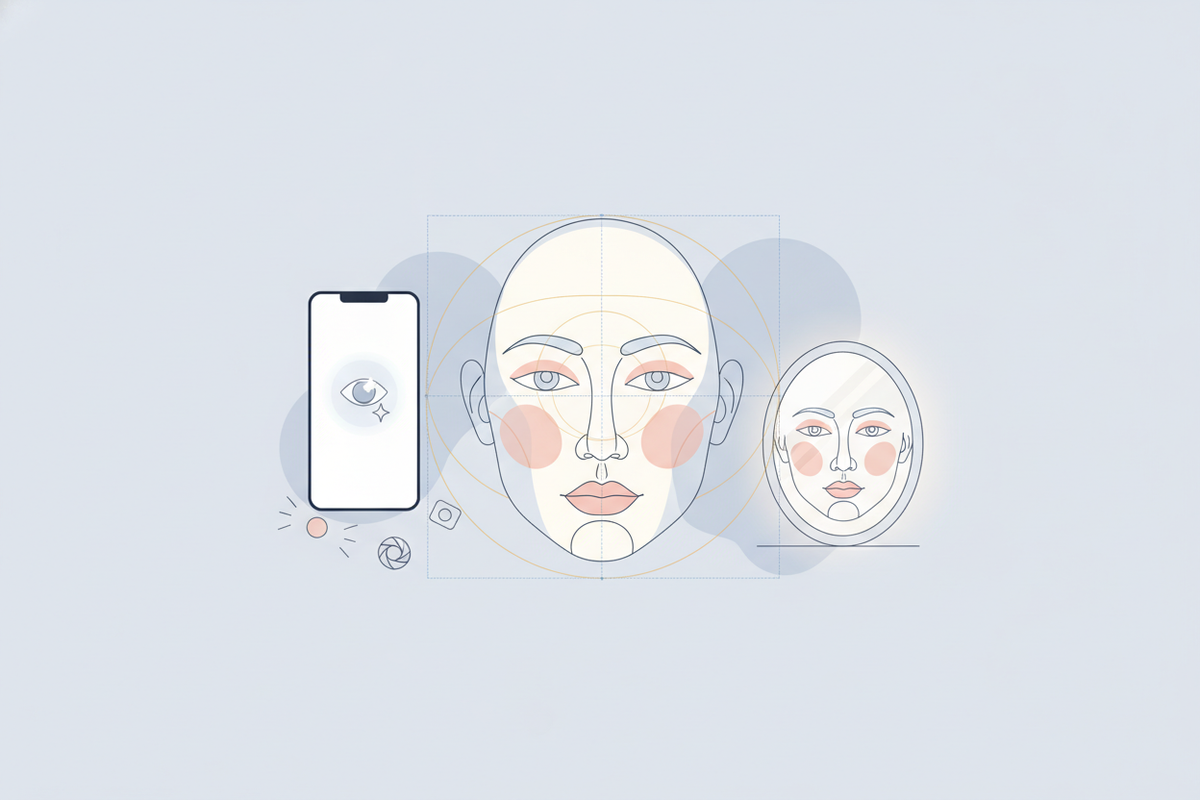
Facial thirds divide the face vertically into three sections: from hairline to eyebrows, eyebrows to base of nose, and nose to chin. Balanced thirds are considered a hallmark of facial attractiveness, as disproportions can create a sense of imbalance or disharmony. AI tools analyze the vertical spacing to assess proportionality by measuring pixel distances between key horizontal landmarks. For example, a face where the middle third (eyebrows to nose base) is significantly longer than the lower third (nose base to chin) may receive a lower proportionality score. Typical ideal measurements show each third occupying roughly equal portions of the vertical face length, with some natural variation.
The Golden Ratio in Facial Analysis
The golden ratio (~1.618) is a mathematical proportion historically linked to beauty. AI face rate systems evaluate horizontal and vertical distances between landmarks—such as eye width to nose width, or mouth width to nose length—to see how closely they match this ratio. For example, the distance between the pupils compared to the width of the mouth often approximates the golden ratio in highly rated faces. AI calculates the ratio of these distances and scores their proximity to 1.618, penalizing deviations proportionally. This process involves precise landmark detection, such as the inner and outer canthus of the eyes, nasal alae edges, and lip corners. The cumulative golden ratio adherence score influences the overall face rate, as it reflects classical aesthetic harmony.
Landmark-Based Proportion Metrics
Besides thirds and the golden ratio, AI measures:
- Interocular distance (between eyes): Ideally about one eye width apart; too narrow or too wide affects attractiveness.
- Nasal length and width: Balanced nose size relative to other features avoids overpowering or underwhelming the face.
- Mouth width relative to nose: Typically mouth width is about 1.5 times the nose width in attractive faces.
- Distance from chin to lips: Balanced lower face proportions contribute to a youthful, harmonious look.
These metrics combine to create a proportion score that influences the overall face rate. The AI also considers cultural and gender differences in proportions to tailor assessments appropriately.
Section 4: Jawline Definition, Canthal Tilt, and Face Shape Metrics
Jawline Definition and Its Impact
A well-defined jawline contributes to perceived masculinity, youthfulness, and attractiveness. AI evaluates the sharpness and angle of the jawline, as well as chin prominence. This is a factor in face rating, especially for profile and frontal views. The AI calculates jawline angle by detecting the mandibular angle points and measuring the contour sharpness against surrounding facial curves. A more acute angle (typically around 120–130 degrees) is often associated with attractiveness in males, while a softer angle suits female aesthetics. Chin prominence is assessed by the projection of the chin in relation to the lips and nose, with moderate projection considered ideal. For example, a weak or recessed chin can reduce scores, but contouring makeup or grooming can improve perceived definition.
What Is Canthal Tilt?
Canthal tilt refers to the angle between the inner and outer corners of the eyes. A positive canthal tilt (outer corner higher than inner) is often linked with a youthful, engaging look. AI measures this subtle eye-area aesthetic to refine attractiveness scores by calculating the slope between the medial and lateral canthi of each eye. A tilt of approximately 5–10 degrees upwards is generally preferred. Negative or flat canthal tilts may lower scores but can be balanced by other features. This metric helps the AI capture nuanced expressions of vitality and engagement that influence perceived attractiveness.
Face Shape and Its Role
Face shape categories—oval, square, round, heart, diamond—affect how features harmonize. AI tools detect face shape by analyzing contours and proportions, influencing recommended grooming or hairstyle changes. The AI segments the facial outline by tracing key points along the jawline, cheeks, and forehead, then compares these shapes to prototype templates. For example, an oval face with balanced proportions tends to score higher by default, while round faces may benefit from hairstyles that elongate the appearance. Take a face shape quiz to understand your unique profile and optimize your look. AI can also suggest specific glasses, hats, or beard styles that complement your face shape to enhance overall attractiveness.
Section 5: Photo Quality and Framing for Accurate Face Ratings
The Importance of Photo Quality
AI face rate accuracy depends heavily on photo quality. Clear, well-lit images with neutral expressions yield the best results. Poor lighting, shadows, or blurry photos distort facial landmarks and reduce rating reliability. For example, low resolution or pixelated images can cause landmark detection errors, while uneven lighting can create misleading shadows that alter perceived contours. Ideally, photos should be taken with sufficient resolution and uniform lighting, such as outdoor shade or soft indoor light. Using natural daylight at midday or morning hours often produces optimal results. Avoid backlighting or harsh direct sunlight, which can cause overexposure or deep shadows masking facial features.
Framing and Pose Tips
- Face the camera directly with a relaxed, neutral expression to ensure symmetrical landmark detection.
- Ensure the entire face is visible without cropping, including the hairline and chin, to allow full vertical third analysis.
- Use natural, diffused lighting to avoid harsh shadows that distort facial features.
- Avoid filters or heavy makeup that obscure natural features, as these can bias AI skin texture and color analysis.
- Maintain a consistent distance from the camera—approximately 1 to 2 meters—to minimize perspective distortion.
- Remove accessories like glasses or hats unless they are part of your regular look, as these can block landmarks.
Maximizing AI Accuracy
Using multiple photos from different angles can help the AI better understand your facial structure, including profile and three-quarter views. Apps like Maxx Report provide guidelines and feedback on photo submissions to help ensure your face rate reflects your appearance. For example, Maxx Report may suggest retaking a photo if shadows obscure the jawline or if the head is tilted excessively. Some apps incorporate 3D reconstruction techniques from multiple images, producing more accurate landmark placements and thus more reliable face rates. Users are encouraged to submit photos under varied conditions but consistent framing to build a comprehensive facial profile.
Section 6: Interpreting Your Face Rate Score and What It Means
Understanding the 0–100 Scale
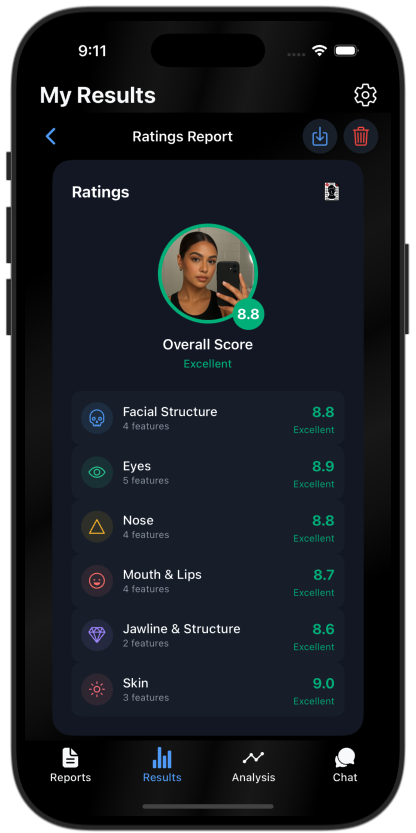
Your face rate score summarizes overall facial attractiveness based on AI analysis. Scores closer to 100 indicate balanced, symmetrical, and proportionate features, while lower scores highlight areas for potential improvement. For context, many people score between 40 and 70, with scores above 80 considered excellent. This scale allows users to track progress over time, especially when implementing grooming or skincare changes. It is important to understand that the score reflects relative attractiveness based on the dataset and algorithm parameters and is not an absolute measure of beauty.
Breaking Down the Score Components
Most AI tools provide sub-scores for:
- Symmetry: Measures left-right face balance.
- Proportions and golden ratio adherence: Evaluates distances and ratios between key landmarks.
- Jawline definition: Assesses contour sharpness and chin prominence.
- Skin texture and clarity: Quantifies smoothness, blemishes, and evenness.
- Eye aesthetics including canthal tilt: Measures eye shape, tilt, and spacing.
This breakdown helps users understand which facial aspects influence their overall rating the most, enabling targeted improvements. For example, a user with excellent symmetry but low skin clarity might prioritize skincare, while another with a weak jawline sub-score might focus on grooming or contouring.
Using Scores to Guide Transformations
Rather than viewing face rate as a fixed judgment, treat it as a diagnostic tool. A lower score doesn’t mean unattractiveness; it indicates which facial features to enhance via grooming, skincare, or styling. For example, a weak jawline sub-score might encourage facial exercises, contouring makeup techniques, or strategic beard shaping. Similarly, low skin texture scores can be addressed with dermatologist-recommended routines or professional treatments like chemical peels. Tracking changes in face rate over weeks or months provides objective feedback on the effectiveness of your glow-up efforts, empowering you to make data-driven decisions about your appearance.
Section 7: Improving Your Face Rate with Grooming and Styling
Grooming Strategies
Simple grooming adjustments can improve your face rate. These include:
- Beard shaping or trimming to enhance jawline definition by creating sharper contours and reducing visual roundness. For instance, trimming the neckline and cheeks to precise lines can add structure, while growing a short beard lengthens the face shape.
- Eyebrow grooming to frame eyes and improve symmetry, such as removing stray hairs or filling gaps with pencil or powder. Balanced eyebrows can elevate eye aesthetics and enhance canthal tilt perception.
- Skincare routines targeting texture and clarity, including cleansing, exfoliating, moisturizing, and sun protection, which reduce blemishes and wrinkles, thereby improving the skin texture sub-score.
- Haircuts tailored to your face shape to balance proportions, such as layered cuts for round faces or volume on top for longer faces, which influence overall facial harmony.
For men with patchy beards, resources like the Glow Up for Men with Patchy Beards guide provide targeted advice, including product recommendations like beard growth serums, styling techniques, and camouflage options to improve facial symmetry and jawline definition.
Hairstyle and Makeup Tips
Choosing the right hairstyle can accentuate your best features and improve the overall harmony of your face. AI-powered apps recommend styles based on face shape and proportions, suggesting cuts, colors, and styling methods that may optimize your attractiveness score. For example, side-parted hairstyles can add angles to round faces, while soft waves complement oval faces. For women or men who use makeup, subtle contouring can enhance jawlines and highlight symmetry by shading areas to create the illusion of sharper edges and balanced features. Techniques such as highlighting the cheekbones and blending along the jawline can raise the jawline sub-score. Additionally, eye makeup emphasizing the canthal tilt by slightly winging eyeliner upward can enhance eye aesthetics.
Leveraging AI Glow-Up Plans
Apps like Maxx Report combine face rate scores with personalized advice to craft transformation plans. These data-driven insights suggest grooming, skincare, and styling steps that may improve your attractiveness metrics. For example, if your skin texture score is low, the app might recommend a dermatologist consultation or specific products such as retinol creams. If jawline definition is lacking, it could suggest facial exercises, beard styles, or makeup techniques. Check out AI Glow Up Tips That Work for actionable strategies that leverage scientific analysis and user feedback to help you systematically enhance your look. These glow-up plans are dynamic, adapting as your face rate changes with progress.
Conclusion
Face rate AI tools offer an innovative, data-driven way to understand and potentially enhance your facial attractiveness. By analyzing symmetry, proportions, jawline, and eye aesthetics, these systems provide scores that reveal your natural strengths and areas for improvement. High-quality photos and proper framing are essential for accurate ratings. Using personalized glow-up plans from apps like Maxx Report, you can apply grooming, skincare, and styling techniques informed by AI data to elevate your look confidently and effectively. This technology democratizes access to beauty insights, enabling everyone to make informed decisions and optimize their appearance with measurable results.
FAQ
Q: How is my face attractiveness score calculated?
A: Your score is calculated using AI algorithms that analyze facial symmetry, proportions, jawline definition, skin quality, and eye-area aesthetics. The system measures distances and angles between key facial landmarks and compares them to ideal standards like the golden ratio. These metrics are combined into sub-scores that are weighted and aggregated to produce the final score on a 0–100 scale.
Q: What makes a face attractive according to AI face rating tools?
A: Attractive faces typically display high symmetry, balanced facial thirds, adherence to the golden ratio, defined jawlines, and positive canthal tilt. Clear skin and harmonious feature proportions also contribute significantly. AI models balance these features to produce an overall attractiveness assessment that reflects both biological and cultural beauty standards.
Q: Is facial symmetry the most important factor in a face rating?
A: Facial symmetry is highly important but not the only factor. AI systems evaluate a combination of symmetry, proportions, jawline, and other features to generate a comprehensive attractiveness score. Other aspects like skin texture and eye aesthetics can equally influence the final rating.
Q: How can I get a more accurate face rating from a photo?
A: Use a clear, well-lit, front-facing photo with a neutral expression. Avoid shadows, filters, and makeup that alter your natural features. Proper framing with your full face visible also helps the AI analyze landmarks accurately. Taking multiple photos under consistent conditions and submitting them can improve assessment reliability.
Q: Can grooming, haircut, or beard changes improve my face rating?
A: Yes, grooming and styling changes can enhance your facial features and symmetry, potentially improving your face rate. Trimming or shaping your beard can define the jawline, while hairstyles can balance face shape proportions. Combining these with skincare and makeup techniques tailored to your unique features may yield the best results.