
How Attractive Is My Face? The Complete Guide to Face Ratings, Golden Ratio, and Facial Harmony
How attractive is my face? Learn how AI measures beauty, golden ratio face, facial symmetry, canthal tilt, FWHR, and more in this comprehensive guide.

Estimated reading time: 17 min
Key Takeaways
- AI face rating apps analyze features like symmetry, golden ratio, and canthal tilt to score facial attractiveness.
- The golden ratio face, facial thirds & fifths, and FWHR are scientific methods for measuring harmony and balance.
- Photo quality and angle significantly impact your attractiveness score—use a clear, front-facing selfie with neutral lighting.
- Improvement tips often focus on grooming, posture, expression, and lifestyle, not just genetics.
- Comparisons are based on global databases and percentile rankings, offering a realistic view of your facial appeal.
Table of Contents
- Section 1: Understanding 'How Attractive Is My Face?' AI Face Ratings Explained
- Section 2: The Golden Ratio Face—History, Science, and Modern Use
- Section 3: Facial Thirds and Fifths—Blueprints of Balance
- Section 4: Canthal Tilt—What Is Canthal Tilt and Why Does It Matter?
- Section 5: Facial Symmetry, FWHR, and Other Key Metrics
- Section 6: Maximizing Your Attractiveness Score—Photo Tips and Real-World Use Cases
- Conclusion
- FAQ
Section 1: Understanding 'How Attractive Is My Face?' AI Face Ratings Explained
What Are AI Face Rating Tools?
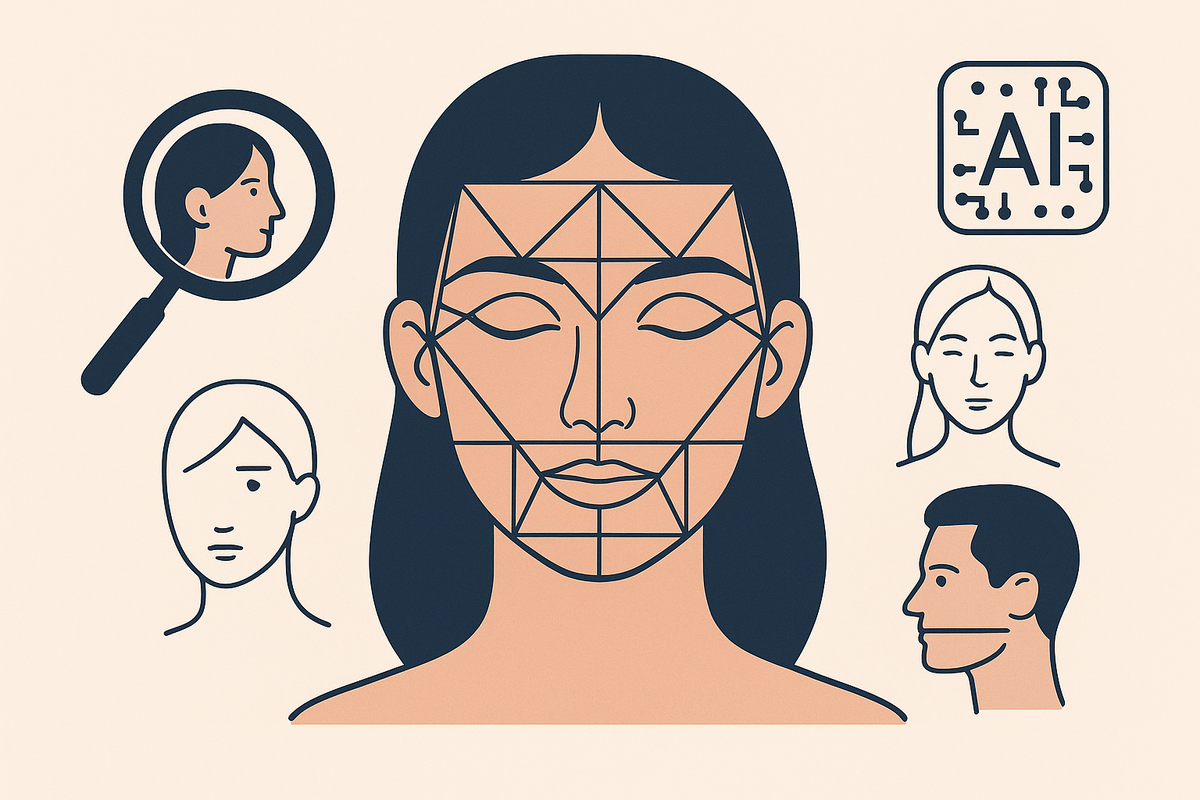
AI face rating tools, like Maxx Report, use sophisticated machine learning algorithms to analyze the geometry, proportions, and symmetry of your facial features and provide an objective attractiveness score. These tools scan your selfie, evaluate dozens—even hundreds—of facial landmarks, and compare your features to vast global databases containing millions of faces. The result? A numerical rating—on scales like 1-10 or 0-100—plus detailed sub-metrics for different aspects of beauty. These ratings are not just arbitrary numbers; they are based on patterns observed in large populations and refined using feedback and validation against human attractiveness ratings.
- Symmetry: Are both sides of your face nearly identical? Symmetry is a fundamental marker of perceived health and genetic fitness.
- Proportions: How well do your features fit the golden ratio or ideal facial thirds? The algorithm calculates various ratios that have been correlated with attractiveness in scientific studies.
- Feature Quality: Jawline sharpness, skin clarity, eye shape, brow position, and more. The algorithm also considers the prominence of cheekbones, fullness of lips, and other nuanced features.
How Are Scores Calculated?
Most apps use a combination of AI-trained models and statistical comparisons. Here’s a closer look at the process:
- Landmark detection: The AI pinpoints key points (corners of eyes, nose, lips, chin, cheekbones, jawline, etc.). High-quality models can detect over 60-80 separate landmarks.
- Ratio analysis: It calculates ratios like facial width-to-height (FWHR), eye width to face width, nose width to mouth width, and more. Each ratio is compared to known aesthetic standards and averages from the global dataset.
- Feature extraction: The system evaluates the clarity of skin, visibility of pores, facial hair, and even the expression (neutral, smiling, etc.).
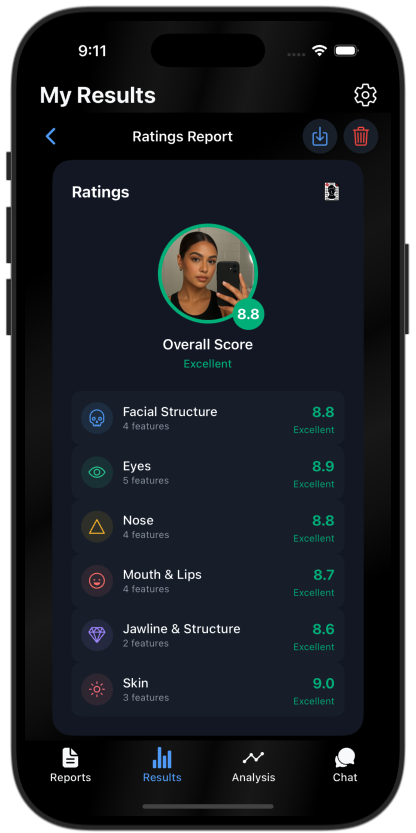
- Score output: You get an overall attractiveness rating, often broken into sub-scores (beauty, handsomeness, cuteness, symmetry, harmony, and sometimes age and gender perception).
Some apps, like Maxx Report, provide percentile rankings or global comparisons—showing where you stand among all users. For example, if you score in the 75th percentile, your facial features are rated as more attractive than 75% of the database. This context is valuable for understanding your results beyond a simple number.
Why Use These Scores?
Many people use AI face ratings to:
- Pick the best dating or social media profile photo. A higher-rated photo can increase your chances of getting matches or attention.
- Track looksmaxxing (self-improvement) progress. Users can see how lifestyle changes, grooming, or cosmetics affect their rating over time.
- Get personalized tips for a glow-up or style transformation. AI can suggest haircuts, beard styles, or makeup adjustments tailored to your unique facial structure.
- Gain confidence through objective feedback. For those unsure about their appearance, a data-driven report can help clarify strengths and areas for improvement.
For a detailed look at how these technologies work, check out How Do Automated Beauty Recommendations Work?
Section 2: The Golden Ratio Face—History, Science, and Modern Use
What Is the Golden Ratio?
The golden ratio (approximately 1.618:1) is a mathematical pattern found in nature, art, and architecture—believed to represent 'ideal' harmony. When applied to faces, it measures how closely the relationships between different facial features align with these proportions. The golden ratio appears in everything from sea shells to the Parthenon, and has been considered a symbol of natural beauty since ancient times.
- Facial length to width: Is the face 1.618 times longer than it is wide? This ratio is considered optimal for a balanced appearance.
- Eye-to-mouth distance: Do these fall on golden ratio points? The spacing between key features is measured and compared.
- Feature spacing: The distance between pupils, width of nose, mouth, and even the position of the eyebrows are evaluated in relation to the golden ratio.
Measuring Your Golden Ratio Face
AI apps map your facial landmarks, then calculate golden ratio scores for various facial regions. Here’s how it works in practice:
- Overall face shape: The algorithm measures the length from the top of the forehead to the bottom of the chin and compares it to the width of the face at the cheekbones.
- Eye position and width: The distance between the eyes and the width of each eye are compared to the ideal golden ratio distance.
- Nose length and width: The proportion of nose length to the width of the nose, and the length of the nose to the distance from eyes to mouth, are all factored into the score.
- Lip size and placement: The width of the mouth compared to the width of the nose, and the position of the lips relative to other features, are measured.
Perfect alignment with the golden ratio is rare—but higher scores indicate more classic facial harmony. For instance, a golden ratio score above 90% is exceptional, while most people fall between 60-80%, which is still considered attractive by most standards.
Does the Golden Ratio Equal Beauty?
While the golden ratio is influential, it’s not the only standard. Cultural beauty ideals vary widely, and individual features like skin clarity, expression, hairstyle, and confidence contribute significantly to perceived attractiveness. For example, some cultures value rounder faces or sharper jawlines, independent of the golden ratio. Still, studies show that faces closer to golden ratio proportions are generally rated more attractive across diverse populations. This is why AI tools use the golden ratio as a core metric, but supplement it with additional data for a well-rounded attractiveness assessment.
For a deep dive, read Golden Ratio Face: The Science of Perfect Facial Proportions.
Section 3: Facial Thirds and Fifths—Blueprints of Balance
What Are Facial Thirds?
Facial thirds divide the face horizontally into three equal sections. This concept is used by artists, orthodontists, and plastic surgeons to assess facial harmony:
- Upper third: From hairline to eyebrows. This region frames the forehead and brow shape.
- Middle third: From eyebrows to the bottom of the nose. It includes the eyes, upper cheeks, and upper nose.
- Lower third: From the bottom of the nose to the tip of the chin. This area covers the mouth, jaw, and chin.
Balanced thirds are a key marker of harmony. If one third is much longer or shorter, it can affect perceived attractiveness. For example, a disproportionately long lower third might make the chin appear elongated, while a short middle third can create a compressed look. AI tools measure these thirds to the millimeter, providing a precise assessment that goes beyond subjective judgment.
What Are Facial Fifths?
Facial fifths divide the face vertically into five equal sections:
- Each eye should fit roughly into one fifth. The ideal is for the width of one eye to equal the space between the eyes.
- The width of the nose matches the width of one eye. This creates a sense of proportion and balance.
- The face is ideally five 'eye-widths' across, with the spaces at the sides (from the outer eye to the edge of the face) also matching the width of an eye.
AI apps evaluate these proportions to rate facial balance, which often influences symmetry scores. For example, a nose that is wider than one eye-width may be rated as less harmonious, while perfectly aligned eyes and nose receive higher scores. These calculations are especially useful for identifying subtle imbalances that are not obvious to the naked eye.
Why Do Thirds and Fifths Matter?
Studies find that faces with balanced thirds and fifths are more likely to be rated as attractive, regardless of ethnicity or gender. These blueprints also inform plastic surgery and orthodontic planning, where achieving ideal ratios can guide reconstructive or aesthetic procedures. For instance, rhinoplasty surgeons often use facial fifths to determine the ideal width of the nose, while orthodontists assess thirds when planning jaw alignment. If you want to see how your facial shape stacks up, try the Face Shape Quiz for personalized feedback. The quiz uses your selfie to measure thirds and fifths, compare them to population averages, and identify areas for potential improvement.
Section 4: Canthal Tilt—What Is Canthal Tilt and Why Does It Matter?
Defining Canthal Tilt
Canthal tilt refers to the angle between the inner (medial) and outer (lateral) corners of your eyes. It’s a small detail that makes a big difference in how youthful, alert, or attractive your eyes appear. The canthal tilt is measured in degrees; a positive tilt means the outer corner is higher than the inner, while a negative tilt means the outer corner is lower.
- Positive canthal tilt: Outer eye corner is higher than the inner (upward tilt). Even 2-5 degrees of positive tilt can enhance the appearance of "hunter eyes"—eyes that look intense and focused.
- Negative canthal tilt: Outer corner is lower than the inner (downward tilt), which can create a tired or sad expression.
- Neutral canthal tilt: Both corners are level, giving a more neutral and sometimes less expressive look.
Why Positive Canthal Tilt Is Preferred
Most studies and AI ratings favor a slight positive canthal tilt. This is associated with youthfulness, energy, and 'hunter eyes'—a look often linked with high attractiveness, especially in men. Celebrities frequently cited for their eye appeal, such as Angelina Jolie or Henry Cavill, often have a positive canthal tilt. Negative tilt, on the other hand, can give the impression of fatigue or sadness, which tends to be rated less attractive. For women, a positive canthal tilt also enhances the appearance of larger, more almond-shaped eyes, which are frequently associated with femininity and beauty.
For more detail about eye shape and how to enhance it, see Hunter Eyes: Definition, Benefits, and How to Achieve Them.
How AI Measures Canthal Tilt
AI scans the angle between the canthi (eye corners) and scores your tilt as part of the attractiveness report. In Maxx Report, the angle is measured in degrees and compared to population norms. Moderate positive tilt (typically 2-8 degrees) usually adds to your score, while negative tilt may detract. Some AI tools even provide visual diagrams showing your eye angle relative to celebrities or idealized standards, making it easy to see where you stand and what you might improve—sometimes through makeup, eyelid tape, or even surgery in extreme cases.
Section 5: Facial Symmetry, FWHR, and Other Key Metrics
Facial Symmetry: The Foundation of Attractiveness
Facial symmetry means both sides of your face are mirror images. Humans subconsciously associate symmetry with health and genetic fitness, as developmental stability and lack of disease or injury during growth tend to produce more symmetrical features. AI tools measure symmetry by mirroring each side of your face and comparing the alignment of features like eyes, eyebrows, nostrils, corners of the mouth, and jaw angles.
- Perfect symmetry is rare; minor asymmetries are normal and can even add character. For example, a slightly crooked smile or uneven eyebrows can make a face more memorable.
- Higher symmetry scores generally lead to higher attractiveness ratings. In scientific studies, faces rated as the most attractive are typically within 95% symmetry or higher.
In Maxx Report, symmetry is scored as a percentage, with most people falling between 80-95%. Subtle shifts in head angle, expression, or lighting can temporarily affect this score, which is why consistency across photos is important for accurate tracking.
FWHR: Facial Width-to-Height Ratio
The facial width-to-height ratio (FWHR) is calculated by dividing the width of your face (at the cheekbones) by the height (from upper lip to brow). This metric has been studied extensively in psychology and biology. Research links higher FWHR with dominance and assertiveness in men, and balanced ratios with attractiveness in both sexes. However, extremes in either direction (very wide or very narrow faces) can reduce perceived harmony.
- Average FWHR: About 1.7 for men, slightly lower for women (around 1.6). These averages vary by population and age.
- Extreme FWHR (values above 2.0 or below 1.5) can be seen as less harmonious, but some cultures or trends may favor wider or narrower faces at different times.
AI face rating tools use FWHR as one of several metrics for overall impression. In dating apps, for example, a balanced FWHR may correlate with more matches, as it aligns with subconscious preferences for health and reproductive fitness.
Other Metrics: Jawline, Skin, Eyes, and More
AI face ratings also consider a wide variety of other features, each contributing to your overall score:
- Jawline: Definition, symmetry, and angle. A strong, well-defined jawline is often associated with masculinity and youth in men, and with delicate proportion in women.
- Skin quality: Evenness, texture, and lack of blemishes. AI tools can detect acne, scarring, or discoloration, which may affect ratings.
- Eye shape: Symmetry, spacing, tilt, and eyelid structure. Almond-shaped eyes with balanced spacing are frequently rated as attractive.
- Nose and lip ratios: The width and length of the nose, the fullness and symmetry of lips, and their proportions relative to other features are all calculated.
- Brow positioning and forehead height: The distance from eyebrows to hairline, and brow arch height, can influence perceived attractiveness.
These metrics together provide the most comprehensive answer to 'how attractive is my face?'. Maxx Report presents a detailed breakdown of your scores, explains the science behind each metric, and offers a personalized improvement plan based on your unique facial structure and features. Whether you’re looking to optimize your grooming, consider makeup techniques, or even explore cosmetic procedures, knowing your strengths and weaknesses helps focus your efforts.
Section 6: Maximizing Your Attractiveness Score—Photo Tips and Real-World Use Cases
How to Take the Best Photo for AI Face Rating
Your score depends heavily on the quality of your photo. To ensure your AI face rating is as accurate and flattering as possible, follow these tips:
- Lighting: Use soft, even lighting—avoid harsh shadows, strong sunlight, or overexposure. Natural daylight facing a window is ideal, but ring lights can also work well.
- Angle: Face the camera directly; a straight-on shot is essential for symmetry analysis. Avoid tilting your head or taking photos from above or below.
- Expression: Use a neutral or slight smile; avoid exaggerated expressions, frowning, or squinting. A relaxed, natural look helps the AI detect your true baseline features.
- Background: Simple, uncluttered backgrounds work best. A plain wall or soft gradient helps the AI focus on your face without distractions.
- Resolution: Use the highest quality your camera allows. Modern smartphones typically work well, but avoid blurry or pixelated images.
- Grooming: Ensure your hair is tidy, remove glasses if possible, and keep facial hair neat or clean shaven depending on your usual style.
For best results, take multiple photos and select the clearest, most balanced one for upload. Some apps let you compare several images to see which yields the highest rating.
Why Scores Can Change Between Photos
Lighting, angle, and expression can all influence your AI attractiveness score. Even minor differences may shift sub-metrics like symmetry or jawline definition. For example, turning your head slightly can make one side appear larger, or uneven lighting can cast shadows that exaggerate asymmetry. Temporary factors like skin blemishes, facial puffiness, or tired eyes can also affect your score on a given day. Consistency is key: always use similar conditions to track progress and ensure a fair comparison over time.
If you notice large swings in your score, review your image for differences in posture, lighting, or expression. Documenting your settings can help you replicate optimal results and better measure improvements as you implement AI-recommended tips.
Using Your Attractiveness Score in Real Life
- Dating profiles: Choose the photo with the highest score for your main image. Studies show that profile photos judged as more attractive receive up to 2-3x more matches or likes, even when other factors are controlled.
- Social media: Present your best self with balanced, natural shots. Consistent use of high-rated photos can improve engagement and followers.
- Personal improvement: Use AI glow-up tips to enhance grooming, posture, and overall appearance. For example, recommendations might include adjusting your hairstyle to suit your face shape, maintaining clear skin, or refining your beard style for a sharper jawline.
- Professional headshots: Business profiles and LinkedIn benefit from photos that convey confidence, approachability, and symmetry. A high AI rating can help you select images that make a strong first impression.
- Tracking progress: Many users like to test photos before and after implementing skincare, orthodontics, or cosmetic procedures. Noticing a measurable increase in your attractiveness score can be motivating and validate your investment in self-care.
For more glow-up strategies, read AI Glow Up Tips That Work.
Conclusion
Understanding 'how attractive is my face' is about more than a single number—it’s about discovering which features work best for you and how to enhance them. AI face rating tools use advanced algorithms to assess golden ratio alignment, facial thirds and fifths, canthal tilt, symmetry, FWHR, and more. By learning what these metrics mean—and how to optimize them—you gain actionable insights for self-improvement, confidence, and better first impressions, both online and offline. Remember, while AI provides a scientific baseline, true attractiveness is influenced by personality, style, and how you carry yourself in everyday life.
Curious to see your own results? Try Maxx Report for a personalized, data-driven analysis and transformation plan tailored to your unique facial features. The journey to maximizing your looks starts with understanding your face—and ends with feeling your best.
FAQ
Q: How attractive am I on a 1-10 scale?
A: AI face rating apps analyze your facial proportions, symmetry, skin quality, and other features to generate a score from 1 (least attractive) to 10 (most attractive). Most people fall between 4 and 7; scores above 8 are rare and indicate strong facial harmony. Keep in mind that your score may fluctuate based on photo quality, lighting, and subtle changes in your appearance over time.
Q: What does my face score mean in percentile or global ranking?
A: Percentile and global ranks show how your facial attractiveness compares to other users. For example, if your percentile is 80, your score is higher than 80% of people in the database. This offers a realistic benchmark for self-assessment and can help you set achievable beauty goals or track improvements as you make changes to your routine or style.
Q: Which facial features affect attractiveness the most?
A: Key features include symmetry, golden ratio alignment, jawline definition, canthal tilt, facial thirds and fifths, skin quality, and eye shape. Each is weighted differently depending on the algorithm, but symmetry and proportion are typically most influential. Other factors such as skin clarity, brow shape, and even the subtleties of your smile can also impact your score, as they contribute to the overall harmony of your face.
Q: How can I take the best photo for an attractiveness test?
A: Use a front-facing, high-resolution selfie with neutral expression, even lighting, and a plain background. Avoid angles, filters, or extreme facial expressions, as these can skew your score. Make sure your hair is tidy and your face is clean for the most accurate and consistent results.
Q: Why did my attractiveness score change between different photos?
A: Changes in lighting, angle, expression, and camera quality can all affect how AI analyzes your features. For consistent results, use similar photo conditions each time. Temporary factors like fatigue, skin blemishes, or lens distortion can also impact your score, so try to standardize your photo-taking process for fair comparisons.
Q: Can an AI attractiveness test really tell how attractive my face is?
A: AI tools provide objective, data-driven insights based on facial metrics like symmetry, golden ratio, and FWHR. While helpful, they can't fully capture personal appeal, charisma, or cultural preferences, so use your score as a guide—not an absolute verdict. Your confidence, style, and personality still play a major role in how attractive you appear to others.