How Beautiful Am I? AI Beauty Score, Facial Analysis & What It Means
Wondering 'how beautiful am I?' Discover how AI beauty tests work, what your score means, and how to get the most accurate, safe results—plus tips to glow up.
Estimated reading time: 14 min
Key Takeaways
Free tools for this guide (run in your browser, no sign-up):
- Free looksmaxxing test (AI looksmax rating)
- Am I pretty? (AI face test)
- Face rating: how AI scores a face
- AI beauty tests analyze facial features, symmetry, and complexion for a fun attractiveness score.
- Photo quality and proper lighting dramatically affect your beauty score accuracy.
- Results include a percentage or rating, breakdowns of strengths, and suggested improvements.
- Online tests are for entertainment and self-improvement ideas, not clinical diagnoses.
- Privacy and safety: use reputable apps, avoid sharing sensitive photos, and understand data usage.
Table of Contents
- Section 1: The Rise of AI Beauty Tests – How 'How Beautiful Am I' Works
- Section 2: Photo Uploads – Getting the Best Beauty Score Results
- Section 3: Facial Symmetry & Proportions – The Science Behind Attractiveness
- Section 4: Skin Quality, Eyes & Expressions – What AI Really Looks For
- Section 5: Understanding Your Beauty Score, Percentages & Archetypes
- Section 6: Privacy, Safety & The Fun Factor in AI Beauty Tests
- Conclusion
- FAQ
Section 1: The Rise of AI Beauty Tests – How 'How Beautiful Am I' Works
AI-Powered Attractiveness Analysis
Curiosity about "how beautiful am I" isn't new, but today's technology offers instant, AI-powered answers. Modern apps like Maxx Report use artificial intelligence to scan your face, analyze features, and generate a personalized beauty score. These tools rely on advanced computer vision and machine learning trained on global datasets of facial images.
Over the last decade, the field of computer vision has made tremendous leaps, allowing apps to identify and quantify subtle facial features with remarkable precision. Early online beauty tests used simple pixel measurements, but apps like Maxx Report now utilize sophisticated neural networks capable of recognizing thousands of minute details. These neural networks are trained on millions of annotated images from diverse populations, enabling them to better account for ethnic and age-related differences. For example, Maxx Report’s models are periodically updated to include more variety in their training data, helping to avoid narrow or biased results.
What Happens When You Upload Your Photo?
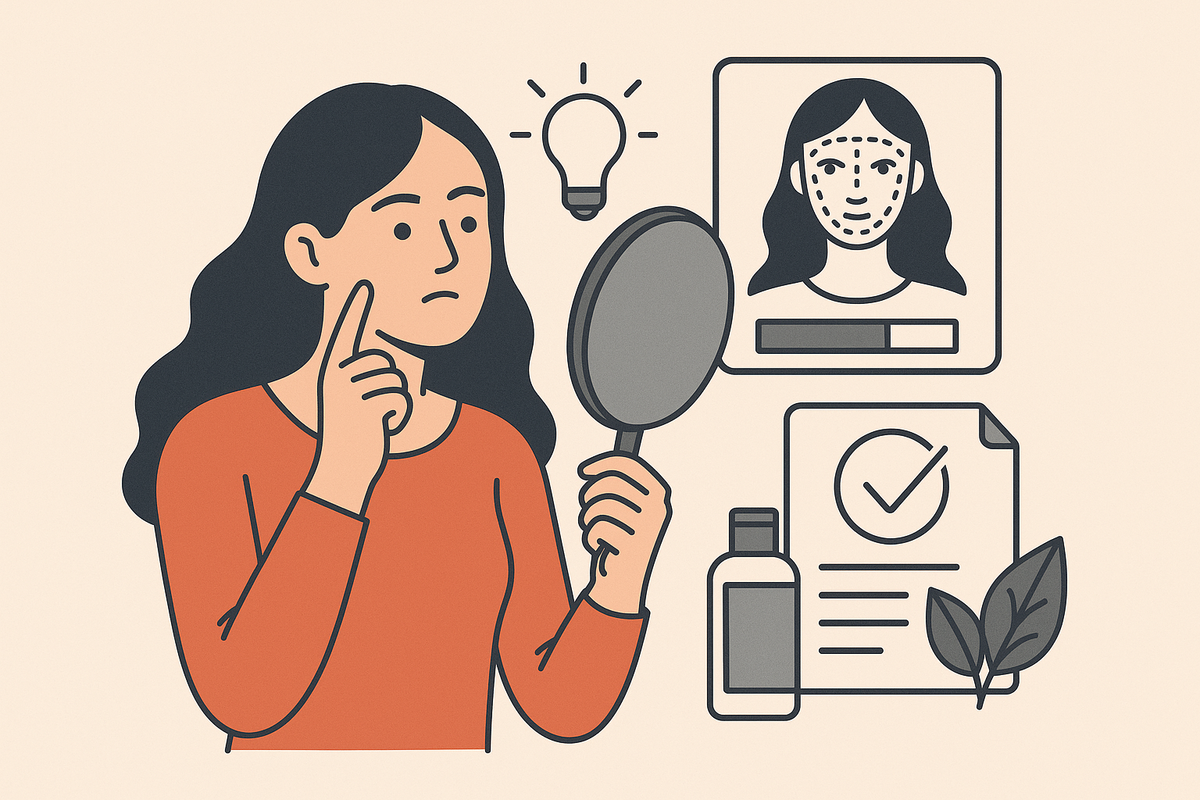
Once you upload a selfie, the AI detects key facial landmarks—such as the eyes, nose, jawline, lips, and cheekbones. It then compares the proportions, symmetry, and skin quality to a range of beauty standards and statistical norms.
- Landmark Detection: Pinpoints facial feature positions for measurement. Maxx Report, for instance, identifies more than 60 distinct points on the face, including the inner and outer corners of the eyes, the curve of the upper and lower lips, the tip and bridge of the nose, and the contours of the jawline and cheekbones. This high-resolution mapping ensures a detailed facial blueprint for further analysis.
- Ratio Analysis: Calculates distances and angles (e.g., eye spacing, jaw width). The app computes dozens of ratios—like the width between the eyes relative to the width of the nose, or the length of the face compared to its width—and evaluates how closely these match averages associated with attractiveness in various populations.
- Texture & Tone: Evaluates evenness of skin, presence of blemishes, and overall complexion. The AI can spot variations in skin tone, highlight areas of redness or darkness (such as under the eyes), and even estimate skin smoothness by analyzing the distribution of light and shadow across the skin.
All these data points are combined into a comprehensive profile. Some apps provide a visual heatmap over your photo, showing which areas contributed most positively or negatively to your score. For example, green overlays may indicate strengths (such as high cheekbones), while red may highlight areas where proportions deviate from statistical norms.
How AI Beauty Tests Differ From Human Judgement
AI offers consistency and speed, but it isn’t influenced by personal bias or cultural trends as much as humans. However, its "beauty standards" are based on data and may not reflect everyone's taste. Unlike human raters, who might be swayed by mood, individual preference, or social trends, AI systems apply the same mathematical criteria for every analysis. Despite this, it’s important to note that AIs are only as good as their training data. If the underlying dataset is limited or biased, results may not fairly represent all populations. Leading apps like Maxx Report attempt to mitigate this by continuously updating their models and incorporating feedback from diverse users.
For a detailed look at how these systems calculate beauty, check out How Do Automated Beauty Recommendations Work? Explained Simply.
Section 2: Photo Uploads – Getting the Best Beauty Score Results
Why Photo Quality Matters
The accuracy of your AI beauty score hinges on the photo you provide. A blurry, shadowy, or angled selfie can confuse the algorithms and lead to unreliable results. For the most precise answer to "how beautiful am I," follow these guidelines when uploading:
- Use a recent, well-lit photo with your face clearly visible. Avoid group photos or images where your face is only partially shown. AI accuracy drops significantly (by as much as 20-30%) when dealing with cropped, low-resolution, or pixelated images.
- Remove sunglasses, hats, and masks to ensure unobstructed facial feature detection. Accessories cast shadows and hide features, which can cause the algorithm to misidentify key landmarks, leading to skewed analysis.
- Face the camera directly with a neutral or slight smile—no dramatic angles. Side profiles, tilted heads, or exaggerated expressions can distort measurements and reduce score consistency.
- Avoid filters or heavy editing, as they can distort your true appearance. Filters often smooth skin or alter coloring, which may result in an artificially high score that does not reflect your real features.
Tips for the Best Result
For maximum accuracy:
- Take your photo in natural daylight—not harsh or colored artificial lighting. Natural light reveals your true complexion and minimizes harsh shadows, making it easier for the AI to detect skin quality and tone.
- Keep your camera at eye level, about an arm's length away. This minimizes distortion (such as nose enlargement from close-up shots) and ensures proportional accuracy.
- Gently tie back hair if it covers your face, and make sure your full face is in frame. Stray hairs or partial frames can cause the AI to miss or misinterpret features, especially around the jawline and forehead.
Consider taking multiple photos with different lighting setups or slight changes in expression to see which yields the most consistent and accurate result. Many users report that small tweaks in camera position or background lighting can shift their beauty score by several percentage points.
Multiple Attempts & Consistency
It's normal to get slightly different scores with different photos—even small changes in lighting, pose, or facial expression can affect the analysis. If you want to track improvement or experiment with looks, use the same setup each time. For example, set up a dedicated spot in your home with consistent lighting and background. Some people even use a tripod or phone stand to ensure the camera angle and distance remain constant.
Regularly updating your photo can also help you see how lifestyle changes—like skincare routines, haircuts, or weight loss—impact your score over time. This can be a motivating way to track progress or experiment with new styles. See more tips in our guide to digital makeovers with AI.
Section 3: Facial Symmetry & Proportions – The Science Behind Attractiveness
Why Symmetry Matters in Beauty
Research consistently shows that facial symmetry is correlated with perceptions of attractiveness. AI beauty tests calculate symmetry by comparing the left and right halves of your face, looking for alignment in features like eyes, cheeks, and lips. High symmetry is often interpreted as a sign of genetic health and developmental stability, which is why it can subconsciously influence attractiveness ratings.
- Perfect symmetry is rare—slight asymmetry is normal and often adds character. In fact, some of the world’s most famous faces have subtle asymmetries, and these can make a face more memorable or unique.
- AI quantifies symmetry using mathematical ratios and overlays. For instance, it might draw a vertical line down the center of your face and measure how closely features on each side mirror one another.
For example, the distance between the center of the nose and the outer edge of each eye is compared. If the measurements are nearly identical, the algorithm considers this highly symmetrical. Variations of more than a few millimeters can reduce the symmetry score, but usually only have a modest effect unless the differences are pronounced.
Facial Proportions: The Golden Ratio
Many AI beauty tests reference the Golden Ratio (about 1.618:1), a mathematical principle historically associated with beauty in art and nature. The AI measures:
- Distance between eyes, nose, and mouth. For example, the ideal width between the eyes is often close to the width of one eye, and the distance from the base of the nose to the chin is ideally about one-third the total face length.
- Width of jawline versus forehead. A well-balanced face often features a jawline that is proportional to the forehead width, creating a harmonious outline.
- Length of face compared to width. The ideal face is about 1.5 times longer than it is wide, according to classic beauty ratios.
These calculations generate a "facial harmony score," indicating how closely your features align with these classic ideals. Apps like Maxx Report will often highlight your strongest proportions and suggest which ones are closest to the Golden Ratio, offering advice for hairstyles or beard styles that can further enhance your natural balance.
Feature Balance & Individuality
While symmetry and proportions matter, individuality is just as important. AI beauty tests also note unique feature combinations that set you apart, rather than just penalizing deviations from mathematical norms. For instance, a slightly asymmetrical smile or distinctive eye shape may reduce a symmetry score but increase the "character" or "uniqueness" factor in the app’s breakdown.
Some AI tools, including Maxx Report, now offer additional insights into which features make you stand out. For example, you may receive feedback such as "distinctive eyes" or "unique jawline," which can help you embrace your individuality rather than chasing a generic ideal. For a deeper dive, explore our face shape quiz and AI analysis.
Section 4: Skin Quality, Eyes & Expressions – What AI Really Looks For
Skin Tone, Texture, and Complexion
AI beauty tests pay close attention to your skin's clarity, evenness, and overall health. These factors can influence your "how beautiful am I" score as much as facial structure:
- Even skin tone: Fewer visible shadows or dark spots. Maxx Report’s AI, for example, analyzes the color distribution across your cheeks, forehead, and chin to identify uneven patches or discoloration.
- Texture: Smoothness and absence of blemishes, acne, or scars. The app uses light reflection patterns to estimate roughness or smoothness, providing a "skin clarity" rating.
- Brightness: Healthy glow versus dullness. AI detects how much natural light reflects off your skin, which can indicate hydration and vitality.
Some advanced apps also assess redness, hydration, and pore visibility, though no app can replace real dermatological advice. For instance, persistent redness or dullness may prompt the app to suggest hydration tips or recommend seeing a skincare professional. The report might highlight areas for improvement, such as "consider using sunscreen to even out skin tone" or "hydration can enhance your natural glow."
Eye Analysis: Gaze, Spacing, & Expression
The eyes are often called the "windows to the soul"—and AI agrees. Many beauty tests analyze:
- Eye size, shape, and spacing (are they close or wide-set?). The app measures the horizontal and vertical distances of each eye, comparing them to ideal ratios. Features like almond-shaped or large, round eyes are often rated highly due to associations with youth and vitality.
- Brightness and clarity of the whites of your eyes. Whiter, brighter eyes can indicate good health, while redness or dullness may detract from the overall score.
- Symmetry and alignment with eyebrows and cheekbones. The AI checks whether your eyes are level and evenly spaced, as well as how they line up with the brows and the upper curve of the cheeks.
Features like "hunter eyes" (deep-set, horizontally-aligned eyes) are increasingly recognized in both AI and human attractiveness judgments. These are typically associated with confidence and intensity. If your eyes are particularly expressive or well-shaped, apps may suggest makeup or grooming tips to accentuate them further. For more, see our post on Hunter Eyes and their impact on looks.
Expression & The Smile Factor
Though most AI tests prefer a neutral face for consistency, some can detect positive expressions like smiling, which can subtly boost your attractiveness score. Relaxed, genuine expressions tend to be rated more favorably. A natural smile can influence perceptions of approachability and warmth, even in algorithmic assessments. Some apps now offer additional feedback, such as "your smile brightens your face" or "a slight smile increases your attractiveness rating by 2-3%."
However, exaggerated or forced expressions might be flagged as unnatural and could slightly reduce your score. For optimal results, aim for a relaxed face with a gentle, confident smile.
Section 5: Understanding Your Beauty Score, Percentages & Archetypes
What Does Your Score Mean?
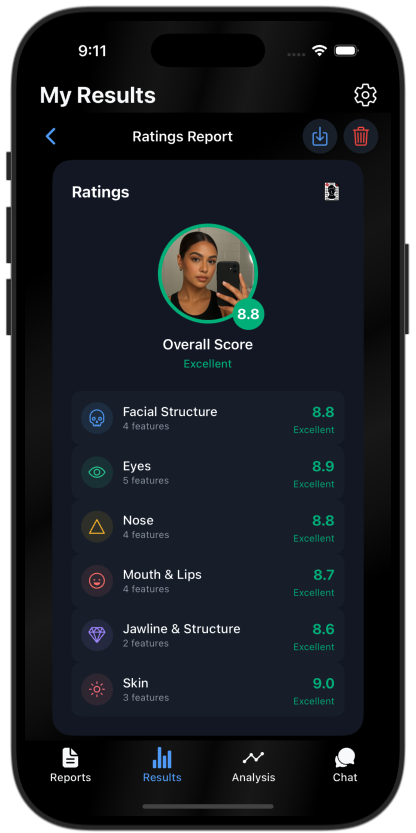
After analysis, most AI beauty apps will give you a numeric beauty score—often as a percentage (e.g., "You scored 74% beautiful") or a rating out of 10. Some, like Maxx Report, provide even more nuanced breakdowns, showing how each part of your face contributed to the final result.
- Score Range: Typically, scores cluster around the average (50-70%), with extremes rare. For example, only a small fraction of users (less than 5%) receive scores above 85% or below 40%, reflecting how most people fall within a standard range of facial variation.
- Relative, Not Absolute: Scores reflect comparison to a dataset, not universal truth. The AI benchmarks your features against a reference group from its training set, so scores can shift as the dataset changes over time.
It’s important to interpret your score as one perspective among many. A high score can be a confidence boost, while a lower score might highlight areas for self-improvement or new styling approaches. The numerical result is best used as a starting point for exploration, not a final judgment of worth.
Archetypes & Strengths Breakdown
Advanced tools may categorize your look into beauty archetypes—such as "classic," "cute," "modelesque," or "masculine/feminine." These offer insight into your unique strengths and can guide your glow-up strategy. For example, Maxx Report might label someone with soft, rounded features and wide-set eyes as "cute," while someone with angular cheekbones and a defined jawline might be classified as "modelesque." Understanding your archetype can help you choose hairstyles, makeup, or grooming styles that enhance your strongest features.
- Jawline: Sharpness and definition. A well-defined jaw is often associated with strength and youth, while softer jawlines can give a more gentle, approachable look.
- Cheekbones: Height and prominence. High cheekbones are a universal marker of attractiveness; the app might suggest contouring or highlight techniques to enhance them.
- Eyes: Shape, spacing, and brightness. Expressive eyes are often a key strength, and the app may recommend eye makeup or brow shaping that draws attention to this area.
- Skin: Clarity and evenness. Clear, radiant skin can raise your score and is often the foundation for many beauty archetypes.
Apps like Maxx Report go further, generating personalized transformation plans and glow-up suggestions based on your results. You might receive recommendations such as "try a layered hairstyle to frame your face shape" or "use a gentle exfoliator for improved skin texture." Over time, you can use these suggestions to track changes and see how small adjustments affect your overall beauty score. For actionable advice, see our guide to AI-powered glow up tips.
Why Results Are For Fun and Self-Discovery
Remember: these scores are designed for entertainment and self-exploration. They can inspire confidence, provide style ideas, and help you see yourself from a fresh perspective—but they are not clinical or definitive judgments. Many users find value in seeing themselves through an unbiased lens and discovering new ways to enhance their appearance, but always keep perspective—real beauty is multifaceted and deeply personal.
Some users use their results as conversation starters or as motivation for self-care routines, while others simply enjoy the novelty of seeing how technology interprets their appearance. The key is to treat your score as one data point among many—not as the final word on your attractiveness.
Section 6: Privacy, Safety & The Fun Factor in AI Beauty Tests
Are 'How Beautiful Am I' Tests Safe?
With the rise of AI beauty apps, privacy is a valid concern. Reputable platforms—such as Maxx Report—use secure photo handling, do not sell your images, and allow you to delete your data after analysis. Always check privacy policies before uploading sensitive photos.
- Choose trusted apps: Look for clear privacy statements and positive user reviews. Check if the app provides details about how long your photos are stored, whether they are encrypted, and if third-party access is restricted.
- Avoid sharing children's photos or private images on unknown platforms. Children’s data is especially sensitive, and reputable apps should have explicit policies against analyzing underage users’ photos.
- Delete your data after use if the option exists. Most reputable apps offer a "delete my data" button or allow you to contact support for removal. This ensures your photos aren’t stored longer than necessary.
How Your Photo is Handled
Most serious apps process your image on secure servers, store it temporarily, and then delete it. Some run analysis directly on your device for maximum privacy. For example, Maxx Report processes images in-memory and automatically deletes all data within hours of analysis unless you explicitly save your results.
Always avoid uploading images to platforms that do not specify their data handling process. If an app asks for excessive permissions or has vague privacy terms, consider it a red flag. Reading independent reviews and checking the app’s reputation can help you make an informed decision.
Entertainment Over Judgment
AI beauty tests are meant to be a fun, lighthearted way to explore your unique features. They can spark self-improvement and curiosity, but shouldn't define your self-worth. If you want to learn more about using AI for style, check out our guide to AI fashion consulting.
For many users, sharing scores and results with friends is part of the enjoyment—comparing archetypes, learning new beauty tips, and even challenging each other to see who can improve their score the most in a month. Remember, the real value is in the experience and the insight you gain, not in chasing a perfect number.
Conclusion
Wondering "how beautiful am I?" is more accessible—and entertaining—than ever thanks to AI-powered beauty apps. By analyzing your facial symmetry, proportions, complexion, and features, these tools generate personalized attractiveness scores and fun archetype breakdowns. Remember, your results are influenced by photo quality, lighting, and pose; treat them as a lighthearted exploration rather than a final verdict.
For a deeper, more actionable experience, Maxx Report offers not only beauty ratings and feature analysis but also tailored glow-up and transformation plans. Try it for a unique perspective and discover how AI sees your best features. Whether you’re seeking self-improvement, a confidence boost, or simply want to satisfy your curiosity, AI beauty tests can offer fresh insights and practical tips. Just remember: true beauty is about confidence, individuality, and how you feel in your own skin.
FAQ
Q: How accurate is an AI beauty test?
A: AI beauty tests provide a consistent, data-driven analysis of facial features but are limited by photo quality, lighting, and the datasets they’re trained on. They give a good approximation for fun and self-discovery, but results are not definitive or medical-grade.
Q: What photo should I upload for the best beauty score?
A: Use a clear, recent selfie in natural light, facing the camera directly, with no heavy filters, sunglasses, or obstructions. A neutral or slight smile with your hair pulled back gives the most accurate results.
Q: What does my beauty score percentage mean?
A: Your percentage reflects how your facial features align with statistical averages or classic beauty ratios. It's a comparison to a dataset—most people fall between 50% and 75%. Use it for entertainment and self-improvement ideas, not as a final judgment.
Q: Which facial features affect attractiveness the most?
A: Symmetry, proportion (Golden Ratio), jawline definition, skin clarity, eye shape/brightness, and cheekbone prominence are key factors in AI beauty tests. Each app may weigh features differently.
Q: Are online 'how beautiful am I' tests safe to use?
A: Most reputable apps are safe, especially those with clear privacy policies and data deletion options. Avoid uploading private or sensitive images to unknown or untrusted platforms.
Q: Can I improve my score by changing pose, lighting, or makeup?
A: Yes—better lighting, natural makeup, and a neutral pose can all enhance your score by highlighting your features and improving photo clarity. Consistency gives the most reliable results.