How Pretty Am I? The Ultimate Guide to Beauty Rating Tests & AI Face Analysis
Curious about 'how pretty am I'? Explore beauty rating tests, 'am I pretty' quizzes, and the science behind AI face analysis for honest, actionable answers.
Estimated reading time: 13 min
Key Takeaways
- Understanding what beauty rating tests and "am I pretty" quizzes actually measure
- How AI-powered face analysis tools like Maxx Report work
- The key facial features and scientific factors that influence beauty ratings
- Actionable tips for improving your beauty score with personalized plans
- The pros and cons of relying on technology to answer "how pretty am I?"
Table of Contents
- Section 1: Why We Ask "How Pretty Am I?"
- Section 2: The Rise of "Am I Pretty" Quizzes and Beauty Rating Tests
- Section 3: The Science of Beauty – What AI Analyzes
- Section 4: How AI Apps Like Maxx Report Rate Your Looks
- Section 5: Personalized Glow-Up Plans Based on Your Results
- Section 6: Limitations, Bias, and Healthy Perspectives
- Conclusion
- FAQ
Section 1: Why We Ask "How Pretty Am I?"
The Universal Curiosity Behind Beauty
It's perfectly normal to wonder "how pretty am I" at some point in your life. Whether you're preparing for a big event, updating your social media profile, or just feeling curious, the desire to assess our own appearance is universal. Beauty has always played a role in social dynamics, self-confidence, and even opportunities in life. The question of "am I pretty?" isn't just about vanity—it's about self-understanding and personal growth.
Research shows that humans, from early childhood, are drawn to faces that they find appealing, often associating beauty with positive traits such as trustworthiness and competence. This subconscious link between attractiveness and perceived social value fuels the ongoing curiosity about our own looks. In social settings, perceived beauty can influence first impressions, sometimes impacting hiring decisions, dating prospects, and even the likelihood of receiving help from strangers. This deep-rooted effect makes the question of "how pretty am I?" more than skin deep—it becomes a way of exploring our relationship with the world and how we are seen by others.
External Validation vs. Self-Perception
We live in a world full of feedback—likes, comments, and compliments. But external validation can only go so far. Sometimes, we crave a more objective, measurable answer. This is where beauty rating tests and "how pretty am I" quizzes come in. They promise a level of scientific or technological objectivity, but the truth is always more nuanced.
While external validation provides instant gratification, it can also foster insecurity and an unhealthy reliance on others' opinions. Studies have shown that persistent seeking of external validation can lead to lower self-esteem over time. In contrast, self-perception is shaped by our history, personality, and internal dialogue. Technology now offers a third option—a supposedly neutral, data-driven assessment that can feel more trustworthy than the fluctuating opinions of friends or strangers. However, this quest for objectivity often overlooks the subjective and evolving nature of beauty itself.
The Impact of Digital Culture
- Social media has amplified our awareness of beauty standards. Platforms like Instagram and TikTok feature influencers with meticulously curated appearances, often setting unrealistic or highly specific trends that shape our own ideals of attractiveness.
- Filters and editing apps have created new benchmarks for attractiveness. The rise of face-altering filters means many of us are comparing ourselves to digitally enhanced versions of reality, making it harder to appreciate our natural features. Some studies suggest that this digital distortion can contribute to body dysmorphia, especially among younger users.
- Memes and viral trends like "how pretty am I quiz" make beauty rating both accessible and addictive. These trends can be light-hearted, but they also tap into deeper insecurities, encouraging repeated engagement and sometimes reinforcing negative self-image.
This curiosity is not just about superficiality—it's often tied to deeper questions of self-worth, identity, and the desire to improve. When we turn to tools and technology for answers, we're seeking clarity and actionable advice. The hope is that by quantifying beauty, we can take control of our self-image and make informed decisions about how to present ourselves to the world.
Section 2: The Rise of "Am I Pretty" Quizzes and Beauty Rating Tests
From Magazine Quizzes to AI Algorithms
"Am I pretty?" quizzes aren't new. For decades, magazines and online forums have offered playful tests that claim to reveal how attractive you are. These quizzes typically ask questions about your features, habits, or style and provide a score or category at the end. But as technology has advanced, so has the accuracy—and the stakes—of these assessments.
In the 1990s and early 2000s, personality and beauty quizzes were a staple of teen magazines like Seventeen and Cosmopolitan. These quizzes often focused on subjective questions: "Do you wear makeup every day?" or "How often do people compliment your smile?" With the rise of the internet, similar quizzes migrated online, reaching millions of users worldwide. However, most remained highly subjective and were meant for entertainment rather than serious self-assessment.
The Evolution to Digital Beauty Analysis
- Early online quizzes were based on self-reported data, often with little scientific backing. They relied heavily on stereotypes and generalizations, sometimes reinforcing narrow beauty standards.
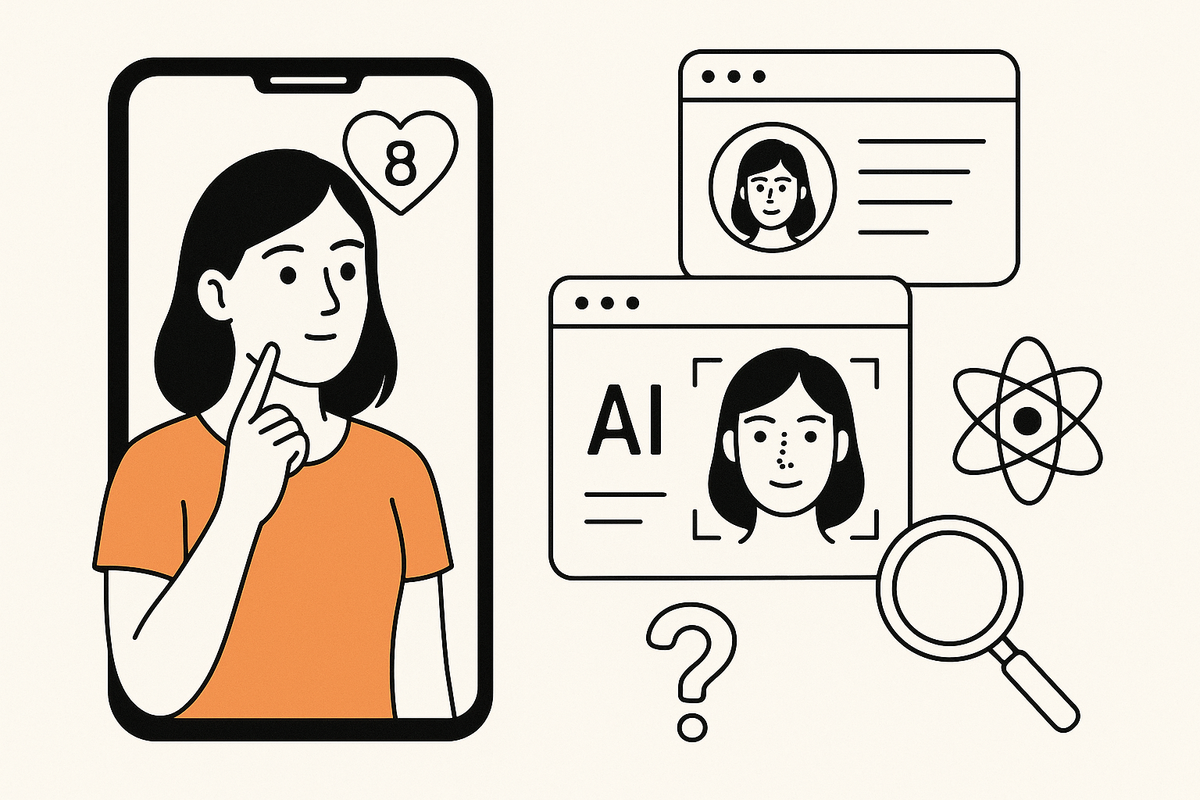
- Beauty rating tests now use photo uploads, facial mapping, and AI to analyze facial symmetry, skin clarity, and feature proportions. Modern algorithms can process thousands of data points in a single image, identifying subtle patterns that would be difficult for the human eye to detect.
- Apps like Maxx Report offer personalized, data-driven insights that go far beyond generic results. Instead of a single "score," users receive detailed feedback on each aspect of their face, along with actionable tips to enhance their unique features.
For example, an AI-based test may analyze the ratio between your eye width and face width, the shape of your chin, and the evenness of your skin tone. Based on these metrics, it can generate a comprehensive report that is far more informative than a magazine quiz could ever be.
The Allure of Objectivity
What draws people to these tools is the promise of objectivity. Instead of relying on biased opinions, you get a "scientific" beauty score. But it's important to remember that even the most advanced algorithms are shaped by the data they're trained on—and by the cultural definitions of beauty that are constantly evolving.
For instance, an algorithm trained primarily on Western beauty standards may underrepresent features common in other populations. As awareness of these limitations grows, leading apps are working to diversify their training data and offer more inclusive assessments. Still, users should approach any beauty rating test with a critical eye, viewing scores as one perspective among many.
If you're looking for a quiz that goes beyond surface-level results, consider AI-driven solutions that break down your facial features, suggest improvements, and offer a holistic view of beauty. For example, the Face Shape Quiz integrates AI analysis for a more tailored assessment.
Section 3: The Science of Beauty – What AI Analyzes
Facial Symmetry
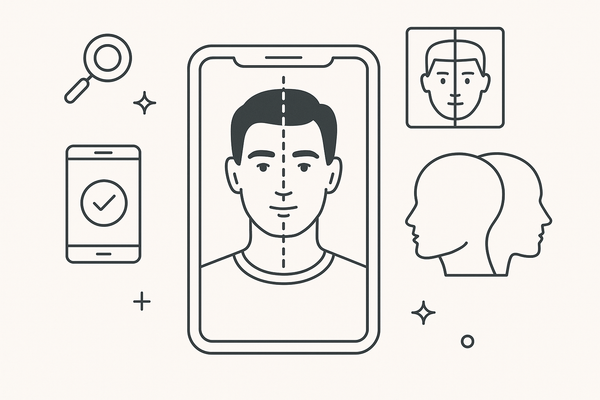
One of the most significant factors in answering "how beautiful am I" is facial symmetry. Studies suggest that humans are naturally attracted to symmetrical faces, as they are often perceived as healthier and more genetically robust. AI-powered beauty rating tests use facial landmark detection to measure the alignment of your eyes, nose, mouth, and jaw.
For example, Maxx Report's AI engine places dozens of points across your face—at the corners of your eyes, edges of your nose, outline of your jaw, and more. It then calculates the distances between these points, comparing the left and right sides of your face. Even minor asymmetries, such as a slight difference in eyebrow height or nostril width, are detected and factored into your overall score. While nobody is perfectly symmetrical, higher symmetry tends to correlate with higher beauty ratings in both scientific and AI-based analyses.
Proportion and the Golden Ratio
The "golden ratio" (approximately 1.618:1) has long been considered a standard of beauty in art and nature. In facial analysis, AI measures the distances between key features—such as pupil distance, nose width, and mouth length—to see how closely your proportions match this ideal. For a deep dive, read more about the science of perfect facial proportions.
Maxx Report and similar apps analyze several key ratios, including:
- The distance between your eyes compared to the width of your face
- The length of your nose relative to the height of your face
- The width of your mouth compared to the width of your nose
These ratios are then compared to the golden ratio and to population averages. If your features align closely with these mathematical ideals, your score will likely be higher. However, it's important to note that beauty is not solely defined by mathematics—individuality and uniqueness often play a significant role in perceived attractiveness.
Skin Clarity and Texture
- AI skin analysis can detect blemishes, uneven tone, and texture. Advanced algorithms can identify redness, sun damage, freckles, and even fine lines from a standard photo.
- Pore size, redness, and hydration are all factors that influence your "pretty" score. Some apps even recommend specific ingredients or routines tailored to your skin type, such as hyaluronic acid for hydration or salicylic acid for acne-prone skin.
Many apps also assess skin smoothness and reflectivity, providing targeted skincare recommendations. For example, if the app detects excessive oiliness or dryness, it may suggest changes in your skincare routine, recommend products, or even alert you to potential underlying conditions that could benefit from professional attention.
Additional Features
- Jawline sharpness is often highlighted in AI assessments as a key indicator of attractiveness. A defined jawline is commonly associated with youthfulness and health, which are universally appealing traits. The app measures the angle and prominence of your jaw, sometimes suggesting exercises or cosmetic options for enhancement.
- Eye size and spacing can suggest youthfulness and are commonly rated in beauty tests. Large eyes with balanced spacing are often viewed as a sign of youth and vitality. AI tools measure your interocular distance and compare it to established norms to provide feedback.
- Smile analysis (tooth alignment, lip fullness) may be included for a holistic rating. Straight, evenly spaced teeth and full lips are frequently highlighted as attractive traits. Some apps even analyze gum exposure and recommend dental or orthodontic solutions if relevant.
By evaluating these features, AI apps aim to answer the question, "how pretty am I?" with as much accuracy as possible based on established scientific principles. However, cultural preferences and personal tastes still play a significant role in what is considered beautiful.
Some advanced tests also consider the harmony of your facial features—how well your nose, eyes, and lips "fit together" visually. This concept of facial harmony or balance is difficult to quantify but is increasingly being explored by AI researchers for a more comprehensive beauty assessment.
Section 4: How AI Apps Like Maxx Report Rate Your Looks
The Process: Upload, Scan, Analyze
Modern AI looksmaxxing apps streamline the process of beauty rating. With Maxx Report, for example, you simply upload a clear photo of your face. The app's AI engine detects facial landmarks, measures symmetry, proportions, and skin condition, and then generates a detailed report with scores in various categories.
To ensure the most accurate results, Maxx Report typically recommends uploading a high-resolution photo taken in natural lighting, facing the camera directly, and with minimal makeup or filters. The AI engine processes the image in several stages:
- Facial Landmark Detection: The AI identifies key points on your face (e.g., eyes, nose, mouth, jaw, cheekbones) for geometric measurements.
- Feature Measurement: The distances and angles between landmarks are calculated for symmetry and proportion analysis.
- Skin Analysis: The app scans for blemishes, wrinkles, texture, and pigmentation differences, providing a quantitative assessment of skin quality.
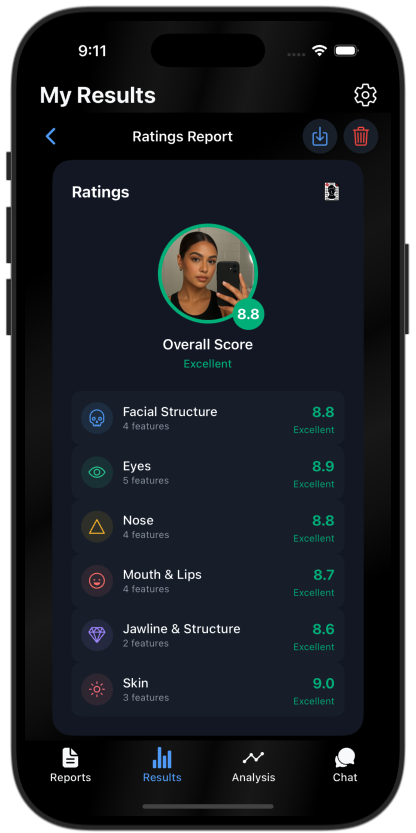
- Report Generation: Scores are compiled for each feature, and the app produces a comprehensive report with visual overlays and explanations.
What the Beauty Report Includes
- Overall beauty score (e.g., 1-10 or percentile ranking). Maxx Report may display your score as a number, a star rating, or a percentile (e.g., "You rank in the top 32% of users").
- Detailed breakdown—jawline, face symmetry, skin, eyes, lips, and more. Each category often includes sub-scores and explanations. For example, your jawline might receive a 7.2/10, with notes on strength and definition, while your eye category could be split into symmetry, size, and brightness.
- Comparison to population averages. The app may show how your features compare to hundreds of thousands of other users, providing context for your score.
- Personalized advice for each feature (e.g., glow-up suggestions, skincare tips). Recommendations are often generated by combining your unique data with evidence-based best practices—from facial exercises for jaw definition to specific moisturizers for dry skin.
Some reports also include visual overlays highlighting areas of particular strength or improvement. For example, green outlines may indicate well-proportioned features, while red highlights suggest potential focus areas for a glow-up plan.
Beyond Numbers: Symbolism, Dreams, and More
Some advanced apps also analyze non-physical aspects, such as symbolism or even dream interpretation, to offer a holistic view of beauty and transformation. Maxx Report, for instance, can rate your transformation potential and connect your appearance to deeper archetypes. For example, the app might identify whether your features align more with "classic beauty," "edgy beauty," or "soft beauty" archetypes, providing guidance on how to enhance your natural essence.
By integrating these broader perspectives, AI apps can help users discover not only how they measure up to mathematical ideals, but also how to express their personality and style through their appearance. For those interested in the data behind the process, check out how automated beauty recommendations work.
Section 5: Personalized Glow-Up Plans Based on Your Results
Turning Analysis Into Action
The real power of an AI beauty rating test isn't just the score—it's what you can do with it. Maxx Report and similar apps don't just answer "how pretty am I?"; they give you a roadmap for improvement. This can include step-by-step glow-up plans tailored to your unique features and goals.
For instance, if your report indicates strong facial symmetry but suggests improvement in skin clarity, the glow-up plan may focus on targeted skincare routines, dietary adjustments, or professional treatments. If your jawline score is lower than average, the app might recommend facial exercises, mewing techniques, or even non-invasive cosmetic options.
Actionable Recommendations
- Skincare routines based on your skin's needs (e.g., hydration, acne, pigmentation). If your skin analysis detects dryness, it may suggest using a hyaluronic acid serum and a heavier moisturizer, while oily skin types might receive recommendations for salicylic acid cleansers and oil-free moisturizers.
- Jawline exercises and facial yoga for sharper contours. These might include chin lifts, neck stretches, or resistance exercises that target the platysma muscle, all designed to enhance jaw definition over time.
- Makeup tutorials that highlight your best features. If your eyes are a standout feature, you'll receive tips on which eyeshadow shades and techniques will make them pop. If lips are a strong point, you might get advice on lip liner and gloss for optimal effect.
- Hairstyle suggestions based on your face shape—see the Face Shape Test for more ideas. For example, if you have a round face, the app may recommend long layers or side-swept bangs to elongate your features.
- Wardrobe updates and color analysis to match your undertones. The app might suggest colors that complement your skin tone, or clothing cuts that balance your proportions for a more harmonious overall look.
Some plans even go a step further, offering meal suggestions for skin health, sleep tips for reducing under-eye circles, or stress management strategies to support overall appearance.
Tracking Progress and Staying Motivated
Most AI beauty apps enable you to save reports and compare progress over time. By regularly updating your photo and following your personalized plan, you can see measurable changes in your beauty score and overall confidence. This data-driven approach shifts the focus from subjective opinions to tangible self-improvement.
For instance, you might start with a skin score of 6.5/10 and, after three months of recommended skincare and lifestyle changes, see that score increase to 8/10. This quantifiable progress can be highly motivating, reinforcing positive habits and helping you stay committed to your goals. Regular check-ins also allow you to adjust your routine as needed, ensuring continuous improvement.
If you're interested in the power of AI for style, read how an AI fashion consultant can revolutionize your personal style.
Section 6: Limitations, Bias, and Healthy Perspectives
The Limits of AI Beauty Analysis
While AI-powered apps like Maxx Report are advanced, they are not infallible. Their algorithms are trained on vast image datasets, but they can still reflect cultural, racial, and gender biases present in those datasets. No app can capture the full complexity of human beauty, which is influenced by personality, charisma, and cultural context.
For example, if an app's training data predominantly features faces from a particular ethnic background, it may inadvertently assign higher scores to features common in that group. To address this, leading platforms are expanding their datasets and incorporating feedback from diverse user bases. Nonetheless, users should remain aware of these biases and interpret scores as one input—not the ultimate truth.
Potential Downsides of Beauty Rating Tests
- Overreliance on scores can lead to anxiety or self-esteem issues if not balanced with self-acceptance. It's important to remember that beauty is multi-dimensional, and no algorithm can account for every aspect that makes you attractive.
- Subjectivity remains: AI can only measure physical features, not the intangible qualities that make someone attractive. Traits like confidence, kindness, humor, and presence play a significant role in real-world beauty but are beyond the reach of technology.
- Comparison traps: Beauty is not a competition, and scores should be viewed as tools for self-growth, not absolute truths. Constantly comparing your results to others can be demoralizing and detract from the intended purpose of self-improvement.
Moreover, some users may experience "score chasing," where the pursuit of a higher rating becomes an obsession. This can lead to unnecessary cosmetic procedures, unhealthy dieting, or compulsive use of beauty apps, detracting from mental and emotional well-being.
Embracing a Growth Mindset
It's important to use beauty rating apps as one part of a broader self-care journey. They can spark motivation for positive changes, but true confidence comes from self-acceptance and the realization that beauty is multifaceted. If you're interested in the transformative side of AI, see how AI can transform your look instantly and help you visualize change.
Practicing self-compassion and focusing on progress rather than perfection can make the experience of using AI beauty tools more empowering. Celebrate the features you love, acknowledge areas for growth, and remember that your worth is not defined by a number or a report. Beauty, in its truest form, encompasses confidence, individuality, and the courage to express yourself authentically.
Remember: The answer to "how beautiful am I?" is always more complex than a number on a screen.
Conclusion
The search for an answer to "how pretty am I?" is both timeless and modern. Today, AI-powered apps like Maxx Report offer a sophisticated alternative to old-school "am I pretty" quizzes, providing in-depth analysis, personalized glow-up plans, and actionable insights. These tools can empower you to make positive changes and better understand your own unique beauty.
However, it's crucial to approach beauty rating tests with a healthy mindset. Use them as guides, not as verdicts on your self-worth. Embrace the actionable advice they offer, but remember: true beauty is multidimensional, shaped by personality, kindness, and confidence as much as by symmetry and skin tone. AI can help you on your journey, but the final answer to "how pretty am I?" is always yours to define.
FAQ
Q: What is the most accurate way to measure how pretty I am?
A: The most accurate approach combines AI face analysis (like Maxx Report) with objective feedback and self-assessment. AI can rate facial features and symmetry, but beauty is also subjective and cultural.
Q: Are "am I pretty" quizzes online reliable?
A: Most online quizzes are for fun and not scientifically rigorous. AI-based tests that analyze your facial features, like Maxx Report, provide more objective and actionable results.
Q: How do AI beauty rating tests work?
A: These tests use computer vision and facial landmark detection to measure symmetry, proportions, skin condition, and feature harmony. Results are compared to population data for a relative score.
Q: Can my beauty score change over time?
A: Absolutely! With lifestyle changes, skincare, and following personalized recommendations, your beauty score can improve. AI apps allow you to track progress over time.
Q: Where can I try an AI beauty rating test?
A: You can try Maxx Report at looksmaxxreport.com for a detailed, personalized report and glow-up plan.