Face Symmetry Test: The Ultimate Guide to Testing Facial Symmetry with AI
Discover how to take a face symmetry test, why facial symmetry matters, and the best apps for accurate results. Learn how symmetrical your face is today!

Estimated reading time: 14 min
Key Takeaways
- Face symmetry tests use AI to analyze facial features and rate symmetry accurately.
- Facial symmetry is linked to perceptions of beauty and health, but no one is perfectly symmetrical.
- Face symmetry apps provide personalized reports and glow-up plans for appearance improvement.
- Learn how to test 'Is my face symmetrical?' at home or with advanced AI tools.
- Understanding your facial symmetry can guide grooming, styling, and self-confidence choices.
Table of Contents
- Section 1: Understanding Face Symmetry Tests
- Section 2: Why Does Facial Symmetry Matter?
- Section 3: How Face Symmetry Apps Work
- Section 4: How to Take a Face Symmetry Test
- Section 5: Improving Your Facial Symmetry
- Section 6: Beyond Symmetry—Other Key Factors in Facial Attractiveness
- Conclusion
- FAQ
Section 1: Understanding Face Symmetry Tests
What Is a Face Symmetry Test?
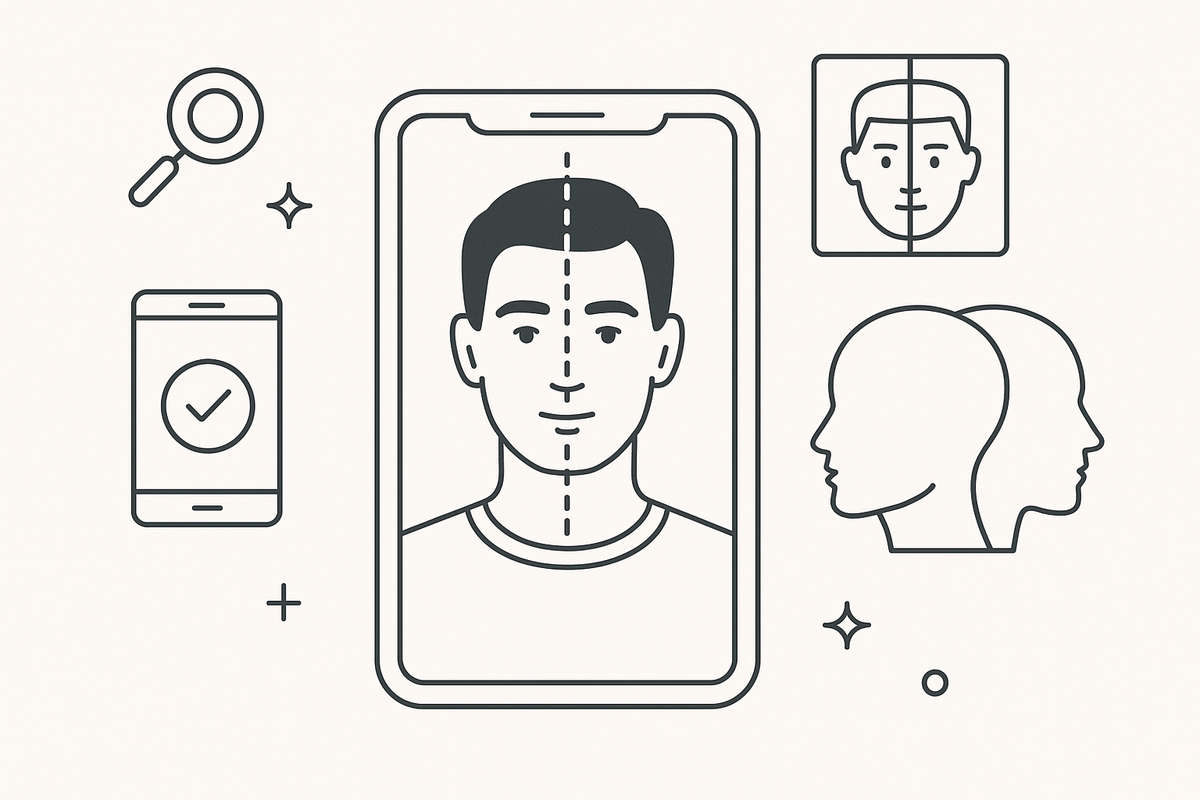
A face symmetry test is a digital or manual analysis that determines how symmetrical your face is—evaluating whether the left and right sides of your face match in shape, size, and feature placement. Typically, these tests assess key facial points: eyes, eyebrows, nose, lips, jawline, and facial contours. In the past, people used mirrors and rulers for rough estimates, but today’s technology—especially AI-driven facial symmetry apps—enables much more precise analysis.
At their core, face symmetry tests break down your facial features into measurable data points. For instance, the distance between the inner corners of your eyes, the alignment of your eyebrows, the width and length of your nose, and the proportionality of your lips are all key metrics. This analysis helps to objectively compare one side of your face to the other across dozens of different vectors. By quantifying asymmetry, you can better understand which features are most balanced and which might differ slightly. This process can reveal subtle asymmetries that are nearly impossible to detect with the naked eye.
Types of Facial Symmetry Tests
- Manual Tests: Using a printed or digital photo, you can draw a vertical line down the center of your face and compare both sides. While simple, this method is subjective and limited in accuracy. For example, you might use a clear ruler or a photo editing app to check if your eyes or cheekbones are the same height. This method is best for a rough overview rather than a precise measurement.
- Mirror Tests: Some people use a mirror and divide their face visually, but this only provides a rough idea. You can hold a mirror perpendicular to your face to see each half in isolation, but slight changes in angle or lighting can skew your perception.
- AI-Powered Tests: Apps like Maxx Report scan your face, map key features, and use algorithms to provide symmetry scores and visual breakdowns. This approach is far more detailed and objective. AI can identify over 60 facial landmarks, calculate precise distances and angles, and generate diagrams highlighting symmetry and asymmetry. These apps adjust for head tilt and facial expression, providing clear and repeatable results that are far superior to manual or visual methods.
What Does a Symmetry Score Mean?
The result of a facial symmetry test is usually a percentage or rating that reflects how closely your facial features align with each other. A higher score indicates greater symmetry. However, it’s important to remember that no face is perfectly symmetrical; small differences are normal and natural. These scores are best seen as a guide for understanding your unique facial structure rather than a definitive judgment of beauty.
For example, an AI app might rate your facial symmetry as 85%, meaning the main features on the left and right sides match closely but with minor variations—perhaps one eyebrow is slightly higher, or your nose tilts a millimeter to one side. Scores above 80% are considered highly symmetrical, scores between 60–80% are average, and scores below 60% may indicate notable asymmetry. However, even people with lower scores can be considered attractive or striking. The real value of a symmetry score is to help you understand your facial balance, inform grooming or styling choices, and track changes over time.
Some advanced apps even break down your symmetry by region: for instance, you might see a separate score for your eye region, lower face, and jawline. This granular data can guide specific improvements, such as eyebrow shaping or jawline grooming.
Section 2: Why Does Facial Symmetry Matter?
The Science Behind Facial Symmetry and Attractiveness
Facial symmetry is often associated with attractiveness and health. Numerous studies in psychology and evolutionary biology suggest that people tend to find symmetrical faces more appealing. This preference is thought to be rooted in our biology—symmetry can indicate genetic health and developmental stability. However, the correlation is not absolute; many attractive faces are slightly asymmetrical.
Research published in journals like Proceedings of the Royal Society B and Evolution and Human Behavior has shown that facial symmetry can signal good genes and resistance to environmental stressors during development. For example, babies as young as six months old prefer looking at symmetrical faces, indicating that our brains are hardwired to notice symmetry from an early age. In mate selection studies, participants consistently rate symmetrical faces as more attractive, regardless of cultural background.
How Symmetry Influences Perception
- First Impressions: People unconsciously assess facial symmetry when meeting someone new. Studies show that symmetrical faces are perceived as more trustworthy, healthy, and youthful.
- Media and Beauty Standards: The entertainment and fashion industries frequently feature models and celebrities with high degrees of facial symmetry, reinforcing the idea that symmetry equals beauty.
For example, when researchers digitally manipulate celebrity photos to increase symmetry, those images are often rated as more attractive in controlled experiments. This cultural reinforcement means many people become more aware of, and sometimes self-conscious about, their own facial asymmetries.
Limitations and Myths
While a facial symmetry test can provide insight into your facial structure, it’s important to recognize the limitations. Beauty is highly subjective and influenced by many factors beyond symmetry—such as facial expressions, skin quality, and individual style. In fact, some studies (and countless real-world examples) show that unique, slightly asymmetrical faces are often considered especially attractive and memorable.
For instance, actors like Denzel Washington and Angelina Jolie have facial features that aren't perfectly symmetrical but are widely celebrated for their beauty. Some evolutionary psychologists suggest that minor asymmetries may even enhance distinctiveness and memorability, which can be attractive in social contexts. Ultimately, attractiveness is a blend of symmetry, proportion, expression, and confidence.
For a deeper dive into the science of facial proportions, see Golden Ratio Face: The Science of Perfect Facial Proportions.
Section 3: How Face Symmetry Apps Work
AI Technology Behind Facial Symmetry Analysis
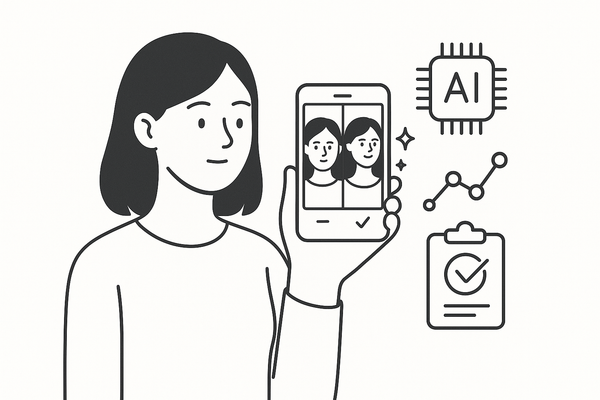
Face symmetry apps use advanced AI algorithms and computer vision to analyze facial images. The process involves detecting facial landmarks (such as pupil centers, nose tip, mouth corners), mapping the face’s geometry, and calculating the degree of symmetry between the left and right halves. These algorithms are trained on thousands of faces, enabling them to account for variations in lighting, head tilt, and facial expressions.
Modern facial analysis models, such as those based on convolutional neural networks (CNNs), can detect up to 68 or more facial landmarks—covering features from the hairline to the chin, and from ear to ear. The algorithms calculate distances, angles, and ratios, comparing each measurement across the midline of your face. For example, the software might compare the distance from the center of your nose to each pupil, or the vertical position of each mouth corner.
Some apps employ 3D modeling to account for depth and contour, providing even more accurate symmetry analysis. This is particularly useful for users with strong bone structures or facial angles that might be misrepresented in 2D photos.
Features of a Good Face Symmetry App
- Accurate Landmark Detection: High-quality apps identify dozens of key points on your face for precise measurement. For example, Maxx Report uses AI to map the inner and outer corners of your eyes, nostrils, philtrum, chin tip, and jawline, ensuring a comprehensive assessment.
- Clear Visual Feedback: The best apps show you overlays or diagrams highlighting areas of symmetry and asymmetry. For instance, you might see red markers where asymmetry is highest, or a mirrored comparison of each half of your face.
- Personalized Recommendations: Beyond just a score, some apps (like Maxx Report) generate custom glow-up and transformation plans based on your unique facial structure. These can include grooming tips, makeup strategies, or even medical consultation suggestions.
- Privacy and Security: Look for apps that keep your data secure and do not share your images without consent. Maxx Report, for example, uses encrypted storage and automatic image deletion after analysis to protect your privacy.
Example: Maxx Report's Ratings Feature
Maxx Report offers a comprehensive face symmetry test as part of its AI-driven looksmaxxing suite. The app analyzes your jawline, facial symmetry, and skin quality, then delivers a detailed ratings report. It also suggests practical steps to improve or enhance your appearance. Here’s what a sample analysis might look like:
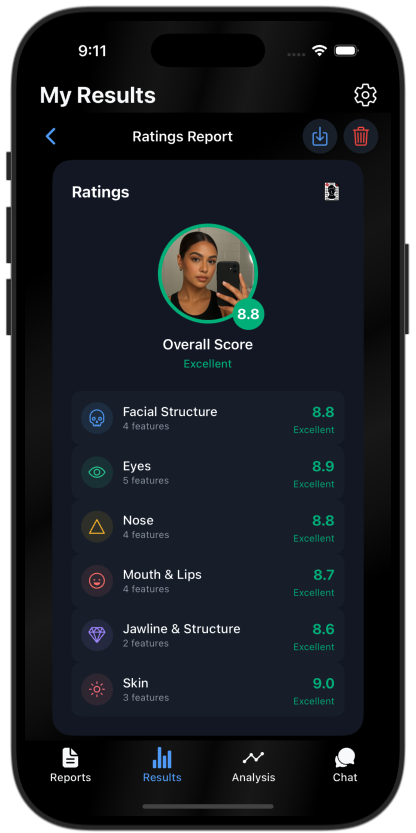
With this kind of analysis, you get much more than a simple yes/no answer to "Is my face symmetrical?"—you receive an actionable plan tailored to your needs. For example, if your jawline is less defined on one side, the app may recommend specific grooming styles or facial exercises. If your eyebrows are uneven, it can suggest shaping techniques or products. Ready to try it? Visit Maxx Report to get your own report.
Additionally, Maxx Report allows you to track your progress over time. By retaking symmetry tests after implementing recommendations, you can see quantifiable improvements in your scores and appearance. This ongoing feedback loop is especially valuable for anyone committed to a glow-up journey.
Section 4: How to Take a Face Symmetry Test
Preparing for Your Test
- Lighting: Use natural, even lighting with minimal shadows for a clear photo. Avoid overhead lights that cast strong shadows or colored bulbs that alter your skin tone. Many users find that facing a window during daylight provides the best results.
- Camera Angle: Hold your phone or camera level with your face; avoid tilting. The camera should be at eye level and perpendicular to your face to prevent distortion.
- Neutral Expression: Relax your face and maintain a neutral expression—smiling or frowning can skew results. Facial tension or asymmetrical expressions can mislead the analysis.
- Remove Obstructions: Take off glasses, hats, and keep hair away from your face. If you have long hair, tuck it behind your ears to ensure your jawline and cheekbones are visible.
Preparing your environment and appearance before the test is crucial for accurate results. If possible, clean your camera lens to avoid blurring, and use a tripod or stable surface to keep the camera steady. Consistency in preparation also allows for better comparison if you repeat the test in the future.
Step-by-Step Guide Using a Face Symmetry App
- Download your chosen face symmetry app (for example, Maxx Report).
- Launch the app and select the facial symmetry test option.
- Follow on-screen instructions to upload or take a clear, front-facing photo.
- Wait for the app to analyze your image. This usually takes a few seconds. High-end apps process your photo in under 10 seconds, even on older phones.
- Review your symmetry score, visual diagrams, and any personalized feedback provided.
Most apps offer additional features, such as saving your results, comparing before-and-after images, or sharing your analysis with friends or a professional for further advice. Maxx Report allows users to export their reports for personal records or to discuss options with a dermatologist or cosmetic professional.
DIY Facial Symmetry Test at Home
If you prefer a manual approach, here’s how you can get a rough estimate:
- Print or display a high-resolution photo of your face. Passport-style photos work best because they are taken straight-on with neutral lighting.
- Draw or imagine a vertical line through the center (from forehead to chin). You can use a photo editing app to draw this line digitally, or simply fold a printed photo in half for comparison.
- Compare the left and right sides—is your jawline, eye shape, or cheekbone height similar? Note any visible differences in size, shape, or position.
- Optionally, use a ruler or digital tool to measure distances between facial landmarks. For example, measure the width of each eye, the distance from the nose to the outer corner of each mouth, or the height of each eyebrow.
Bear in mind, this method is less precise than using a dedicated face symmetry app. Manual measurements are subject to human error and can be influenced by lighting, camera angle, or photo quality. Still, it can be a fun way to gain a basic understanding of your facial symmetry.
Curious about how AI analyzes your face shape and features? You might also enjoy Face Shape Quiz: Discover Your Perfect Look With AI Analysis.
Some users take this a step further by using image editing software to create a mirrored version of each side of their face—placing the left side against itself and the right side against itself. This technique highlights asymmetries that are otherwise difficult to detect, but remember, perfectly mirrored faces often look unnatural.
Section 5: Improving Your Facial Symmetry
Can You Make Your Face More Symmetrical?
While your basic bone structure is set by genetics, small asymmetries can be minimized or balanced through various techniques. Most people seeking facial harmony focus on grooming, makeup, and lifestyle adjustments rather than drastic interventions.
It's important to set realistic expectations: significant changes to bone structure require surgical intervention, but many people are surprised by how much difference small changes in grooming, posture, or muscle use can make. Even subtle adjustments—like parting your hair differently or shaping your eyebrows—can create the visual effect of greater symmetry.
Non-Invasive Ways to Enhance Symmetry
- Grooming: Adjust your hairstyle, eyebrow shape, or facial hair to balance out asymmetrical features. For example, if one side of your jaw is less defined, a beard or stubble can add structure. Eyebrow shaping can correct uneven heights or thickness, and side-swept hairstyles can visually balance a lopsided hairline or forehead.
- Makeup: Skilled makeup application can create the illusion of symmetry by contouring, highlighting, or reshaping certain areas. Makeup artists often use darker shades to recede areas and lighter shades to bring features forward. For example, contouring one side of your nose or jawline can visually correct minor asymmetries. Even slight adjustments to eyeliner or lip liner can balance uneven eyes or lips.
- Skincare: Even skin tone and healthy skin can make features appear more harmonious. Use products targeting dark spots, redness, or uneven texture to reduce distractions from symmetrical features. Consistent skincare routines—cleansing, exfoliating, moisturizing, and using sunscreen—can enhance the overall balance of your appearance.
- Posture and Facial Exercises: Good posture and facial muscle exercises may subtly improve symmetry over time, especially if uneven muscle use or tension is a factor. For instance, sleeping consistently on one side can impact facial shape due to pressure, so alternating sleep position may help. Facial yoga and targeted exercises can strengthen weaker muscles and improve alignment—exercises such as cheek lifts, jaw clenches, and targeted stretching can make a subtle but noticeable difference over months.
Medical and Cosmetic Options
- Orthodontics and Dental Work: Straightening teeth or correcting bite issues can impact facial balance. Malocclusion (misaligned bite) can cause the jaw to appear uneven. Treatments like braces, clear aligners, or jaw expanders can correct these issues over months or years, sometimes resulting in a noticeably more symmetrical lower face.
- Dermal Fillers and Botox: Non-surgical injectables can be used to adjust volume in the cheeks, jaw, or lips for improved symmetry. For example, fillers can even out asymmetrical cheekbones or lips, and Botox can relax overactive muscles that pull one side of your face differently from the other. These treatments are temporary (lasting 6–18 months) and must be administered by trained professionals.
- Plastic Surgery: Procedures like rhinoplasty or genioplasty (chin surgery) are options for those seeking permanent changes but should be considered carefully. Surgical options involve greater risk, cost, and recovery time, so thorough consultation with board-certified specialists is essential. Many surgeons use digital simulations to show potential results before any procedure is performed.
For most people, simple changes yield noticeable results. If you want a tailored plan, try an AI-powered app like Maxx Report, which suggests personalized glow-up strategies based on your facial symmetry analysis. These plans may include product recommendations, grooming tips, and even referrals to professionals for further consultation.
It's also worth noting that habits such as always chewing on one side, resting your chin in your hand, or maintaining uneven posture can gradually affect facial muscle development over time. Being mindful of these habits and making small corrections can contribute to improved symmetry in the long run.
Section 6: Beyond Symmetry—Other Key Factors in Facial Attractiveness
Proportion, Harmony, and the Golden Ratio
Facial symmetry is only one aspect of what makes a face appealing. Proportion (how features relate in size and spacing) and harmony (how well features fit together) are equally important. The 'Golden Ratio,' a mathematical concept applied to facial analysis, has been used to describe ideal proportions. For a comprehensive look at this topic, visit Golden Ratio Face: The Science of Perfect Facial Proportions.
For example, the ideal ratio for facial width to height is often cited as 1:1.618, and the "rule of thirds" suggests the face should be divided into three equal vertical sections (hairline to brow, brow to nose, nose to chin). These proportions are seen in many famous faces, but individual variations can be equally beautiful. Apps like Maxx Report often include proportion scores alongside symmetry ratings, helping users understand the broader picture of facial attractiveness.
Skin Quality and Facial Expression
- Skin Clarity: Even tone and smooth texture often enhance perceived attractiveness, regardless of symmetry. People are drawn to healthy, glowing skin, which can make the entire face appear more youthful and balanced. Routine skincare and addressing issues like acne, redness, or hyperpigmentation can dramatically improve overall appearance.
- Facial Expressions: A genuine smile or confident look can elevate your appearance more than minor symmetry differences. Dynamic expressions often 'mask' asymmetries. Studies show that people rate smiling faces as more attractive than neutral or unsmiling ones, regardless of underlying symmetry.
Personal Style and Confidence
- Hair, Makeup, and Fashion: The right choices can highlight your best features and downplay asymmetries. For example, strategic use of color, hairstyle, or clothing neckline can draw attention to your favorite features and away from any areas of concern. Makeup techniques like contouring, strobing, and brow shaping are widely used by professionals to create facial harmony.
- Confidence: Studies show that self-assured individuals are rated as more attractive, regardless of facial structure. Confidence influences posture, eye contact, and facial expression—all of which have a powerful impact on how others perceive you. Building self-esteem through positive self-talk, body language, and personal achievements can be just as transformative as any cosmetic intervention.
For those interested in a total transformation beyond symmetry alone, see Digital Makeover: How AI Transforms Your Look Instantly.
It's also important to remember that every culture and era has its own standards of beauty. What is considered attractive in one context may be less valued in another. Embracing your unique features and developing a personal sense of style can help you stand out and feel more comfortable in your own skin.
Conclusion
Taking a face symmetry test is a powerful way to gain insight into your facial structure and how others may perceive you. While facial symmetry is linked to attractiveness, it’s just one piece of a much larger puzzle that includes proportion, skin quality, and personal confidence. Thanks to AI-powered face symmetry apps like Maxx Report, anyone can access a detailed, objective analysis and receive personalized recommendations for enhancing their appearance. Whether you’re simply curious—"Is my face symmetrical?"—or seeking actionable tips for a glow-up, face symmetry testing is now more accessible and insightful than ever before.
Remember, minor asymmetries are normal and often add character to your appearance. Use symmetry testing not as a tool for self-criticism, but as a way to appreciate your unique features and make informed choices about your grooming, styling, and self-care routines. Empower yourself with knowledge, and enjoy the journey of discovering and enhancing your best self.
FAQ
Q: How accurate are face symmetry tests?
A: AI-powered facial symmetry tests are very accurate at measuring geometric symmetry based on facial landmarks. However, results can vary depending on photo quality, lighting, and facial expression. No test can capture the full complexity of human beauty, but apps like Maxx Report offer reliable, repeatable results. For the most accurate results, follow best practices for photo-taking as outlined in this guide.
Q: Can I test my facial symmetry for free?
A: Many apps offer free trials or basic face symmetry test features. Maxx Report provides a free scan with summary ratings, with more detailed reports available via upgrade. This allows you to explore your results before deciding to invest in a premium analysis.
Q: Is perfect facial symmetry achievable?
A: Perfect symmetry is rare in nature and not necessary for attractiveness. Minor asymmetries are normal and can even enhance character and appeal. The goal is to understand and appreciate your unique look, not to chase perfection. Most people find that small, non-invasive changes can significantly improve their appearance and confidence.
Q: What else can face symmetry apps analyze?
A: Beyond symmetry, apps like Maxx Report assess jawline, skin quality, color analysis, and even offer dream symbolism and transformation guidance, making them a comprehensive tool for self-improvement. These features help users address a wide range of appearance goals and track their progress over time.
Q: Where can I learn more about AI-powered beauty analysis?
A: For a broader look at how AI is shaping personal appearance analysis, see Looksmax AI: How AI is Reinventing Personal Appearance Analysis.