
How to Use Color Wheel for Mens Fashion: A Practical Guide
Learn how to use color wheel for mens fashion, find your best colors by skin tone, and master men's color analysis for confident, stylish outfits.

Estimated reading time: 12 min
Key Takeaways
- Understand the color wheel and its role in men’s fashion
- Discover the best colors for men by skin tone and undertone
- Learn how to build outfits using proven color schemes
- Apply the 70/30 rule to balance neutrals and colors
- Avoid common color-matching mistakes
If you want to master men's fashion, knowing how to use the color wheel is a game-changer. The right color combinations not only boost your confidence but also make every outfit look intentional and put-together. This step-by-step guide explains how to use the color wheel for mens fashion, match colors to your skin tone, and gradually create a wardrobe that works for you. Let’s dive into men’s color analysis and the style basics you need to know.
Step 1: Understand the Color Wheel Basics
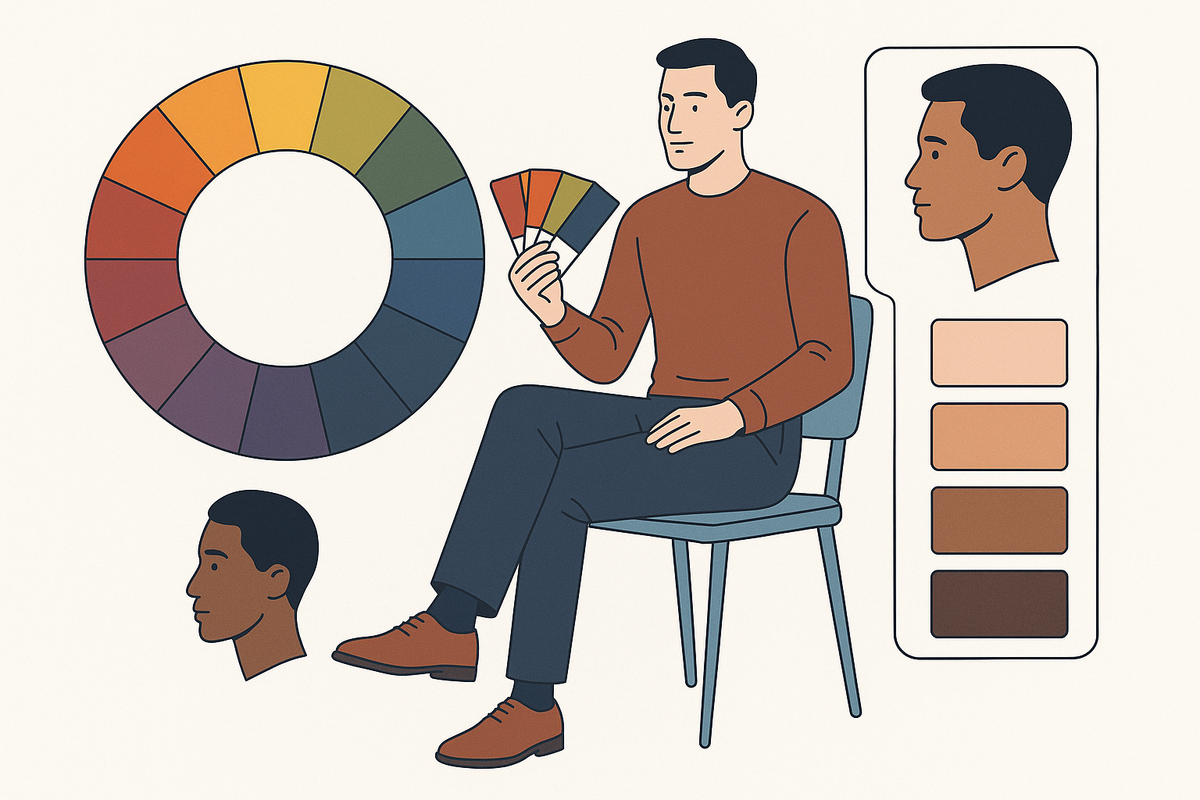
The color wheel is the foundation of men’s color analysis. It’s a visual guide showing how primary, secondary, and tertiary colors relate to each other.
- Primary colors: Red, blue, and yellow. These can’t be made by mixing other colors.
- Secondary colors: Orange, green, and purple. Each made by mixing two primary colors.
- Tertiary colors: Red-orange, yellow-green, blue-purple, etc., made by mixing a primary and a secondary color.
Knowing these basics helps you create balanced, visually appealing outfits and understand why certain shades work better together in men’s fashion.
Step 2: Warm vs. Cool Colors and Menswear Impact
Colors are divided into warm (reds, oranges, yellows) and cool (blues, greens, purples) categories. This distinction is crucial in men’s color analysis, as it affects how clothes complement your complexion.
- Warm colors create energy and stand out. Ideal for statement pieces.
- Cool colors feel calm and professional. Great for business and everyday wear.
Understanding your undertone helps you choose between warm vs cool undertone men’s palettes for the most flattering look.
Step 3: Identify Your Skin Tone and Undertone
The key to “what colors should I wear?” lies in your skin tone and undertone. Here’s how to find yours:
- Skin tone: Surface color of your skin (light, medium, dark).
- Undertone: The subtle hue beneath the surface—warm, cool, or neutral.
Try these quick tests:
- Look at your wrist veins in daylight:
• Blue/purple veins: Cool undertone
• Green veins: Warm undertone
• Hard to tell: Neutral undertone
- Hold gold and silver jewelry to your skin:
• Gold looks better: Warm
• Silver looks better: Cool
For a more accurate analysis, apps like Maxx Report can scan your face and provide detailed color recommendations based on your unique features.
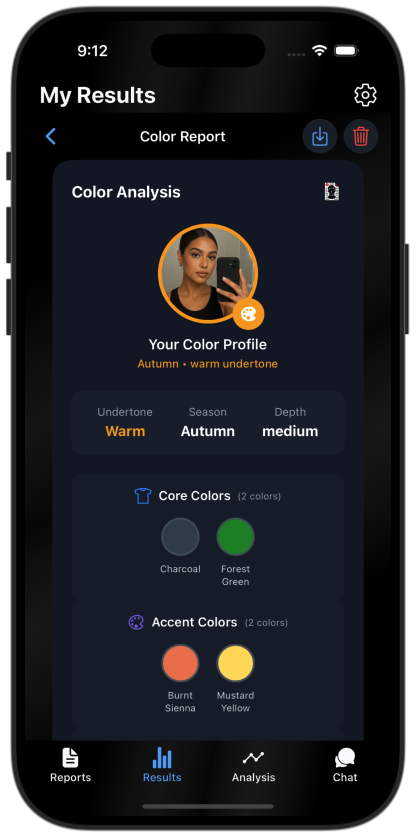
Step 4: Best Colors for Men by Skin Tone
Once you know your undertone, match it to the best colors for men by skin tone:
- Light skin, cool undertone: Navy, emerald, burgundy, charcoal, crisp white
- Medium/olive skin, warm undertone: Earth tones (olive, camel, rust), warm blues, teal, coral
- Dark skin, neutral/warm undertone: Bold colors (cobalt, tangerine, mustard), white, jewel tones
Check out the AI Fashion Consultant guide for more in-depth, per-tone recommendations.
Step 5: Neutral Colors – The Wardrobe Foundation
Neutrals are essential in men’s style basics. They’re easy to mix and match, allowing your accent colors to shine.
- Core neutrals: Black, white, gray, navy, beige, olive
- Use neutrals as the main part of your outfit (jackets, pants, shoes)
Neutrals form the backbone of the 70/30 rule: aim for 70% neutrals, 30% color in your outfit for a balanced, versatile look.
Step 6: Build Outfits with Proven Color Schemes
The color wheel guides you in creating harmonious men’s outfits. Try these core schemes:
- Monochromatic: Different shades of one color (e.g., navy shirt with lighter blue chinos)
- Analogous: Colors next to each other on the wheel (e.g., blue, blue-green, green)
- Complementary: Opposite colors (e.g., blue and orange; try navy with burnt orange accents)
- Split-complementary: Base color + two neighbors of its complement (e.g., blue with red-orange and yellow-orange)
- Triadic: Three evenly spaced colors (e.g., navy, burgundy, olive)
Start simple: pair neutrals with one accent color, then experiment with two-color combos as you gain confidence.
Step 7: Refine with Tints, Shades, and Tones
For more advanced style, consider the depth and intensity of your colors:
- Tint: Color + white (lighter, softer)
- Shade: Color + black (darker, richer)
- Tone: Color + gray (muted, sophisticated)
Mixing tints, shades, and tones adds dimension and polish to men’s outfits—especially when dressing for your body type or occasion.
Step 8: Coordinate Shoes, Accessories, and Details
Well-matched accessories complete your color story. Here’s how to coordinate:
- Shoes and belts: Match leathers (brown with brown, black with black)
- Socks: Go one shade darker than your trousers, or pull a color from your shirt/tie for flair
- Watches, hats, eyewear: Use metallics (silver, gold) or subtle pops of color to complement your palette
Accessories are an easy way to try bold colors without overwhelming your look.
Step 9: Start Small and Build Confidence
If you’re new to color, begin with classic combinations like navy and white, or charcoal with olive. Gradually introduce more color as you get comfortable.
- Try a colored shirt under a neutral jacket
- Add a statement tie or pocket square
- Experiment with different color schemes each week
Apps like Maxx Report can help you visualize and fine-tune your choices for your features and body type.
Tips & Common Mistakes
- Don’t use too many colors at once—stick to 2-3 main hues per outfit
- Avoid clashing undertones (don’t mix warm and cool shades unless intentional)
- Test in daylight—colors look different under artificial lighting
- Don’t ignore fit: Even the best color combo won’t work if the clothes don’t suit your body type (Face Shape Quiz)
- Refresh your wardrobe seasonally, adjusting your palette as your skin tone changes with sun exposure
Conclusion
Learning how to use color wheel for mens fashion is a practical skill that instantly upgrades your wardrobe and confidence. By understanding your skin tone, choosing the best colors, and building outfits using proven schemes, you’ll always look sharp and intentional. For a more personalized approach, try an AI-driven color analysis with Maxx Report to discover your most flattering hues and get a custom transformation plan. Ready to level up your style? Explore more detailed guides and tools at Maxx Report.
FAQ
- How do men use a color wheel to match clothes?
Men can use the color wheel to create harmonious outfits by selecting color schemes such as monochromatic, analogous, or complementary. Start with neutrals and add colors that are adjacent or opposite each other on the wheel for balance. - What colors go together in men’s fashion?
Classic combinations include navy and white, charcoal and olive, or beige and burgundy. Complementary and analogous schemes from the color wheel work well, especially when matched to your undertone. - What is the best color combination for men’s outfits?
The best combos depend on your skin tone and occasion. Navy and grey, olive and tan, or blue and rust are universally flattering. Use the 70/30 rule: mostly neutrals with a pop of color. - Should men wear warm or cool colors based on skin tone?
Yes, men with cool undertones look better in cool colors (blue, grey, emerald), while those with warm undertones shine in earth tones (olive, camel, rust). Neutral undertones can wear both. - How many colors should you wear in one outfit?
Stick to 2-3 main colors per outfit for a cohesive look. Too many colors can look chaotic and distract from your style basics. - How do you match shoes and accessories to your outfit colors?
Match leather tones (brown with brown, black with black), choose socks that complement your trousers or shirt, and add subtle color pops with accessories. Use the color wheel to guide accent choices.