Skin Tone Names: The Complete Guide to Identifying Your Shade
Discover all skin tone names from porcelain to ebony, undertone tips, charts, celebrity examples, and how to find what your skin tone is called. Comprehensive & practical.
Estimated reading time: 15 min
Key Takeaways
- Skin tone names range from porcelain and ivory to caramel, mahogany, and ebony, each with distinct undertones.
- Understanding your undertone (warm, cool, neutral, olive) is crucial for accurate skin color identification.
- Celebrity examples, practical tests, and charts help you pinpoint what your skin tone is called.
- Industry standards like the Fitzpatrick Scale differ from cosmetics naming conventions.
- Skin tone names are essential for makeup, fashion, writing, and AI beauty analysis—like with Maxx Report.
Table of Contents
- Section 1: The Full Spectrum of Skin Tone Names
- Section 2: Descriptions, Definitions, and Undertone Characteristics
- Section 3: Industry Standards vs. Cosmetics Naming
- Section 4: How to Identify Your Skin Tone and Undertone
- Section 5: Celebrity Skin Tone Examples and Real-Life References
- Section 6: Skin Tone Names for Creative Writing, AI, and Design
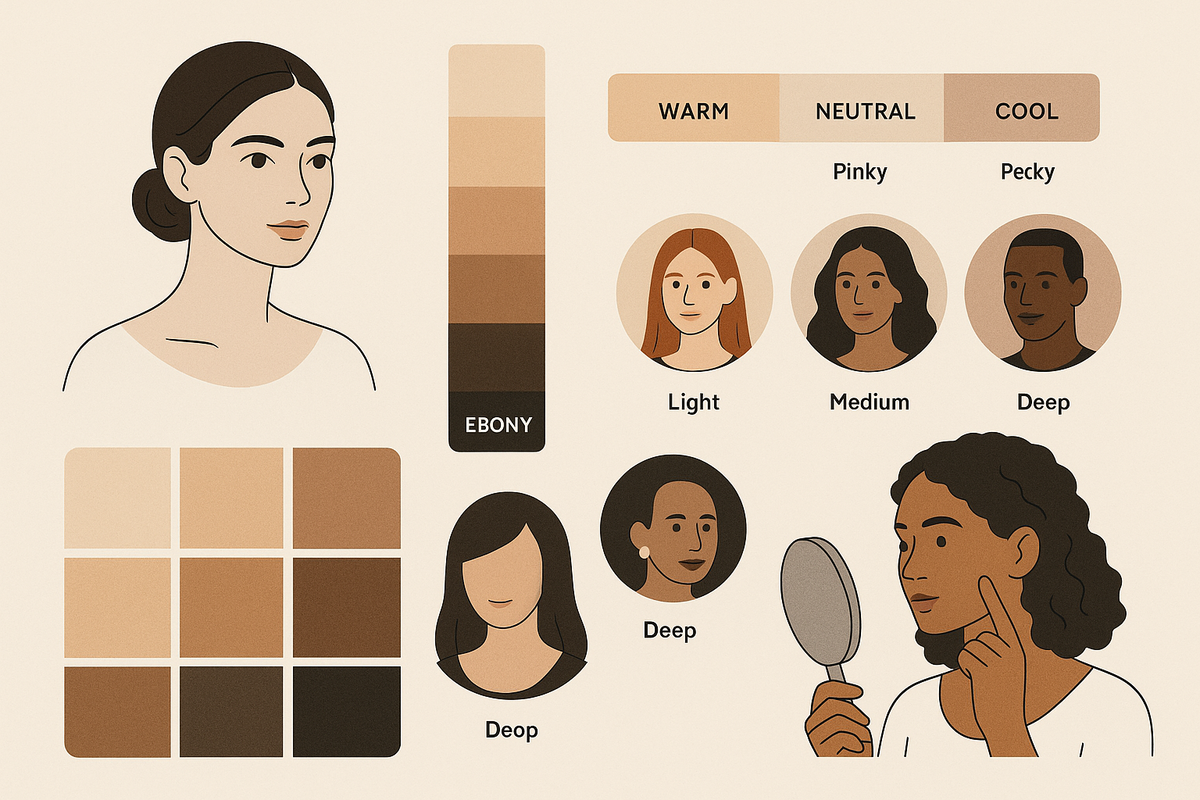
- Section 7: Visual Aids: Charts, Color Codes, and Comparison Guides
- Section 8: Common Questions and Ambiguities: Olive, Undertones, and Naming
- Conclusion
- FAQ
Section 1: The Full Spectrum of Skin Tone Names
Comprehensive List: From Lightest to Deepest
Skin tone names help us describe the unique shades and undertones of human skin. From cosmetics to AI beauty apps like Maxx Report, accurate naming is essential for color matching, self-expression, and personal care. Here’s a broad, universally recognized sequence of skin color names, from the lightest to the deepest:
- Porcelain – very fair, often with pink or neutral undertones
- Alabaster – fair, subtle yellow or neutral undertones
- Ivory – fair with warm, peach, or yellow undertones
- Fair – light, with various undertones (pink, yellow, neutral)
- Light – slightly more pigmented than fair
- Beige – light-medium, tan or yellow undertones
- Sand – light-medium with golden or olive undertones
- Medium – balanced between light and dark, common globally
- Olive – medium with greenish or ashy undertones
- Honey – warm, golden-brown tones
- Tan – medium-deep, sun-kissed, warm undertones
- Caramel – medium-deep, rich golden or bronze
- Almond – medium-deep to deep, neutral to warm undertones
- Bronze – deep tan, metallic warmth
- Chestnut – rich brown with red or golden undertones
- Mocha – deep brown, neutral to cool undertones
- Espresso – very deep brown, often cool
- Ebony – deepest brown to nearly black, cool or neutral
Why So Many Names?
Human skin tones are a spectrum—not just light, medium, or dark. These names help us communicate nuanced differences, which is why you’ll see varying lists in different industries. For instance, makeup brands may use proprietary shade names, while dermatologists or AI tools might use more standardized terms.
Quick Reference Table
Here’s a simplified skin tone chart spanning the most common names from light to dark:
- Porcelain / Alabaster / Ivory / Fair / Light
- Beige / Sand / Medium / Olive / Honey
- Tan / Caramel / Almond / Bronze / Chestnut
- Mocha / Espresso / Ebony
Section 2: Descriptions, Definitions, and Undertone Characteristics
What Defines Each Skin Tone Name?
Each skin tone name encapsulates both the surface color and the undertone—those subtle hues beneath the skin that influence overall appearance. Here’s how they break down:
- Porcelain: Almost translucent, pink/neutral undertones. E.g., Nicole Kidman.
- Ivory: Slightly warmer/paler than porcelain. Warm or neutral undertones. E.g., Emma Stone.
- Beige: Light-medium with yellow or golden undertones. E.g., Jennifer Aniston.
- Olive: Medium with distinct greenish/ashy cast, sometimes with golden warmth. E.g., Penélope Cruz.
- Caramel: Medium-deep, golden or bronze. E.g., Beyoncé.
- Espresso: Deep, cool brown. E.g., Lupita Nyong’o.
- Ebony: Rich, nearly black. E.g., Alek Wek.
Undertone Types
- Warm: Yellow, peach, or golden base
- Cool: Pink, red, or blue base
- Neutral: Mix of warm and cool
- Olive: Greenish/ashy undertone, can be warm or neutral
How Undertones Interact With Skin Tone Names
The same surface color can have different undertones, altering the name or perception. For example:
- A person with fair skin and cool undertones might be called "porcelain," while fair with warm is "ivory."
- "Olive" is unique—it refers to a medium depth with a greenish cast, not just a shade but an undertone.
Section 3: Industry Standards vs. Cosmetics Naming
The Fitzpatrick Scale (Dermatology)
Dermatologists often use the Fitzpatrick Skin Type scale, which classifies skin by its reaction to sun exposure:
- Type I: Pale white, always burns, never tans (Porcelain/Alabaster)
- Type II: Fair, usually burns, tans minimally (Ivory/Fair)
- Type III: Medium, sometimes mild burn, tans uniformly (Beige/Medium)
- Type IV: Olive, rarely burns, tans easily (Olive/Honey/Tan)
- Type V: Brown, very rarely burns, tans very easily (Caramel/Almond/Bronze)
- Type VI: Deeply pigmented dark brown to black, never burns (Mocha/Ebony)
This system is scientific, focused on sun reactivity rather than aesthetic color names.
Cosmetics and Proprietary Naming
Makeup brands often use evocative or poetic skin color names (e.g., "Warm Almond," "Golden Honey," "Rich Espresso") and sometimes create shade families. While this makes shopping fun, it can cause confusion if you’re comparing products across brands.
AI and Digital Tools (e.g., Maxx Report)
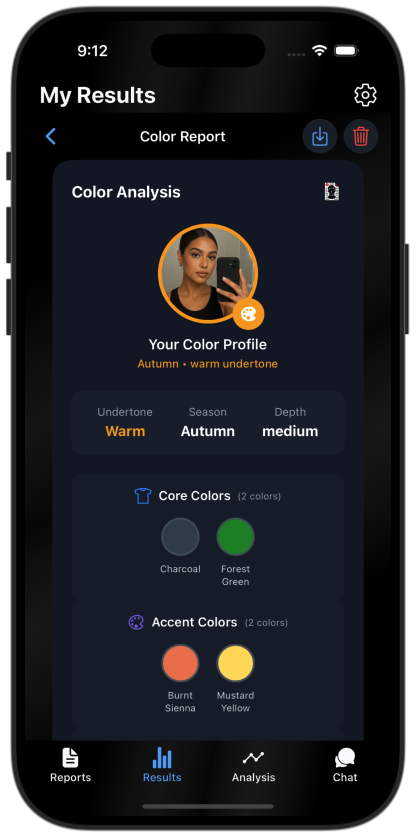
AI-powered analysis platforms, such as Maxx Report, use both standardized and custom skin tone names to generate precise beauty recommendations. These tools often analyze your undertone and depth to assign the most accurate name and suggest personalized transformation plans.
Section 4: How to Identify Your Skin Tone and Undertone
Step-by-Step Identification
- Step 1: Examine Your Skin in Natural Light
Look at the skin on your jawline, inner arm, or chest—areas less affected by sun exposure. - Step 2: The Vein Test
Check the veins on your wrist:- Blue/purple veins = likely cool undertone
- Green veins = likely warm or olive undertone
- Hard to tell = likely neutral undertone
- Step 3: Jewelry Test
Gold jewelry flatters warm tones; silver suits cool tones. If both look good, you may be neutral. - Step 4: Sun Reaction Test
If you burn easily, you’re likely cool or fair; if you tan easily, you may have a warmer or deeper tone.
Matching to a Skin Tone Name
Once you know your depth and undertone, compare to the lists above. For example:
- Fair with cool undertone: Porcelain
- Medium with olive undertone: Olive
- Deep with warm undertone: Chestnut or Caramel
AI-Assisted Tone Matching
Modern tools can analyze your photo and recommend precise skin tone names. Apps like Maxx Report provide AI-powered color analysis, rating your skin and suggesting enhancements. For a full facial analysis, see our Face Shape Quiz or read about how AI transforms your look instantly.
Section 5: Celebrity Skin Tone Examples and Real-Life References
Light to Medium Celebrity Examples
- Porcelain: Saoirse Ronan, Nicole Kidman
- Ivory: Emma Stone, Amanda Seyfried
- Fair: Taylor Swift, Anne Hathaway
- Beige: Jennifer Aniston, Drew Barrymore
- Olive: Zendaya, Penélope Cruz, Dev Patel
Medium to Deep Celebrity Examples
- Honey: Jessica Alba
- Tan: Priyanka Chopra, Shay Mitchell
- Caramel: Beyoncé, Halle Berry
- Almond: Mindy Kaling, Janelle Monáe
- Bronze: Gabrielle Union
Deep to Deepest Celebrity Examples
- Mocha: Naomi Campbell, Viola Davis
- Espresso: Lupita Nyong’o
- Ebony: Alek Wek, Duckie Thot
Referencing well-known figures helps visualize each skin tone name and guides you when deciding "what is my skin tone called?"
Section 6: Skin Tone Names for Creative Writing, AI, and Design
Creative Descriptors for Storytelling and Prompts
Writers and AI prompt engineers need evocative, precise skin color names. In addition to standard names, consider these creative descriptors:
- Milky, snow, moonlit (lightest tones)
- Sun-kissed, honeyed, tawny, ochre (medium/warm)
- Copper, sable, cinnamon, toasted almond (deep/unique)
- Onyx, obsidian, midnight (deepest/ebony)
- Olive leaf, moss, ash (for greenish/olive undertones)
Fantasy and Non-Human Skin Tone Names
For fantasy or AI-generated characters, you might see or use names like "opaline," "bronzed rose," "deep umber," or "verdant olive." These evoke emotion and setting beyond simple color.
Hex Codes and CSS Color Values
Designers often use specific color codes to represent skin tones digitally. Here are a few examples:
- Porcelain: #FBE8EB
- Ivory: #FFF8E1
- Beige: #F5E1C8
- Olive: #C3B091
- Caramel: #A9744F
- Mocha: #6B4C3B
- Ebony: #2C1608
These codes allow digital artists and AI tools to match skin tone names with precision.
Section 7: Visual Aids: Charts, Color Codes, and Comparison Guides
Skin Tone Chart: A Visual Reference
Skin tone charts display a spectrum from the lightest to the deepest shades, often side-by-side. Here’s a typical progression you might see in professional color analysis or makeup counters:
- Porcelain → Ivory → Fair → Light → Beige → Sand
- Medium → Olive → Honey → Tan → Caramel → Almond
- Bronze → Chestnut → Mocha → Espresso → Ebony
Side-By-Side Comparison
Comparison guides help you distinguish subtle differences:
- Porcelain vs. Ivory: Porcelain is cooler/paler, ivory is warmer/yellower.
- Caramel vs. Almond: Caramel is more golden, almond is more neutral.
- Mocha vs. Espresso: Mocha is lighter and warmer, espresso is deeper and cooler.
Why Visuals Matter
Seeing these tones side-by-side clarifies where your skin fits on the spectrum—and helps when using AI tools or selecting products. For more on how digital analysis enhances your personal glow-up, see AI Glow Up Tips That Work.
Section 8: Common Questions and Ambiguities: Olive, Undertones, and Naming
Is Olive a Skin Tone or an Undertone?
"Olive" is a contested term—sometimes described as a skin tone (medium depth with greenish/grayish cast) and sometimes as an undertone. It’s unique in that it straddles both, and is most common in people of Mediterranean, Middle Eastern, or South Asian descent.
Ambiguous and Overlapping Names
Names like "almond," "caramel," and "chestnut" can vary by brand or region. Always look for context—such as accompanying undertone descriptors or shade numbers.
How Undertones Affect Naming
Two people with the same "medium" surface color may have totally different undertones—one "olive," one "golden." This can make product matching and self-description tricky, so always consider both depth and undertone when naming your skin color.
Tips for Communicating Your Skin Tone
- Use both the tone name and undertone: e.g., "medium with warm undertone"
- Reference celebrities or color codes for clarity
- When in doubt, seek AI or professional color analysis for accuracy
Conclusion
Understanding skin tone names is more than a beauty obsession—it’s a practical tool for choosing makeup, clothing, digital design, and even for creative writing. With a grasp of the full spectrum, undertone science, and industry conventions, you’ll never be confused about "what is my skin tone called" again. For a personalized, AI-powered analysis and glow-up recommendations, try Maxx Report today, and unlock a new dimension of self-knowledge and style.
FAQ
Q: What are all the different names for skin tones from light to dark?
A: Common names, from lightest to darkest, include porcelain, alabaster, ivory, fair, light, beige, sand, medium, olive, honey, tan, caramel, almond, bronze, chestnut, mocha, espresso, and ebony. Each has distinct undertones.
Q: How do I know if my skin tone is olive, warm, cool, or neutral?
A: Check your undertones using the vein test (green veins = olive/warm, blue = cool, both = neutral), jewelry test (gold vs. silver), and sun reaction. Olive tones have a subtle greenish or ashy cast. AI apps like Maxx Report can help analyze your tone accurately.
Q: What celebrity has porcelain/almond/caramel/mahogany skin tone?
A: Examples: Porcelain – Nicole Kidman; Almond – Mindy Kaling; Caramel – Beyoncé; Mahogany (similar to chestnut/mocha) – Viola Davis or Gabrielle Union.
Q: Is there a standard chart for skin tone names?
A: Dermatology uses the Fitzpatrick Scale (Types I-VI), while cosmetics and AI use proprietary charts with names like porcelain, honey, or espresso. See above for a universal chart and color codes.
Q: What skin tone name should I use for my character in a story?
A: Choose a name that reflects both depth and undertone, such as "medium with olive undertone" or "deep caramel." Use real-life references or color hex codes for clarity in descriptions.
Una comparación ordenada puede empezar por el corte, la transpiración del tejido y las instrucciones de cuidado. Para ordenar la búsqueda, camiseta del club Arsenal puede revisarse junto con las medidas y el tipo de ajuste preferido. La decisión final resulta más clara cuando se comparan datos concretos y no solo la apariencia general.
Q: How do undertones affect the name of my skin color?
A: Undertones (warm, cool, neutral, olive) modify the surface tone name. For example, "ivory" is fair with warm undertones, while "porcelain" is fair with cool undertones. Always consider both for accuracy.