hardmaxxing transformation: Meaning, Procedures, and Results
Softmaxxing vs hardmaxxing explained: what counts as each, real examples, results you can expect, safety red flags, and a free AI looksmax rating to find your starting point.

Estimated reading time: 14 min
Key Takeaways
Free tools for this guide (run in your browser, no sign-up):
- Free looksmaxxing test (AI looksmax rating)
- How attractive am I? (free AI test)
- Hardmaxxing transformation and softmaxxing are the two main types of looksmaxxing, each with distinct strategies, risks, and results.
- Softmaxxing focuses on non-invasive, reversible improvements like skincare, grooming, posture, and style.
- Hardmaxxing involves invasive, often permanent procedures such as surgery, fillers, and implants, and is the foundation of a true hardmaxxing transformation.
- Most people should start with softmaxxing before considering hardmaxxing for sustainable, lower-risk results.
- Understanding the difference helps you choose the safest, most effective path for your personal transformation goals.
Table of Contents
- Section 1: Looksmaxxing Meaning and Types
- Section 2: What is Softmaxxing?
- Section 3: What is Hardmaxxing?
- Section 4: Softmaxxing vs Hardmaxxing — Key Comparison Factors
- Section 5: Practical Methods for Softmaxxing
- Section 6: Popular Hardmaxxing Procedures
- Section 7: Which Approach Is Right for You?
- Conclusion
- FAQ
Section 1: Looksmaxxing Meaning and Types
Defining Looksmaxxing
Hardmaxxing transformation is a key concept in the world of looksmaxxing, which refers to optimizing your appearance through a range of methods—both non-invasive and invasive. With the rise of AI-powered tools like Maxx Report, you can scan your face to rate your looks, including jawline, symmetry, and skin, and get a personalized transformation plan. Whether you’re interested in a hardmaxxing transformation or starting with softmaxxing, understanding each path helps you maximize your attractiveness with a structured approach. If you want to see dramatic before-and-after results, hardmaxxing transformations are often shared in online communities to showcase the power of these changes.
The concept of looksmaxxing has evolved rapidly, expanding from simple grooming advice to a comprehensive self-improvement strategy. Online communities now share tips, success stories, and before-and-after hardmaxxing transformations. Digital platforms and AI apps have made looksmaxxing more accessible by offering personalized recommendations based on facial analysis and skin diagnostics.
Types of Looksmaxxing: Soft vs Hard
There are two primary types of looksmaxxing:
- Softmaxxing: Non-invasive, reversible methods to enhance appearance.
- Hardmaxxing: Invasive, often permanent changes to facial or body structure, resulting in what many call a hardmaxxing transformation.
Understanding the difference between softmaxxing and hardmaxxing is crucial for anyone considering a transformation journey. Softmaxxing focuses on maximizing your natural potential, while hardmaxxing is about overcoming genetic or structural limitations. Many people blend both approaches for optimal results.
Why Distinguish Between Them?
Choosing the right looksmaxxing type affects your safety, results, and satisfaction. For example, softmaxxing is accessible and low-risk, making it a logical first step. Hardmaxxing, on the other hand, can deliver dramatic results but comes with greater financial, medical, and psychological implications. Many who seek a hardmaxxing transformation do so when softmaxxing alone is not enough to reach their goals. If you're inspired by hardmaxxing transformation stories, it's important to research both the upsides and the risks.
Distinguishing between softmaxxing and hardmaxxing also helps you set realistic expectations. While softmaxxing can provide steady improvements that are easy to maintain, hardmaxxing often requires a greater investment of time, money, and emotional resilience. By clearly understanding both paths, you can design an appearance optimization strategy tailored to your unique needs, resources, and comfort level.
To help you navigate these choices, let’s break down each category in detail.
Section 2: What is Softmaxxing?
Definition and Philosophy
Softmaxxing is all about optimizing your looks using reversible, non-invasive strategies. These methods work with what you naturally have, aiming for gradual improvements in skin, hair, posture, and overall grooming. The philosophy centers on maximizing your genetic potential without altering your bone structure or resorting to surgery.
Softmaxxing is rooted in the concept that small, consistent improvements compound over time to create significant changes. The approach leverages the body’s natural ability to regenerate and heal, relying on healthy habits and accessible products. It’s about working smarter, not harder—focusing on routines that deliver visible results without risk of permanent regret.
Common Softmaxxing Methods
- Skincare: Cleansing, exfoliating, moisturizing, and using sunscreen daily to improve skin clarity and texture. Routine use of serums containing antioxidants (like vitamin C) can fade hyperpigmentation, while retinoids can promote cell turnover and reduce acne or fine lines.
- Grooming: Regular haircuts, beard maintenance, eyebrow shaping, and personal hygiene. For men, shaping the beard to match face shape can enhance jawline definition. For women, eyebrow grooming can create facial balance and accentuate the eyes. Nail care and oral hygiene (whitening toothpaste, flossing) also fall under this category.
- Fitness: Exercise routines to reduce body fat, improve muscle tone, and enhance posture. Targeted strength training (like neck, chest, and back exercises) can make the face appear slimmer and more defined. Cardiovascular workouts improve circulation, lending skin a healthy glow.
- Style and Fashion: Choosing clothes and colors that complement your body shape and skin tone. AI tools like those highlighted in AI Fashion Consultant: Revolutionizing Personal Style in 2024 can help here. Accessories (watches, belts, glasses) can add sophistication and polish to your appearance.
- Posture: Correcting slouching and building core strength for a more confident, attractive presence. Simple cues like pulling your shoulders back and engaging your core can instantly make you look taller and more self-assured. Yoga and Pilates are excellent for improving alignment.
- Sleep and Lifestyle: Prioritizing rest, hydration, and nutrition for healthy skin and energy. Studies consistently show that 7-9 hours of quality sleep improves skin texture, reduces eye bags, and supports healthy hair. Drinking enough water (about 2-3 liters per day) keeps skin plump. A diet rich in vegetables, lean proteins, and healthy fats supports optimal appearance.
- Mewing: Practicing proper tongue posture for potential jawline enhancement over time. While scientific evidence is limited, anecdotal reports suggest that consistent mewing can subtly improve facial definition, particularly when started in adolescence. For adults, benefits are modest but may include improved breathing and posture.
Softmaxxing Benefits
- Low risk and minimal side effects. Most softmaxxing routines can be safely adopted without medical supervision. The rare exceptions include allergic reactions to skincare products or overuse of actives like retinol, which can cause irritation.
- Affordable — generally costs range from $20 to $1,000 per year depending on product and routine choices. A basic skincare set (cleanser, moisturizer, sunscreen) can cost as little as $20/month, while premium brands and advanced treatments (like LED masks) may add up to $1,000 annually. Haircuts and grooming supplies typically range from $10 to $60/month.
- Fully reversible; you can stop or change methods anytime. If a particular style or product doesn’t suit you, there’s no long-term commitment. This flexibility makes softmaxxing ideal for those who want to experiment before making permanent changes.
- Accessible to almost everyone regardless of age or gender. Softmaxxing is inclusive—teens, adults, men, women, and nonbinary individuals can all benefit from improved self-care routines. No medical clearance is required to start.
Softmaxxing is a sustainable, foundational approach, often recommended as the first step before considering harder interventions. Consistency is key: most visible improvements take several weeks to a few months to manifest, but the results are cumulative and easy to maintain.
Section 3: What is Hardmaxxing?
Definition and Purpose
Hardmaxxing transformation refers to invasive, often permanent procedures that alter your facial structure or body features. It includes surgical and non-surgical interventions designed to achieve changes that softmaxxing can’t, such as reshaping the nose or jaw. If you want a dramatic hardmaxxing transformation, these are the interventions that deliver the most significant changes. Many people consider hardmaxxing when non-invasive methods plateau and they seek a more substantial upgrade in facial symmetry, jawline definition, or overall attractiveness. Hardmaxxing transformations are typically shared online as before-and-after photos to highlight the dramatic results possible with these procedures.
The hardmaxxing philosophy centers on overcoming genetic or structural limitations that can’t be addressed through lifestyle changes alone. Some pursue hardmaxxing for cosmetic reasons, while others seek it to correct congenital defects, traumatic injuries, or severe asymmetries. The decision to hardmaxx should involve careful consideration of your motivations, expectations, and willingness to accept potential risks and complications. Using an AI looksmaxxing app like Maxx Report can help you identify which facial features may benefit most from hardmaxxing procedures, based on objective facial analysis and personalized recommendations.
Typical Hardmaxxing Procedures
- Rhinoplasty: Nose reshaping surgery for improved symmetry or profile. Techniques include straightening a deviated septum, refining the tip, or reducing a dorsal hump. Recovery may involve bruising and swelling for 2-4 weeks.
- Orthognathic (jaw) surgery: Adjusts jaw alignment, improving facial proportions and bite. Often performed by maxillofacial surgeons, this procedure can correct underbites, overbites, or facial asymmetry. The process may require braces before and after surgery. A full jaw hardmaxxing transformation can significantly change your facial structure and profile.
- Chin implants: Enhances chin projection, balancing facial features. Implants are typically made of silicone and inserted through an incision inside the mouth or under the chin.
- Fillers and Botox: Temporarily alter facial contours, reduce wrinkles, or add volume. Although not always permanent, repeated treatments are considered hardmaxxing due to their impact and risk profile. Common sites include the cheeks, jawline, and lips. Side effects can include swelling, bruising, and rarely, vascular complications.
- Hair transplants: Surgical relocation of hair follicles to combat baldness. Methods include FUE (Follicular Unit Extraction) and FUT (Follicular Unit Transplant). Results are typically permanent but require months to fully grow in.
- Orthodontics: Braces or aligners to permanently straighten teeth and improve smile aesthetics. Treatment duration is usually 12-36 months, depending on the severity.
Section 4: Softmaxxing vs Hardmaxxing — Key Comparison Factors
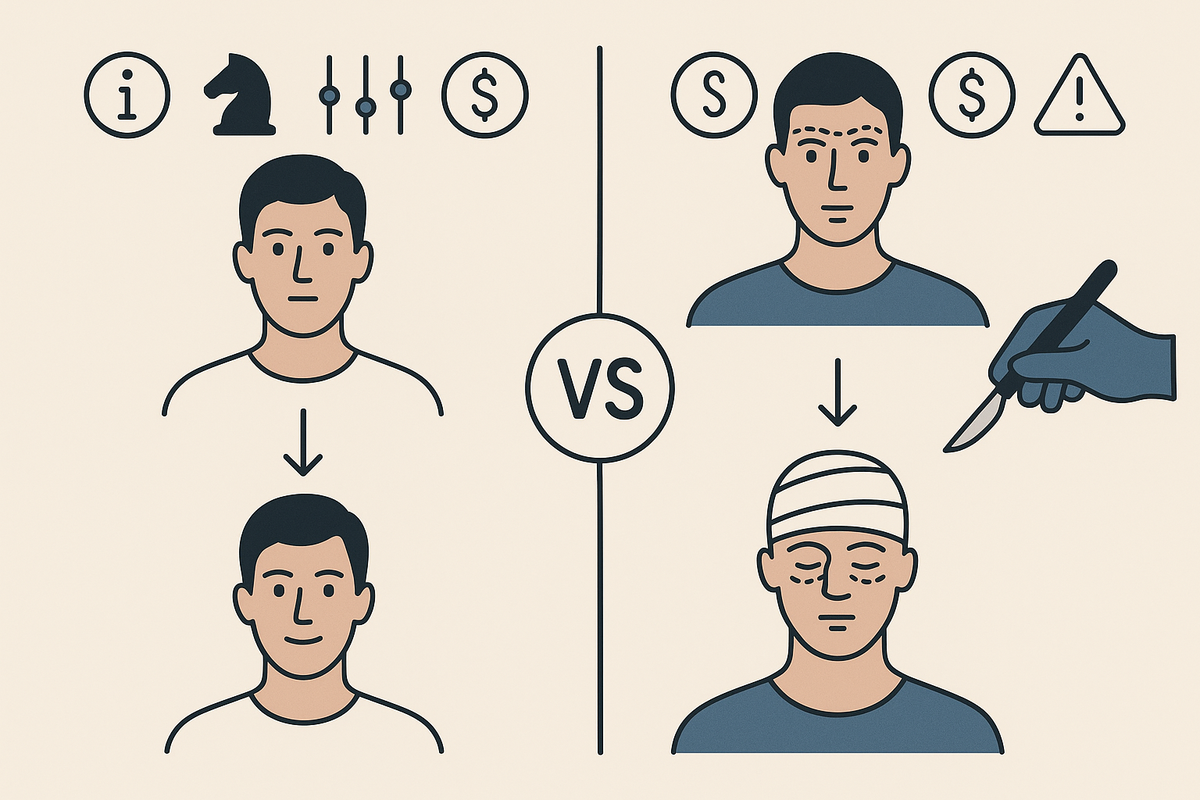
Understanding the key differences between softmaxxing and hardmaxxing can help you decide which path fits your goals, budget, and risk tolerance. Softmaxxing is low-risk, affordable, and reversible, making it ideal for those starting their looksmaxxing journey. Hardmaxxing can produce dramatic, lasting changes but involves higher costs, medical risks, and recovery time.
Many individuals combine softmaxxing and hardmaxxing strategies for the best results. For example, building a solid skincare routine and fitness habits before undergoing surgery can improve healing and enhance final outcomes. Using AI tools like Maxx Report can guide you in identifying which features to target with softmaxxing or hardmaxxing.
Section 7: Which Approach Is Right for You?
Choosing between softmaxxing and hardmaxxing depends on your personal goals, budget, tolerance for risk, and desired timeline for results. If you want gradual, low-risk improvements, starting with softmaxxing is recommended. If you seek a dramatic hardmaxxing transformation and are prepared for the financial and medical commitment, consult with qualified professionals and consider AI-based facial analysis to create a personalized plan.
Remember that both approaches require patience and consistency. Combining softmaxxing habits with targeted hardmaxxing procedures often yields the most balanced and satisfying transformation.
FAQ
What is a hardmaxxing transformation?
A hardmaxxing transformation involves invasive, often permanent procedures like surgery or fillers that significantly change your facial or body structure to enhance attractiveness.
How does hardmaxxing differ from softmaxxing?
Softmaxxing uses non-invasive, reversible methods such as skincare and grooming, while hardmaxxing involves surgical or medical interventions for more dramatic, lasting changes.
What are common hardmaxxing procedures?
Popular procedures include rhinoplasty, orthognathic surgery, chin implants, fillers, Botox, hair transplants, and orthodontics.
Is hardmaxxing safe?
Hardmaxxing carries higher risks than softmaxxing, including surgical complications and recovery challenges. It’s important to consult qualified professionals and thoroughly research procedures.
Can AI help with hardmaxxing transformation planning?
Yes, AI looksmaxxing apps like Maxx Report analyze your facial features objectively and recommend personalized procedures to optimize your transformation results.